Understand any stock in simple English
Enter a ticker to learn what the company does and how it makes money.
TTM Technologies, Inc.
TTM Technologies makes the printed circuit boards and specialized electronic components that go inside everything from smartphones and cars to satellites and fighter jets.
TTM Technologies is a manufacturer of printed circuit boards, the flat green (or blue, or red) slabs inside almost every electronic device that hold chips and chipsets together and let electricity flow between them. If you have ever opened up a laptop or a router, the board with all the tiny solder joints and chips on it is exactly what TTM builds. Founded in 1998 through a management buyout and grown through a string of acquisitions, the company is headquartered in Costa Mesa, California, and sells to original equipment manufacturers and contract manufacturers across the aerospace and defense, automotive, medical, industrial, and networking markets.
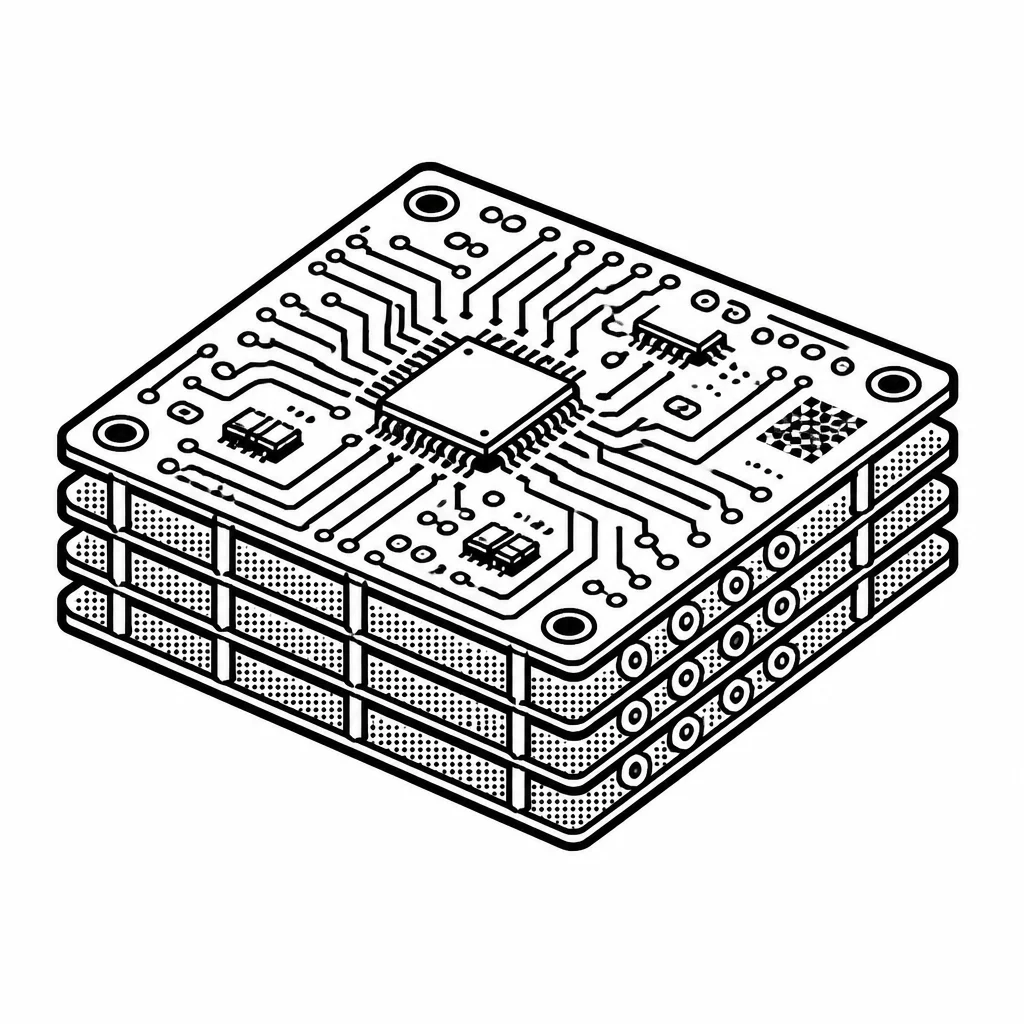
The company runs two main kinds of business. The bigger and more capital-intensive one makes printed circuit boards, the physical foundation of electronics, in plants spread across the US, China, and elsewhere. The other, smaller segment builds specialty components such as radio frequency and microwave assemblies, the kind of tricky analog parts that go into radar, defense systems, and satellites. TTM sells to a customer base that cares a lot about reliability. A circuit board that fails in a fighter jet or a medical implant is vastly worse than one that fails in a cheap toy, so defense and aerospace customers pay a premium for boards that are certified, traceable, and built to survive harsh conditions. That is the part of the business that is hardest for a low-cost Asian competitor to copy, and it is where TTM has deliberately shifted its focus. The less glamorous truth is that making circuit boards is a competitive, capital-heavy, and somewhat cyclical business. In commercial electronics, customers squeeze on price relentlessly, and the company competes with large Asian manufacturers who have scale and cheap labor. TTM's answer has been to lean into the high-mix, high-reliability stuff: defense, medical, and automotive boards where qualification takes years and switching suppliers is painful. This has made the business lumpy — revenue depends on defense budgets and on how many cars and networking switches are being built — but it also gives TTM a moat in the places where electronics are literally mission-critical. The company's biggest customer category, aerospace and defense, is a steady but politically exposed stream: when defense spending rises, orders rise, and when programs get cut, orders stall.
Timeline
Kent Alder Starts TTM
Kent Alder had already run a circuit board company, ElectroStar, and watched it get bought up by a giant. So he went out on his own, buying a small circuit board maker called Pacific Circuits near Seattle. The boards it built were the plumbing inside routers, switches, servers and memory modules, the unglamorous parts that make computers talk to each other.
A Merger Sets the Direction
A year later, TTM merged with Power Circuits, and the combined company moved south to Santa Ana, California. That combination was the spark: it turned a small regional shop into a platform for building a circuit board supplier that could sell around the world.
TTM Goes Public
The company listed its shares on the Nasdaq, and the offering did better than anyone had priced it for. Going public gave TTM money and a public currency, which would matter a lot in the years ahead, because this company's favorite way to grow was to buy other companies.
Buying Tyco's Circuit Board Unit
Then came the big one: TTM bought Tyco's printed circuit group for $226 million, doubling itself overnight. More importantly, it bought its way into circuit boards built for aerospace and defense, the kind that have to work perfectly when lives depend on them. Just like that, TTM was the number one supplier of military and aerospace circuit boards in North America.
Meadville Doubles It Again
A few years later TTM went shopping in Asia, paying $521 million for Meadville, a circuit board maker based in Hong Kong. The deal doubled the company again and pushed it into the boards inside smartphones and tablets. TTM was now growing by doing the same trick over and over: buy a rival, double in size, and add a new market.
Tom Edman Takes Over
Founder Kent Alder retired, and Tom Edman, who had become president a year earlier, stepped into the top job. The handoff mattered because Edman would spend the next decade reshaping what TTM was, steering it toward the markets he thought had the longest runway.
Viasystems Brings Cars
The next big purchase was Viasystems for $950 million, which made TTM one of the largest circuit board makers on earth. The real prize was cars: auto went from a tiny sliver of sales to a fifth of the business, and aerospace and defense got bigger too. That mattered because TTM had grown dangerously dependent on one huge customer, Apple, and this deal spread the risk around.
TTM Walks Away From Phones
Then TTM did something unusual for a company that loved buying things: it sold. It unloaded its mobile device business, four factories in China, for $550 million, and shut its commercial assembly operation there too. The message was clear: the phone business was a race to the bottom on price, and TTM wanted to play in markets where its boards were special enough to earn a better margin.
Telephonics Deepens Defense
TTM bought Telephonics, a defense electronics company, for $330 million. This was the same bet as before, only deeper: more of the company's fate tied to aerospace and defense work, where contracts last for years and customers care more about reliability than about shaving a penny off the price.
Edman Announces His Retirement
After more than a decade running the place, Tom Edman said he would retire, and the board started looking for a successor. He left behind a very different company: factories spread around the world, a strong defense business, and a new position in the computing power behind generative AI. He also left at the top, with the best first half of revenue growth and margins in the company's history.
The AI Data Center Bonanza
Then the market fell in love with TTM. Its stock climbed 237% in a year as investors saw it as a play on AI data centers and defense, which together made up about 80% of sales. Data center and networking sales jumped 91% in one quarter and were expected to more than double for the year, and the company's special N+M circuit boards, built so signals travel better, went into mass production with hundreds of millions in revenue expected in the second half alone.
Record Results, Crushed Stock
The very next quarter looked spectacular on paper: record revenue of $1.2 billion, up 60%, and earnings that beat expectations. Yet the stock fell about 28%. Data center sales came in roughly 10% short of guidance because customers moved their programs around, key materials took up to 24 weeks to arrive, and all those debt-funded acquisitions had pushed borrowing up to nearly three times earnings. Investors panicked, even though management pointed to a strong revenue outlook for the year ahead, a reminder that a great business can still get a brutal grade from the market.
A useful way to see the business is as a toll road for the physical electronics supply chain. TTM does not design the chips or write the software; it owns the unglamorous, capex-hungry factories that turn copper-clad laminate into a functioning board, and it collects a little money on every board it ships. The company has spent years pruning commoditized work and adding capacity in high-end boards, including work tied to advanced packaging and the data-center buildout, where circuit boards are getting more complex to support AI accelerators and high-speed networking. In recent years it has also leaned on shareholder returns, buying back shares aggressively and paying a small dividend, which signals management sees limited need to hoard all the cash the business throws off. The long-term case rests on whether high-reliability and increasingly complex boards keep command premium pricing — or whether the board-making game remains a race to the bottom.
Saved answer · last researched 7 Nov 2026
BIG PICTURE
About 80% of TTM Technologies' sales now come from AI and defense work.
- 80% AI and defense end markets
- 20% Medical, industrial, automotive and other markets
Most of TTM's money comes from two kinds of customers: companies building AI data centers and defense programs. Management puts that combined share of net sales at roughly 80%. Data center and networking sales alone jumped 91% in the second quarter of 2026 and made up 40% of total sales, while aerospace and defense added 37%. The circuit boards are the same product, but the buyers have shifted toward the fastest-spending corners of the economy. Source: Nasdaq, data from 2026