Understand any stock in simple English
Enter a ticker to learn what the company does and how it makes money.
TC Energy Corporation
TC Energy moves natural gas and oil across North America through thousands of miles of pipelines and also generates electricity.
TC Energy is one of North America's biggest pipeline companies. It builds and operates the long steel tubes that carry natural gas and crude oil from where they are produced to where they are burned, processed, or shipped. If a city in Ontario needs gas to heat homes in January, or a refinery in the U.S. Midwest needs crude oil, TC Energy's pipes are often the ones doing the moving. The company also runs power plants, including nuclear and renewable generation, though pipelines are the heart of the business.
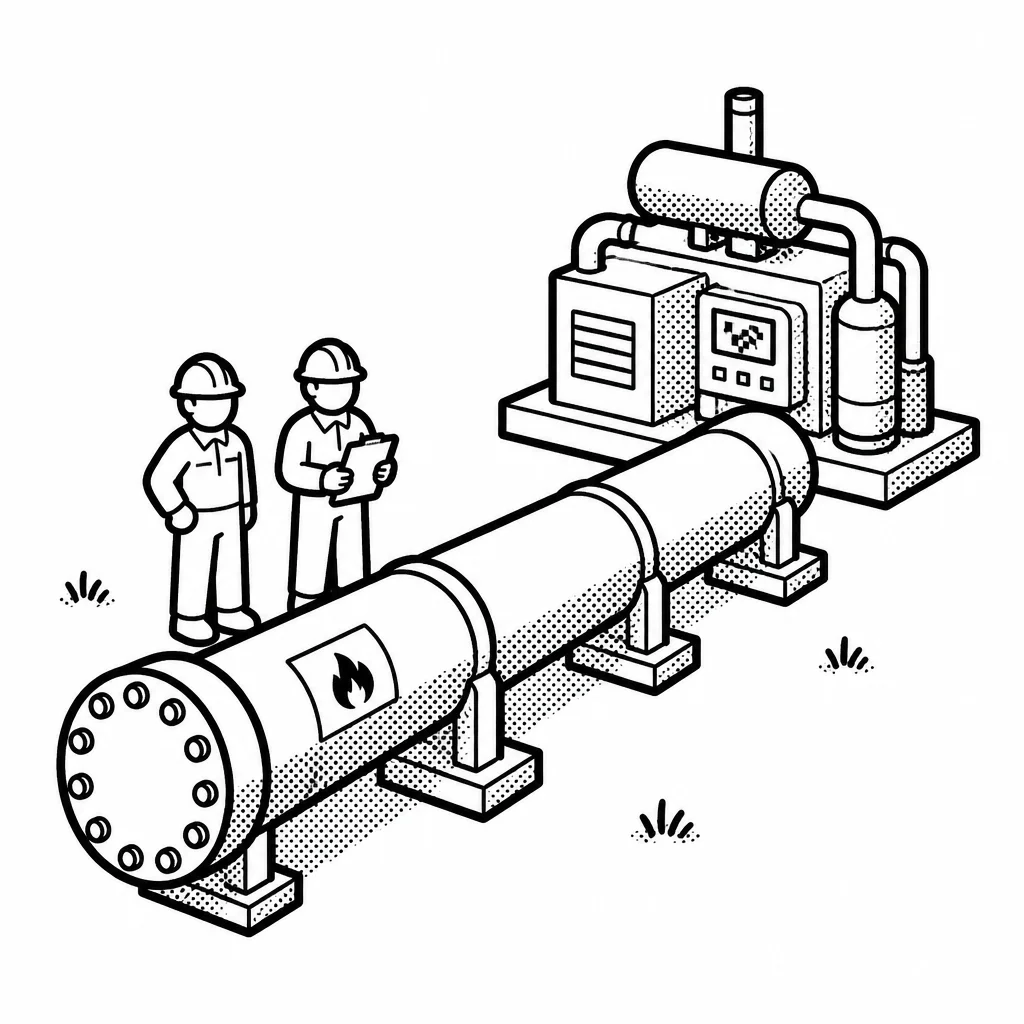
The money comes from moving stuff, not from owning it. TC Energy charges shippers a fee to use its pipelines, and most of those fees are locked in by long-term contracts, which makes revenue steadier than you might expect from an energy company. That steadiness is the whole appeal: as long as gas keeps flowing, the tolls keep coming. Its network is enormous — the mainline system alone stretches across Canada and into the U.S., feeding markets all the way to the East Coast. Competitors include Enbridge in liquids and Williams Companies in gas, but pipelines are hard to duplicate, so each route often has few real alternatives. The company has been through a reckoning. A costly, years-long fight over the Keystone XL oil pipeline ended badly in 2021 when the project was cancelled, and TC Energy took a multibillion-dollar writedown. More recently, it spun off its liquids pipelines business into a separate company, South Bow, in 2024, leaving TC Energy more focused on natural gas — the fuel many utilities and exporters see as a bridge to a cleaner grid. It is also a big player in liquefied natural gas pipelines along the U.S. Gulf Coast, connecting gas fields to export terminals.
For investors, TC Energy behaves like an income stock. It pays a hefty dividend and has raised it for more than two decades, funding that payout and new projects with a mix of cash flow and debt. That debt load is the trade-off: pipelines are stable, but they are expensive to build, and higher interest rates make the borrowing sting. Still, the basic pitch is simple — collect steady tolls on essential energy infrastructure, and hand much of the cash back to shareholders.
Saved answer · last researched 12 Nov 2026