Understand any stock in simple English
Enter a ticker to learn what the company does and how it makes money.
TomTom N.V.
TomTom makes navigation software and location data that help drivers, carmakers, and businesses figure out where things are and how to get there.
TomTom is a location technology company. You probably know it from the dashboard: its software powers millions of built-in car navigation systems, and its maps and traffic data sit behind apps and services that tell you which way to turn and which road to avoid. But the company's real customers today are mostly carmakers and big businesses, not people buying a gadget at the store.
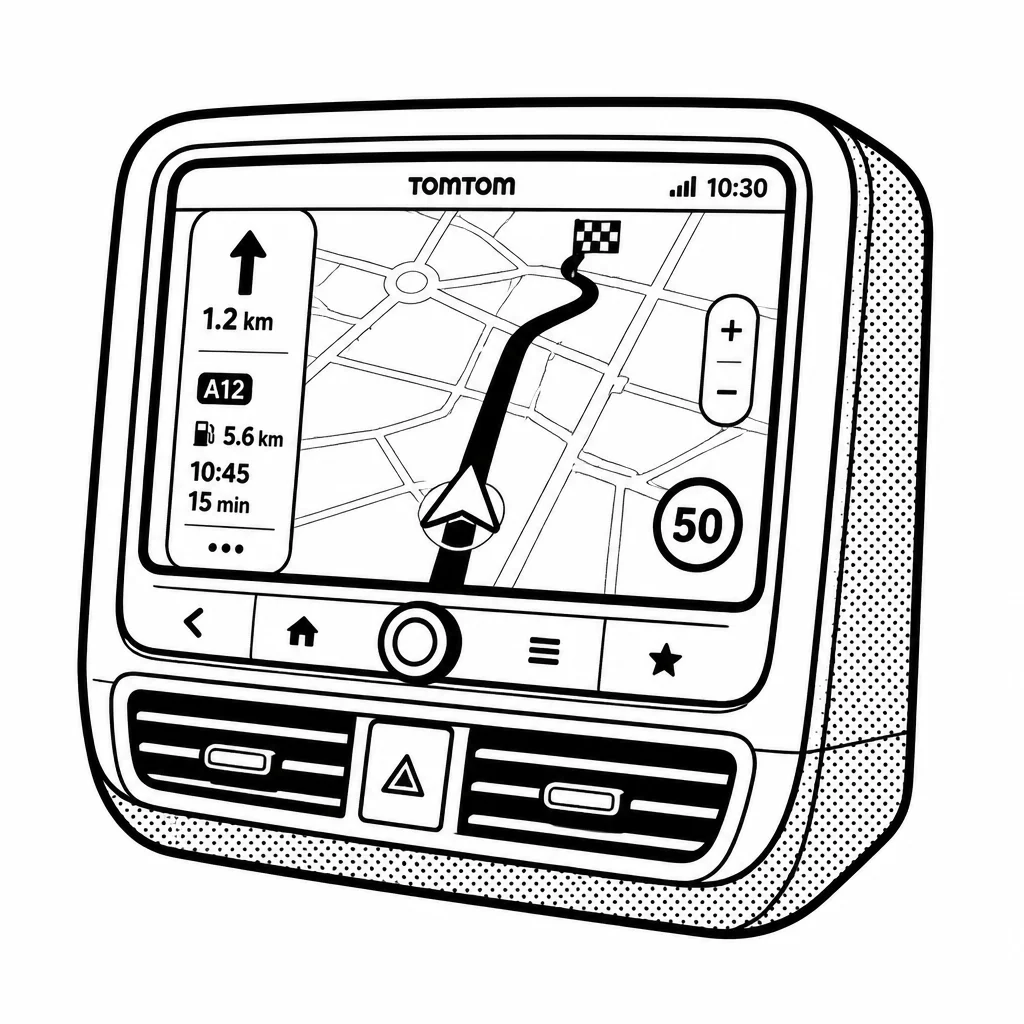
The business comes in a few flavors. It licenses its maps, traffic information, and navigation software to automakers, who bake it into the screens of new cars — that's the company's biggest and most important revenue stream. It also sells location data and software tools to enterprise customers, from logistics firms routing delivery trucks to governments and tech companies needing accurate maps. And there's a smaller consumer business of navigation apps and sports watches, a leftover of its famous early days selling standalone GPS devices. Why would a carmaker pay TomTom instead of building maps itself? Making a good map is brutally hard and endlessly expensive. Roads change, lanes shift, speed limits move, and traffic patterns flip by the hour. TomTom gathers this data from car sensors, government records, and its own fleet of map-making vehicles, then cleans it up. The alternative is spending years and fortunes building that machine in-house — so most automakers would rather license it.
The danger is real, though. Free map apps on phones gutted its consumer gadget business years ago, and big tech players like Google and Apple loom over the mapping world. TomTom's bet is that carmakers want an independent map supplier they can control and customize, rather than handing their dashboards to a rival tech giant. It has also pushed into advanced driver-assistance and self-driving mapping, where precise lane-level data matters. The company is profitable and generates cash, and it spends that money on developing its mapping tech and paying down debt rather than splashing out on acquisitions. It's a niche player in a giant market, betting that being the neutral mapmaker for the car industry is a durable place to stand.
Saved answer · last researched 14 Nov 2026