Understand any stock in simple English
Enter a ticker to learn what the company does and how it makes money.
PT Timah Tbk
PT Timah mines tin ore, smelts it into metal, and sells it to factories and industries around the world.
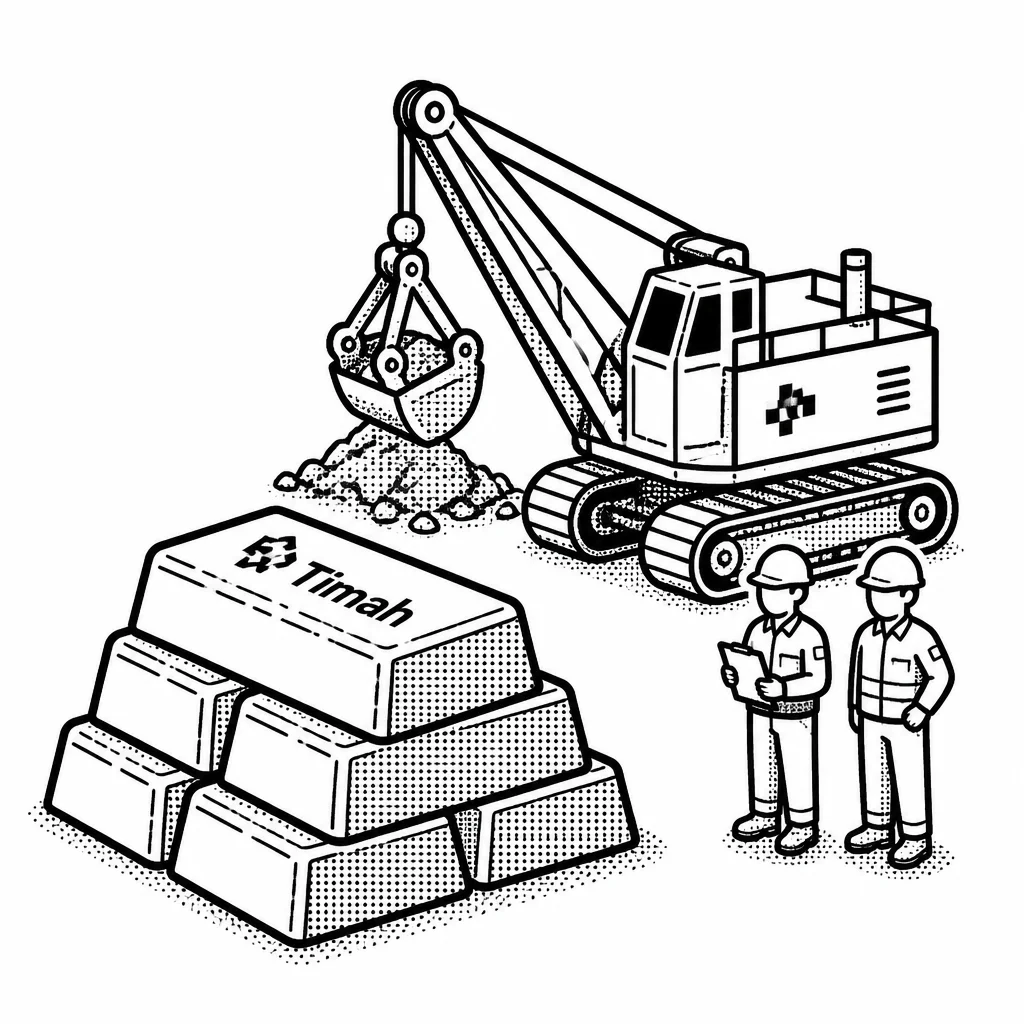
PT Timah is one of the world's largest tin producers, and its business starts underground. The company digs tin ore out of the ground, mostly from mines on and around the Indonesian islands of Bangka and Belitung, then smelts that ore into shiny tin metal. Tin is a humble metal, but it is everywhere: it is used in solder that holds electronics together, in tin plating for food cans, and in chemicals and specialty alloys. Factories that make circuit boards, cars, and packaged food need a steady supply of it, and that is what PT Timah sells them, both in Indonesia and abroad.
The company is majority-owned by the Indonesian government, and its shares trade on the Indonesia Stock Exchange. Mining tin is a tough, cyclical business. The price of tin swings with global demand, so when electronics makers are busy, PT Timah earns good money, and when demand cools, profits shrink. Its costs also depend on how hard it is to reach the ore, since its mines are increasingly deep and old. That combination means the company's results can move sharply from year to year, which is normal for a commodity miner. Tin is also a metal with a reputation problem. Much of the world's tin comes from small, informal mines, and there are long-standing concerns about illegal mining, environmental damage, and unsafe working conditions in the regions where tin is found. PT Timah has faced scrutiny over these issues, and it has worked to certify its tin as responsibly sourced so that big electronics and food companies can buy it without worry. That certification matters, because buyers like Apple and other electronics firms increasingly demand proof that the metal in their products was mined cleanly.
Two big challenges frame the company's future. First, it is competing with lower-cost producers from countries like China, Myanmar, and parts of Africa, so it cannot simply set its own price. Second, the easy-to-reach tin near the surface is largely gone, so PT Timah must go deeper and spend more to keep production up. The company also owns downstream operations, including tin chemical and solder plants, which let it sell more processed products instead of just raw metal. How well it manages costs, keeps its environmental record clean, and adapts to shifting tin prices will decide whether this state-owned miner stays a steady supplier to the world's factories.
Saved answer · last researched 12 Nov 2026