Understand any stock in simple English
Enter a ticker to learn what the company does and how it makes money.
Tidlor Holdings Public Company Limited
Tidlor makes loans secured by vehicle registration books and sells insurance to everyday Thai consumers and small businesses who often can't get credit from big banks.
Tidlor is a Thai lender that helps people whom regular banks tend to skip. Its core product is a vehicle title loan: a customer hands over the registration book for their car or motorcycle, keeps driving the vehicle, and gets cash against it. That single idea is the engine of the business, and it reaches customers — street vendors, small shop owners, gig workers — who need quick money but don't have the payslips or credit history that a big bank demands.
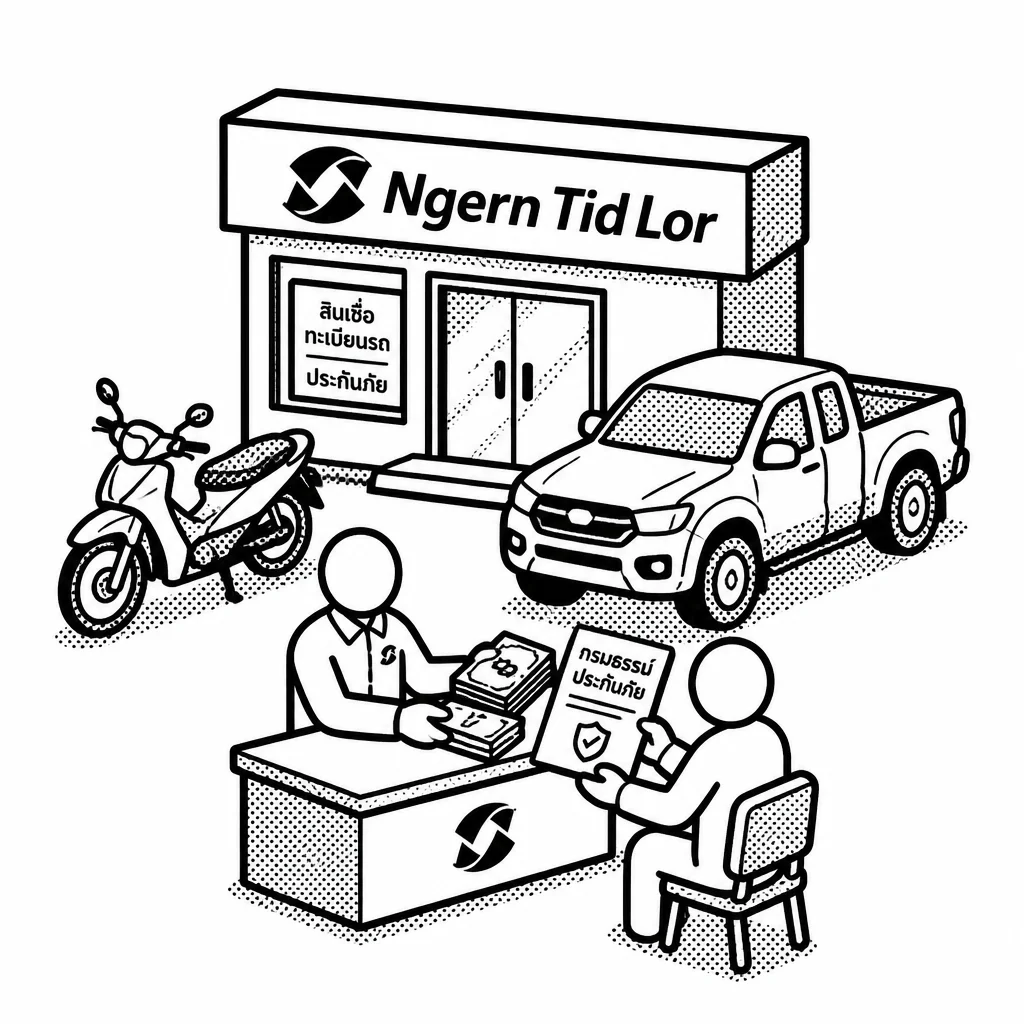
On top of lending, Tidlor sells insurance. Its branches double as a storefront for motor, life, and personal accident policies, and it earns commission acting as a broker. This matters because it turns a single branch visit into more than one way to make money, and it gives customers something they need anyway. The loans and the insurance feed each other: the branch network is the shared backbone, and the insurance business adds profit without adding much cost. The company built its edge on reach and speed. It runs one of the largest branch networks of any non-bank lender in Thailand, so a loan can be approved and cash handed over the same day. That convenience is exactly what big banks, with their paperwork and slow approvals, struggle to match. It also leans on data and its own credit models to price risk, because these borrowers have thin credit files. The flip side is real: when the economy slows and borrowers' incomes dry up, defaults rise, and regulators watch consumer lending closely. Access to funding is another pressure point, since a lender's cost of money determines its margins.
Tidlor was founded inside the Thai conglomerate Thoresen Thai Agencies, which still backs it, and the brand was sharpened to lean into its branch-driven, door-to-door style of reaching customers. It listed on the Stock Exchange of Thailand and has grown into a large player by focusing on a segment the big banks find too small or too expensive to serve well. The whole business rests on a simple trade: charge borrowers more than it costs to fund the loans and run the branches, and keep losses low enough that the spread survives.
Saved answer · last researched 12 Nov 2026