Understand any stock in simple English
Enter a ticker to learn what the company does and how it makes money.
Teleperformance SE
Teleperformance runs call centers and customer-service operations for big companies around the world.
Teleperformance is one of the world's largest customer-service outsourcers. When you call a bank about a lost card, message an airline about a delayed flight, or get help from a tech company's support chat, there's a decent chance the person on the other end works for Teleperformance — even if their badge or script says otherwise. The company operates huge call centers and remote-work networks across dozens of countries, handling phone calls, emails, chat, and back-office tasks on behalf of its clients.
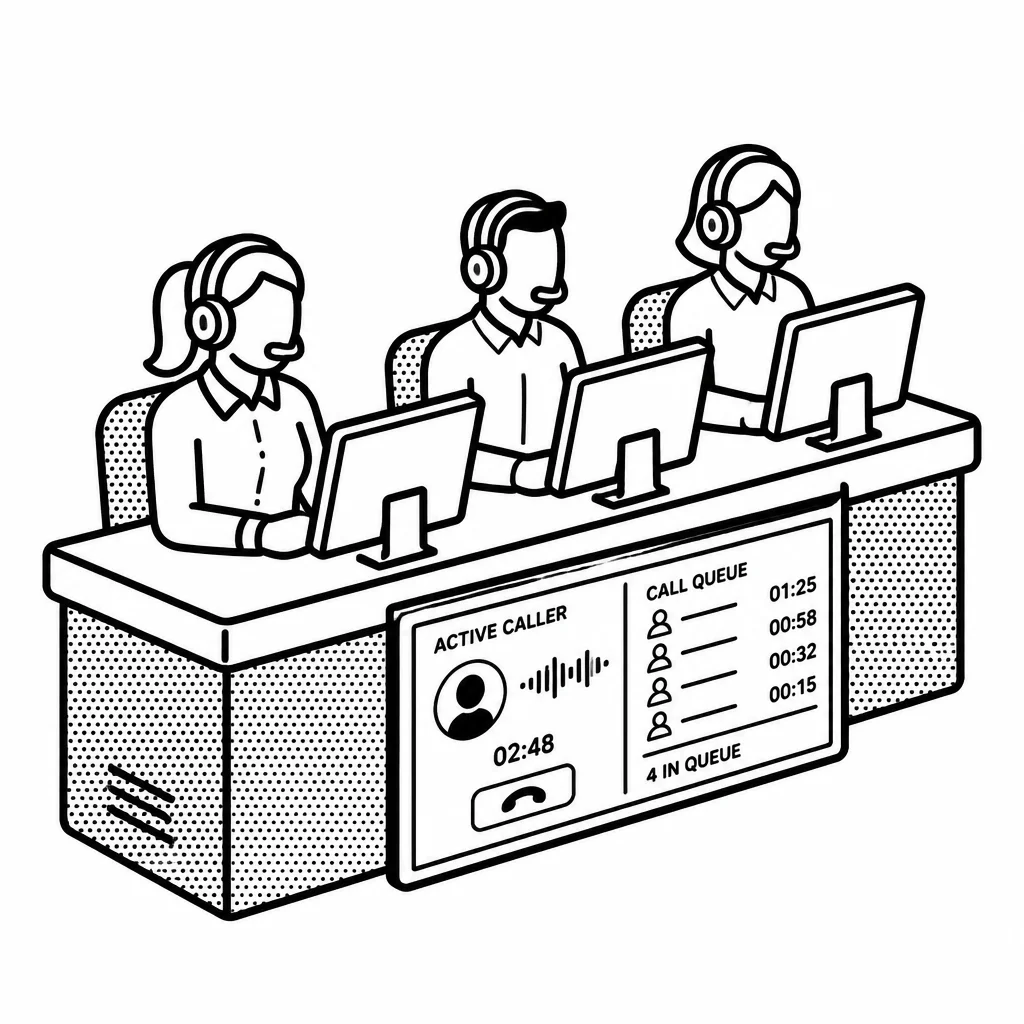
The business model is simple to grasp. Big companies don't want the headache of hiring, training, and managing thousands of support agents in every country they sell in. So they hand that work to Teleperformance, which runs the operations and charges by the hour, by the contact, or per seat. Teleperformance's edge comes from scale: it can staff up fast, cover many languages and time zones, and squeeze costs by placing centers where labor is cheaper. It also sells higher-end services like tech support, debt collection, and AI-assisted customer analytics, and it has pushed into specialized areas such as content moderation for social media platforms. That content-moderation work is where the story gets messier. Teleperformance has faced lawsuits, regulatory scrutiny, and worker complaints over the psychological toll on moderators who review disturbing material, and it has been criticized for labor practices in some markets. The company has also leaned hard into automation and AI, betting that tools can handle routine queries while humans tackle complex ones. Its biggest threat is that same technology: if AI chatbots get good enough, clients may need fewer human agents, which cuts both ways for an outsourcer that sells human labor.
Teleperformance is headquartered in France and listed in Paris, and it has grown largely by acquisition — buying rivals and specialist firms to expand its footprint and capabilities. It generates billions of euros in annual revenue and employs hundreds of thousands of people, making it one of France's largest private employers. The company returns cash to shareholders through dividends and share buybacks, and it has used debt to fund deals, so its balance sheet and acquisition discipline matter to investors. In short, it's a scale business that profits from handling the unglamorous human side of customer service — and now has to prove it can survive the machines.
Saved answer · last researched 10 Nov 2026
BIG PICTURE
More than a third of Teleperformance's clients now use at least one of its AI tools
- 35% Clients using at least one TP.ai solution
- 65% Clients not yet using any TP.ai solution
At the end of September, more than 35% of Teleperformance's clients were using at least one TP.ai solution, and the company counted about 1,400 AI projects, more than double a year earlier. The call-center giant still earns most of its money answering calls and messages for banks, insurers and governments, so getting software into those accounts is how it hopes to stay relevant as automation cuts into old work. Source: ABC Bourse, data from 2026
Timeline
A Cold-Calling Business Is Born
In 1978, Daniel Julien started a small company in Paris that mostly made phone calls on behalf of French clients, the kind of telemarketing that fills your dinner hour. The idea was simple: many companies needed to talk to customers, and it was cheaper to let someone else make those calls. That one-country operation was the seed of everything that follows.
France's Leader Goes Public
By 1986 the little phone-call company had become the biggest in France and listed on the Paris stock exchange, and it opened its first subsidiaries in Belgium and Italy. The message was plain: it had won at home, and now it wanted to see if the same trick worked abroad.
First Stop: America
In 1993 it opened a contact center in the United States. Winning there meant proving it could handle customers in the world's biggest market, not just in French-speaking Europe.
A Jump Into Latin America
A few years later it bought companies in Brazil and Argentina, its first move into Latin America. This was the point where the company stopped being a European player and started acting like a global one.
Number One in the World
By 2007, a mix of growth and buying rivals had made it the world's biggest outsourced customer experience company. In plain terms, it now ran customer service and call centers for other companies on a scale nobody else matched.
Buying LanguageLine
In 2016 the company paid about $1.5 billion for LanguageLine Solutions, the American leader in phone and video interpreting, and set up a new 'specialized services' group covering interpreting, visa processing and debt collection. The logic was to climb out of low-margin call work and into fancier, higher-value jobs. It was a bet that the future lay in more specialized work, not just more phones.
Intelenet, India and Content Moderation
Two years later it bought Intelenet, a big outsourcing player, which made India its top revenue country and pushed it into a new and uncomfortable business: moderating web content. That meant paying people to screen the worst stuff on the internet, and it would come back to haunt the company later.
Into the CAC 40
In 2020 the company joined the CAC 40, the main Paris index, a sign it had become one of France's corporate heavyweights. Then Covid hit, and it moved more than a quarter-million employees to work from home to keep the phones and screens running.
The 2022 Share Price Plunge
In November 2022 the share price fell by more than a third in a single day after Time published a Colombian labor ministry investigation into union-rights violations, traumatic working conditions and low pay. The market was suddenly pricing in something the company had treated as a side issue: reputational and social risk around its offshore content-moderation work.
Buying Majorel
In 2023 it agreed to buy Majorel for about €3 billion, a deal that strengthened its reach in Europe and its high-value expertise. The catch was debt, and the deal closed in early 2024 with a bigger balance sheet to carry.
A Shorter Name: TP
In February 2025 the company shortened its name to TP, a fresh brand for a new era. Behind the rebrand was a harder question: could an old call-center giant remake itself around digital tools and AI?
Julien Steps Down
In March 2026, after 48 years, founder and CEO Daniel Julien stepped down to become Strategic Advisor, and Jorge Amar, an expert in AI-native customer operations, took over as Group CEO. Amar immediately launched a review of the portfolio, with possible sales and buys on the table.
The AI Bet
By late 2026 the company was betting its future on AI, with over 1,400 AI projects and more than a third of its clients using at least one of its AI tools. Revenue was falling as content moderation shrank, but the core business still grew about 2% and margins and cash flow held. The survival story now comes down to one thing: turning its Future Forward AI plan into real, profitable growth.