Understand any stock in simple English
Enter a ticker to learn what the company does and how it makes money.
Südzucker AG
Südzucker turns sugar beets and grains into sugar, animal feed, ethanol, and food ingredients, and sells the rest of its business through frozen pizza, starches, and fruit preparations.
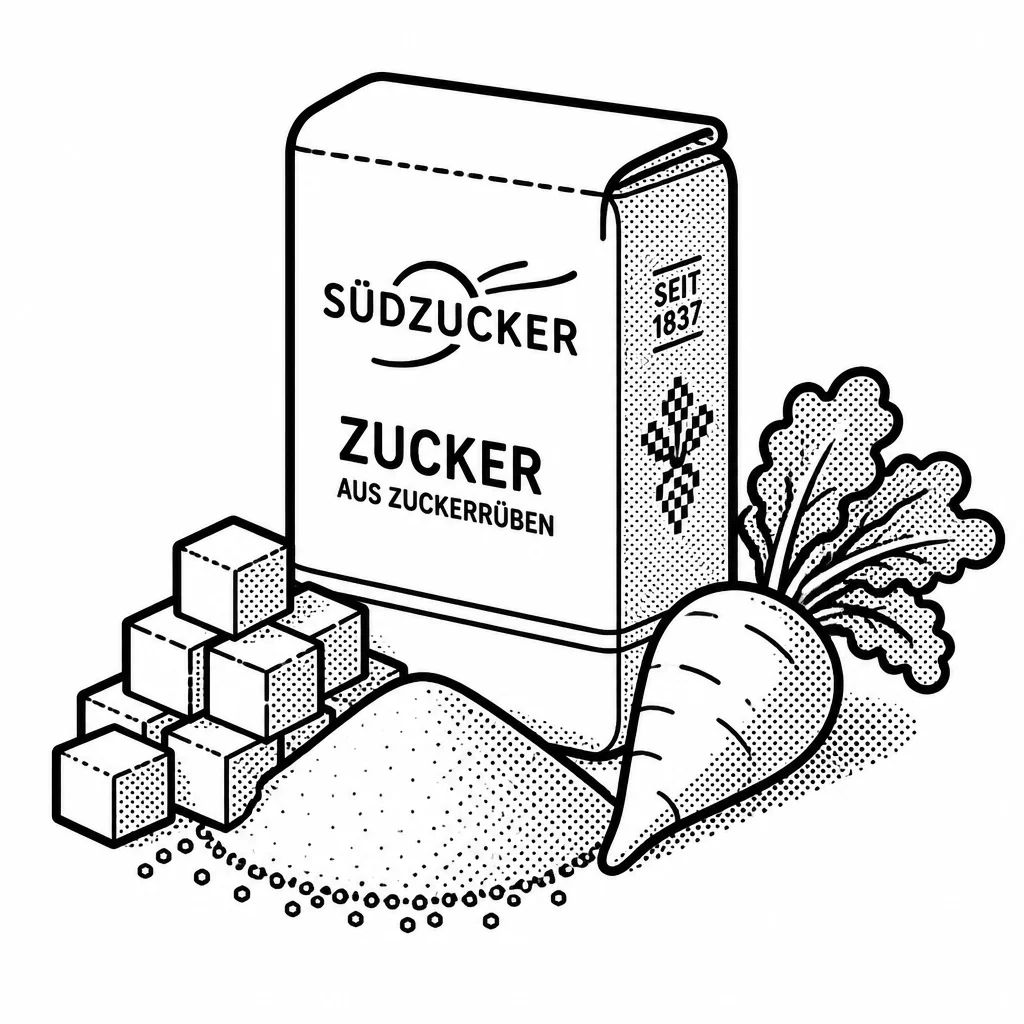
Südzucker is Europe's biggest sugar company, and sugar is still the heart of the business. Farmers deliver truckloads of sugar beets, the company turns them into the white stuff in your coffee, the syrup in your soda, and the sugar in your cake, and industrial food and drink makers buy most of it in bulk. Sugar is a commodity, which means the product is identical to a competitor's — the winner is whoever crushes beets most efficiently and buys natural gas and other costs most cheaply. Prices in Europe are still shaped by politics and quotas, so this is a business where regulators matter almost as much as weather.
The company's answer to boring commodity economics is diversification. Through its CropEnergies arm it turns grain into ethanol for blending into fuel, and through its starch division it makes ingredients that end up in paper, packaging, and food. It also runs a big frozen pizza business, mostly under brands like Wagner and Oetker, which sells to supermarkets and is far more profitable per euro than raw sugar. And its fruit preparations unit sells jams, toppings, and fruit fillings in giant tubs to yogurt makers and bakeries. Those frozen and ingredient businesses are the ballast: when sugar prices fall, they keep the lights on. What matters right now is the European sugar reform. For decades Brussels capped how much sugar each producer could make and sell at protected prices; those quotas were scrapped in 2017, which opened the door to more competition and more exports — good news for low-cost producers, bad news for anyone with weak margins. On top of that, the company has been squeezing costs and shedding plants. In 2024 it announced a plan to close several sugar factories across Germany, France, and Belgium and cut jobs. That is what you do when a commodity business can't grow the top line much: you get leaner, pay down debt, and hand the rest of the cash to shareholders. The money is also in the details — literally. Südzucker has long been a dividend payer, and the founding families behind the company have held on to a big stake for generations, which keeps the board focused on steady cash rather than flashy deals. It also owns a portfolio of non-sugar businesses that some investors treat as hidden value: the company has talked openly about spinning off or listing parts of the group, and its CropEnergies unit was partly sold to shareholders in 2023, giving investors a pure-play ethanol option. Translation: management knows the empire is a bit of a patchwork, and it is slowly trying to make each piece count.
Farming is the word that describes the risk. Sugar beets are grown, not manufactured, so a bad harvest or a heatwave pushes costs up and prices around. Add volatile energy costs, sugar imports from Ukraine and Brazil, and European regulators with a taste for health policy, and you have a business that will not get rich overnight. But it will keep turning beets into cash, keep feeding Europe's food factories, and keep paying the families who founded it.
Saved answer · last researched 12 Nov 2026