Understand any stock in simple English
Enter a ticker to learn what the company does and how it makes money.
Symbotic Inc.
Symbotic builds robots and software that automate the big warehouses where stores and delivery companies sort and move goods.
Symbotic builds the robots and software that run the back rooms of big warehouses. Its main customer is Walmart, which uses Symbotic's systems to sort and move goods at massive scale. If you have ever wondered how a store gets thousands of different products without a small army of people pushing carts around a giant building, Symbotic is one answer: it replaces much of that walking and lifting with machines.
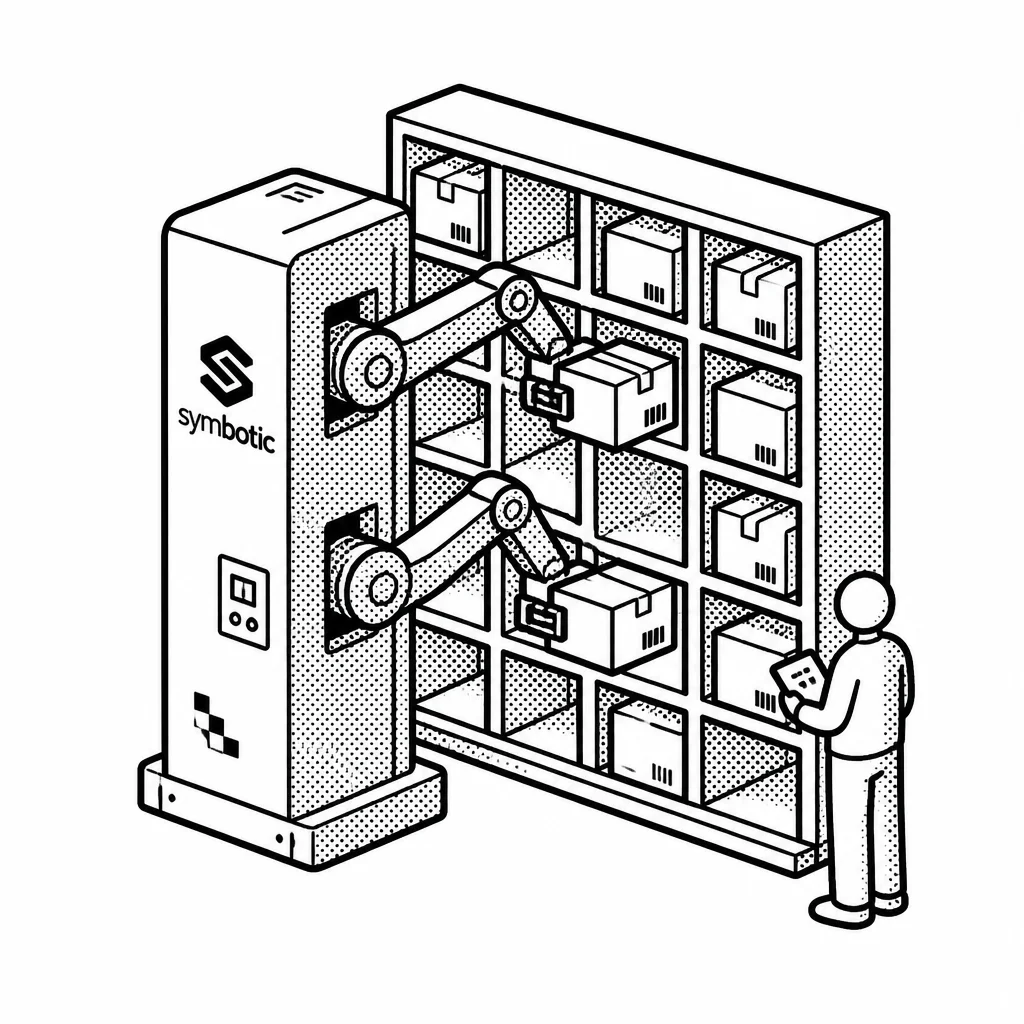
Here is the basic problem it solves. A big warehouse holds thousands of different items, each in its own case. Workers used to walk miles a day to find a case, carry it to a truck, and repeat. Symbotic's system changes that by putting cases into tall stacks that robots can reach. Robotic vehicles glide along the top of those stacks, grab the case they need, and hand it off to other robots that bring it to the loading dock. Symbotic sells the whole system — robots, software, and the design of the warehouse — and also earns money servicing and upgrading it over time. The business has been growing fast. Revenue was about $1.8 billion in its fiscal 2024 year, up sharply from the year before, though the company has also dealt with losses and the messy work of installing complicated systems on tight deadlines. It has expanded beyond Walmart, adding customers such as Target and working with Amazon-owned companies and others in grocery and retail. That matters because relying on one giant customer is risky: if that customer slows down its spending, Symbotic feels it immediately.
The big question is whether warehouse automation becomes the default for large retailers or stays a niche for the very biggest. Symbotic's pitch is that its system saves space, labor, and time, and that it can pay for itself. Competition comes from older conveyor systems and from other robotics firms, but Symbotic's edge is that it sells a complete package rather than pieces. The company is still young and not consistently profitable, so its future depends on installing systems reliably and turning those installations into steady service revenue.
Saved answer · last researched 14 Nov 2026