Understand any stock in simple English
Enter a ticker to learn what the company does and how it makes money.
Sterling and Wilson Renewable Energy Limited
Sterling and Wilson builds large solar power plants and then keeps them running for the companies that own them.
Sterling and Wilson is a builder-for-hire for the solar boom. When a power company, an oil giant, or a government wants a giant field of solar panels but has no idea how to actually put one together, Sterling and Wilson is one of the firms it calls. The company designs the plant, buys the panels and inverters and cables, hires the construction crews, and hands over a working power station — a package the industry calls EPC, short for engineering, procurement and construction. It also offers to run the finished plant afterward, cleaning panels, fixing broken parts, and squeezing out every megawatt it can, under long-term contracts called O&M.
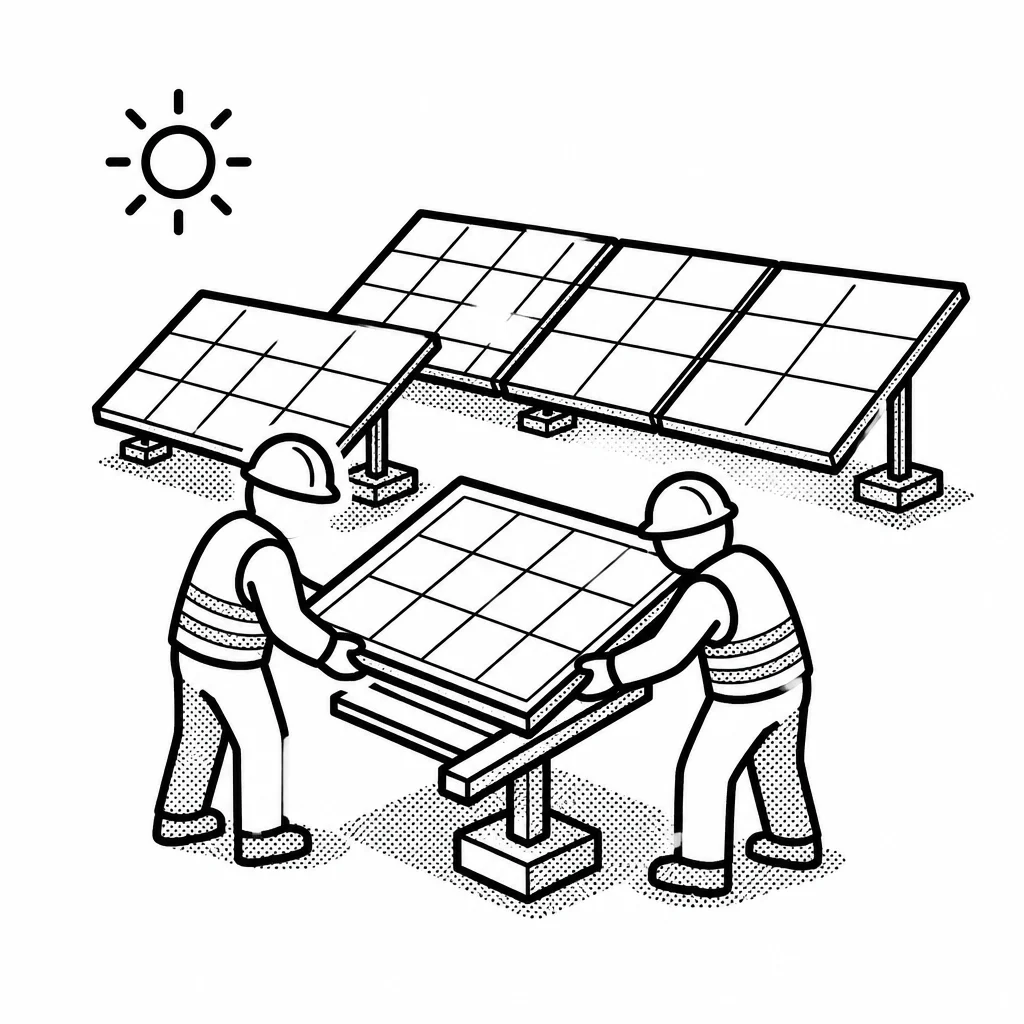
The customers are the deep-pocketed owners of energy assets — utilities, sovereign funds, and oil majors trying to go green — and many of them are outside India. Sterling and Wilson has built projects across the Middle East, Africa, Europe, and the Americas, and it has moved into floating solar, where panels sit on lakes and reservoirs instead of taking up land, plus hybrid plants that pair solar with batteries or wind. The reason a customer picks it over a rival is straightforward: these are enormous construction jobs with brutal deadlines, and the company's long track record of finishing big solar farms is the sales pitch. The business is simple but thin-margined. Sterling and Wilson earns a slice on each project it builds, and the O&M side brings steadier recurring fees from plants it already delivered. The trouble is that EPC revenue is only as good as the order book, and construction firms like this are at the mercy of panel prices, freight costs, currency swings, and contracts signed months before the actual build. In 2024 a big chunk of the company — around a fifth of its equity — was sold by its parent Reliance Industries to a group of investors, a change in ownership worth watching because it shifts who controls the company's direction.
The story behind the firm is very Indian and very family-driven. Sterling and Wilson grew out of a electrical contracting business started in Mumbai in the 1920s, later run by the Khurshed Daruvala family, and it became one of India's best-known solar builders before being folded into the Shapoorji Pallonji empire — the construction giant controlled by the Mistry family, which also owns a big stake in Tata Sons. After years of rapid global expansion, the company hit a rough patch with losses and heavy debt, and the recent ownership reshuffle is partly about steadying the ship and funding the next wave of projects. For a 15-year-old, the picture is this: it's the contractor that turns a patch of desert or a reservoir into a working power plant, and it gets paid for the muscle and know-how, not for the electricity itself.
Saved answer · last researched 14 Nov 2026