Understand any stock in simple English
Enter a ticker to learn what the company does and how it makes money.
Stora Enso Oyj
Stora Enso makes renewable packaging materials, wood-based building products, biomaterials, and paper from trees.
Stora Enso is one of the world's oldest companies—but today it is a forest-products giant that turns trees into the stuff of modern life. Its biggest business is packaging: it makes the cardboard, paperboard, and barrier materials that food companies, e-commerce sellers, and consumer brands use to box and protect their products. It also makes wood products like cross-laminated timber for construction, sells paper for printing and publishing, and produces biomaterials such as dissolving pulp that goes into textiles.
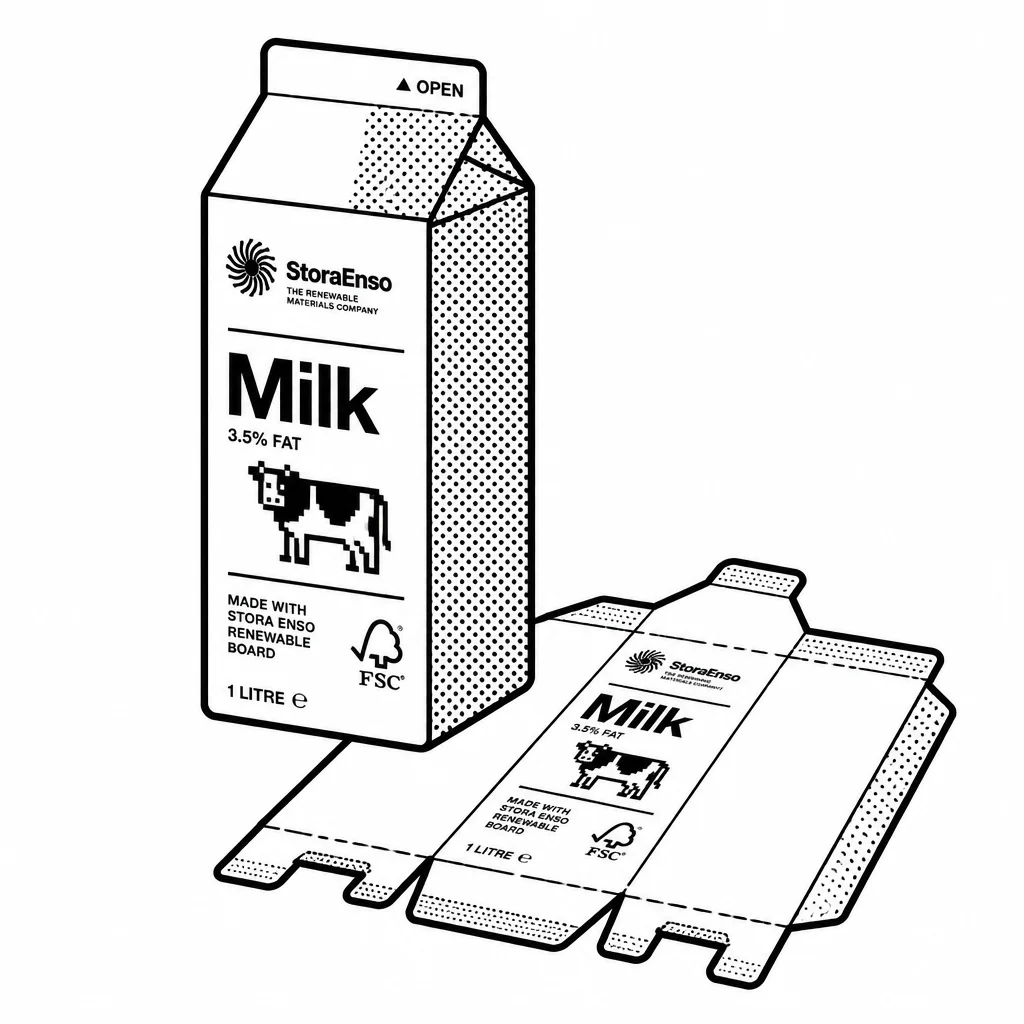
The core logic is that a tree is a remarkably versatile raw material. Stora Enso owns or manages forests and buys wood, then processes it in mills into fibers, boards, and chemicals. Customers pay for materials that are recyclable and come from a renewable source, which makes them attractive as brands and regulators push away from plastic. That is the selling point: not just paper, but a fossil-free alternative for packaging and building. It is a cyclical business, tied closely to the health of the broader economy. When shoppers buy more, packaging demand rises; when construction slows, timber sales fall. The company has been reshaping itself for years—selling off declining paper assets and investing in new packaging lines and wood construction—while pushing hard into innovation such as tree-based alternatives to plastic bottles and battery materials made from wood fiber.
Headquartered in Helsinki, Stora Enso is a genuinely global operation, with mills and customers across Europe, Asia, and the Americas. It pays a dividend and has spent heavily on growth projects, though its fortunes remain closely tied to wood prices, energy costs, and the mood of the industries it supplies.
Saved answer · last researched 14 Nov 2026