Understand any stock in simple English
Enter a ticker to learn what the company does and how it makes money.
Snam S.p.A.
Snam owns and runs the natural gas pipelines, storage sites, and import terminals that keep gas flowing across Italy and beyond, and it charges the companies that trade and ship gas for using that network.
Snam is the company that owns the plumbing of Italy's gas system. When a ship loaded with liquefied natural gas arrives at an Italian port, or when gas flows in from pipelines running under the Alps or across the Adriatic, Snam's infrastructure is what moves it, stores it, and turns it back into a usable fuel. It doesn't buy or sell the gas itself. It charges the companies that do — utilities, traders, big industrial users — for the right to push their gas through its pipes, park it in its underground storage caverns, or chill it into liquid form and warm it back up at a regasification terminal.
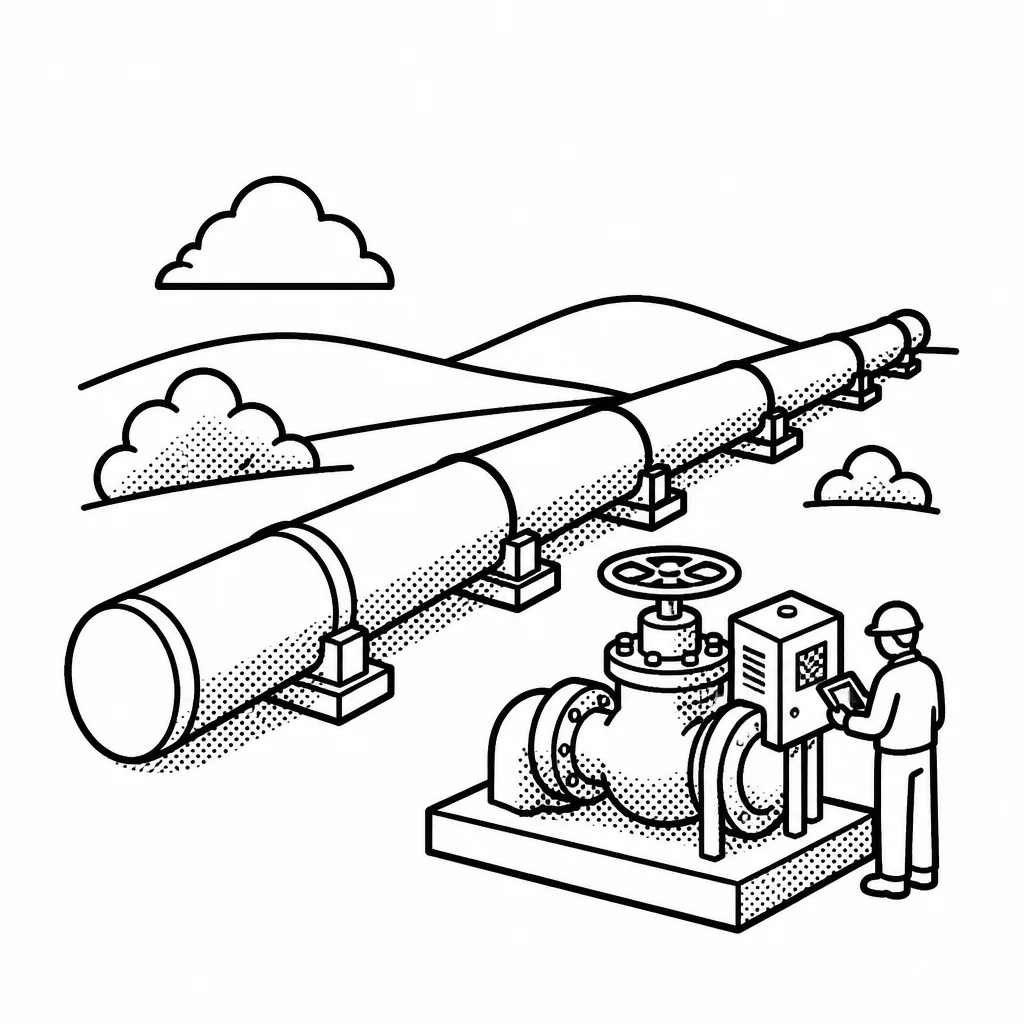
That business is about as steady as it gets. Snam earns mostly regulated fees set by Italian authorities, the kind of arrangement where the government decides how much the network operator is allowed to charge and roughly what return it can pocket. The upside is predictability: demand rises and falls with winters and economies, but the toll booth keeps collecting. The trade-off is that Snam's growth depends heavily on regulators approving spending on new pipes and on the company finding sensible ways to spend it — a model that rewards discipline more than creativity. The company has been reaching beyond Italy. It owns stakes in gas transport and storage businesses in Austria, Greece, the UK, and France, and it has moved into liquefied natural gas terminals and energy-transition projects, including hydrogen-ready infrastructure and carbon capture. That push matters because Europe is trying to wean itself off Russian pipeline gas and shift toward cleaner fuels, which reshapes both the physical map and the politics of gas. Snam's pipes are still essential today, but the company is betting it can make itself just as essential in whatever the next version of the energy system looks like.
Snam's main weakness is that its fate is tied to natural gas, a fuel many governments want to use less of over time. It also carries real debt, which it took on to fund acquisitions and capital spending — and it pays investors a steady dividend while doing so. In short, this is the company that owns the gas grid rather than the gas, collecting steady tolls on a network that Europe still needs but is quietly trying to redesign.
Saved answer · last researched 12 Nov 2026