Understand any stock in simple English
Enter a ticker to learn what the company does and how it makes money.
The SPAR Group Ltd
SPAR is a wholesaler that supplies groceries and goods to independently owned SPAR grocery stores and other retail outlets, mostly in South Africa.
SPAR is a grocery wholesaler and distributor. It does not run most of the stores that carry its name. Instead, it sells food and everyday goods to independent shop owners who run SPAR-branded supermarkets, and those owners sell to the public.
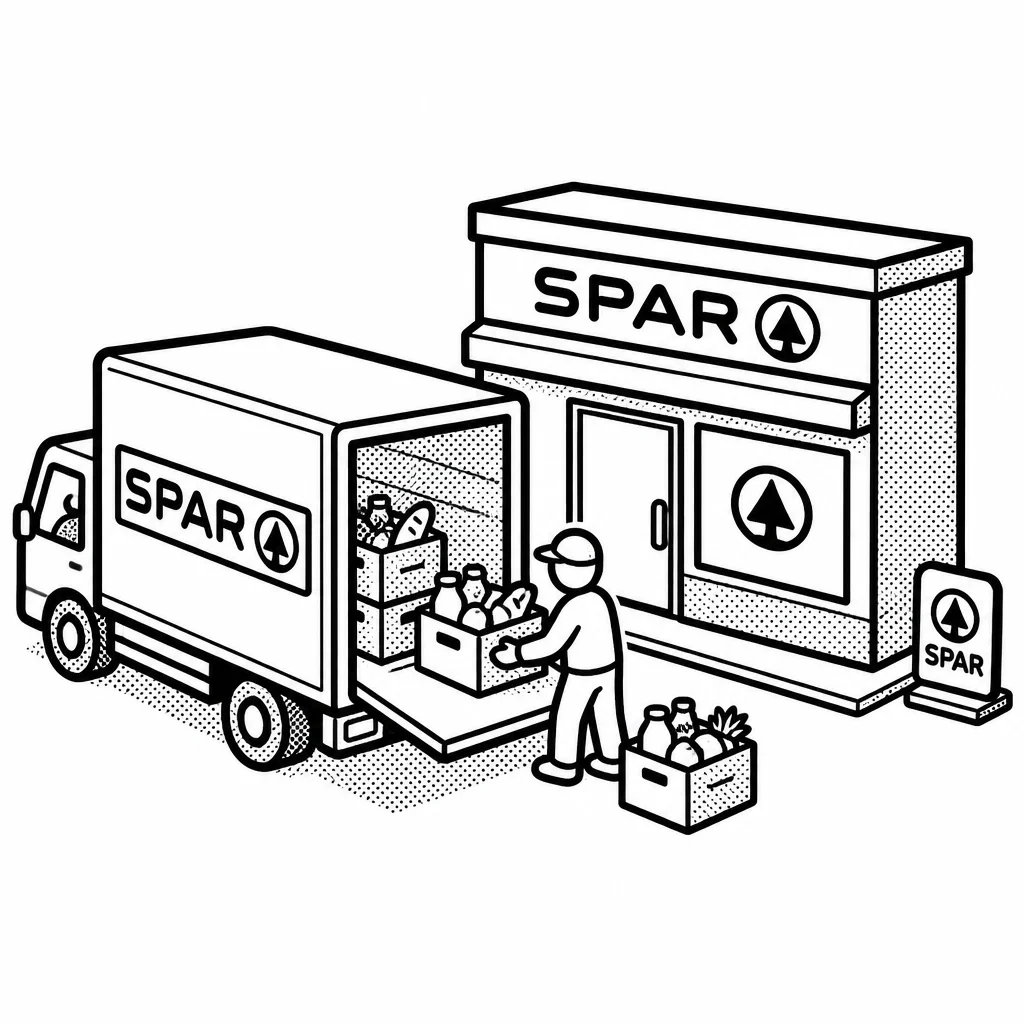
That setup matters. The people who run the stores are usually independent entrepreneurs, not salaried employees of a giant chain. SPAR's job is to buy in bulk, run warehouses, and truck goods to those stores. The store owners get the buying power and the famous green-and-white brand without having to build their own supply network. SPAR earns its money from the margin between what it pays suppliers and what it charges the stores — a thin slice on a very large pile of groceries. The business has grown well beyond South Africa. SPAR operates through a group of regional wholesalers, and it has expanded into Ireland and the UK through its BWG Foods business, plus Switzerland and other European markets. That spread helps, because grocery demand is steady and dull in a good way — people eat every day, in booms and busts. The risks are just as ordinary: thin margins, price wars with discounters like Shoprite and Pick n Pay, and the constant need to keep warehouses and trucks efficient while keeping independent store owners happy.
SPAR's real strength is its network. Thousands of small stores, each owned by someone with skin in the game, feed a shared machine of buying and logistics. The company has also built a sizeable private-label business, selling SPAR-branded products that tend to carry better margins than big-name brands. It pays dividends to shareholders from the cash this steady machine throws off. It is not a glamorous business. It is the plumbing behind a familiar sign on the corner, and the plumbing is what keeps the shelves full.
Saved answer · last researched 12 Nov 2026