Understand any stock in simple English
Enter a ticker to learn what the company does and how it makes money.
SPDR Portfolio Developed World ex-US ETF
It is a low-cost exchange-traded fund that holds a broad basket of stocks from developed countries outside the United States, giving investors an easy way to diversify internationally.
This is a fund, not a company that makes or sells things. It is a basket of hundreds of stocks from developed markets around the world — Japan, the United Kingdom, Canada, France, Germany, Australia, Switzerland and others — all wrapped into a single investment that trades on an exchange like a stock. When you buy a share, you are effectively buying a tiny slice of large and mid-sized companies across those countries, from banks and drugmakers to car manufacturers and technology firms.
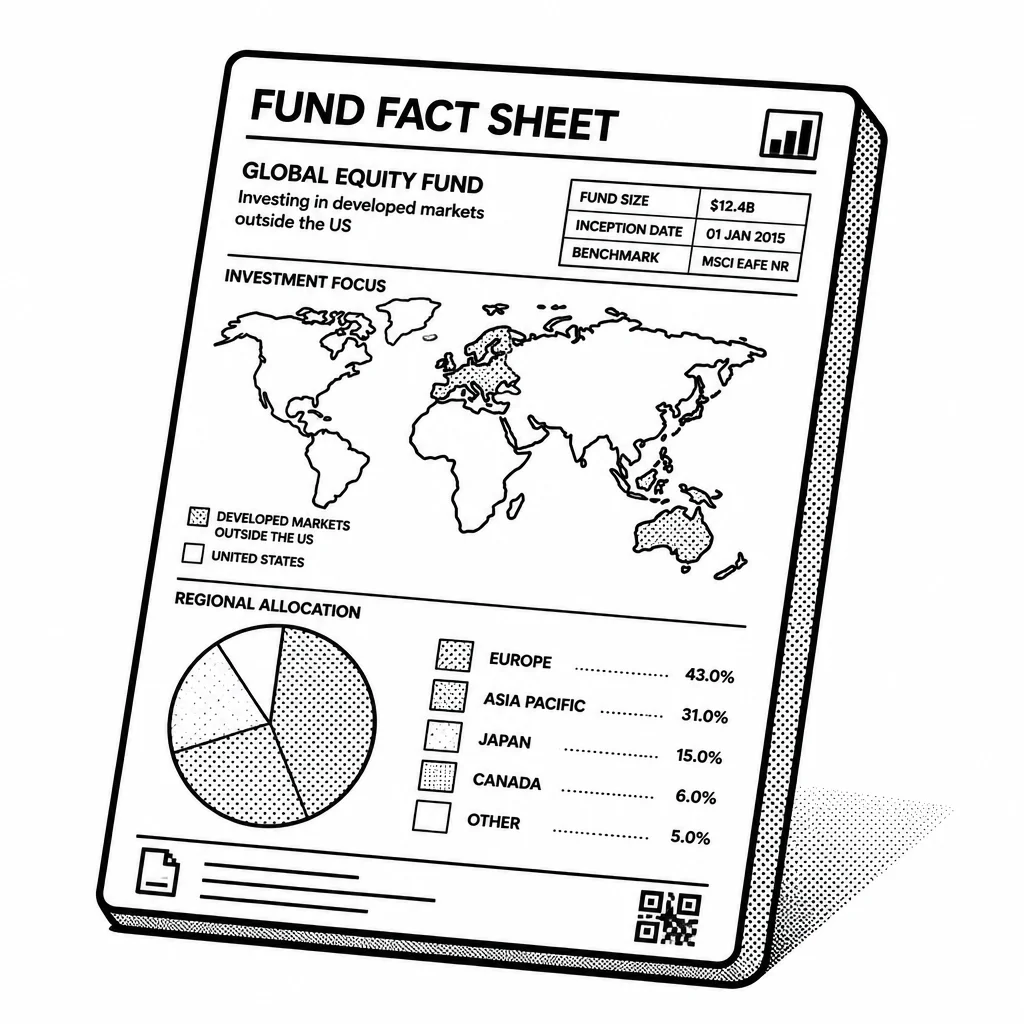
People use it when they want their money spread beyond the U.S. stock market without picking individual foreign companies. Instead of opening a brokerage account in Tokyo or London, an investor buys this one fund and gets broad exposure in a single click. It is a plain, low-cost building block — the sort of thing a financial advisor might use to add an international piece to a portfolio. The fund is sponsored by State Street, the big Boston-based financial firm that also runs the well-known SPDR family of funds. State Street charges a small annual fee, a sliver of the money invested, and that fee is the main way the fund's sponsor earns money from it. The selling point is cost: this is built to be one of the cheaper ways to own developed-world stocks outside America, which matters because over decades small fee differences quietly compound.
One thing to understand is what "developed world ex-US" actually leaves out. It skips the United States entirely, and it also leaves out fast-growing emerging markets like China and India. So it is a middle ground for someone who already owns plenty of U.S. stocks and wants to balance that with steadier, richer economies abroad. The fund's value rises and falls with those foreign stock markets and with currency swings, since many of the holdings earn money in euros, yen, or pounds rather than dollars.
Saved answer · last researched 16 Nov 2026