Understand any stock in simple English
Enter a ticker to learn what the company does and how it makes money.
Supalai Public Company Limited
Supalai builds and sells houses, townhouses, condominiums, and office buildings in Thailand.
Supalai is one of Thailand's biggest homebuilders. It buys land, builds housing estates and condominium towers, and sells the finished homes to ordinary Thai families and to businesses that need office space. If you walk through a new gated community on the edge of Bangkok or a freshly finished condo block near a train line, there is a decent chance Supalai built it.
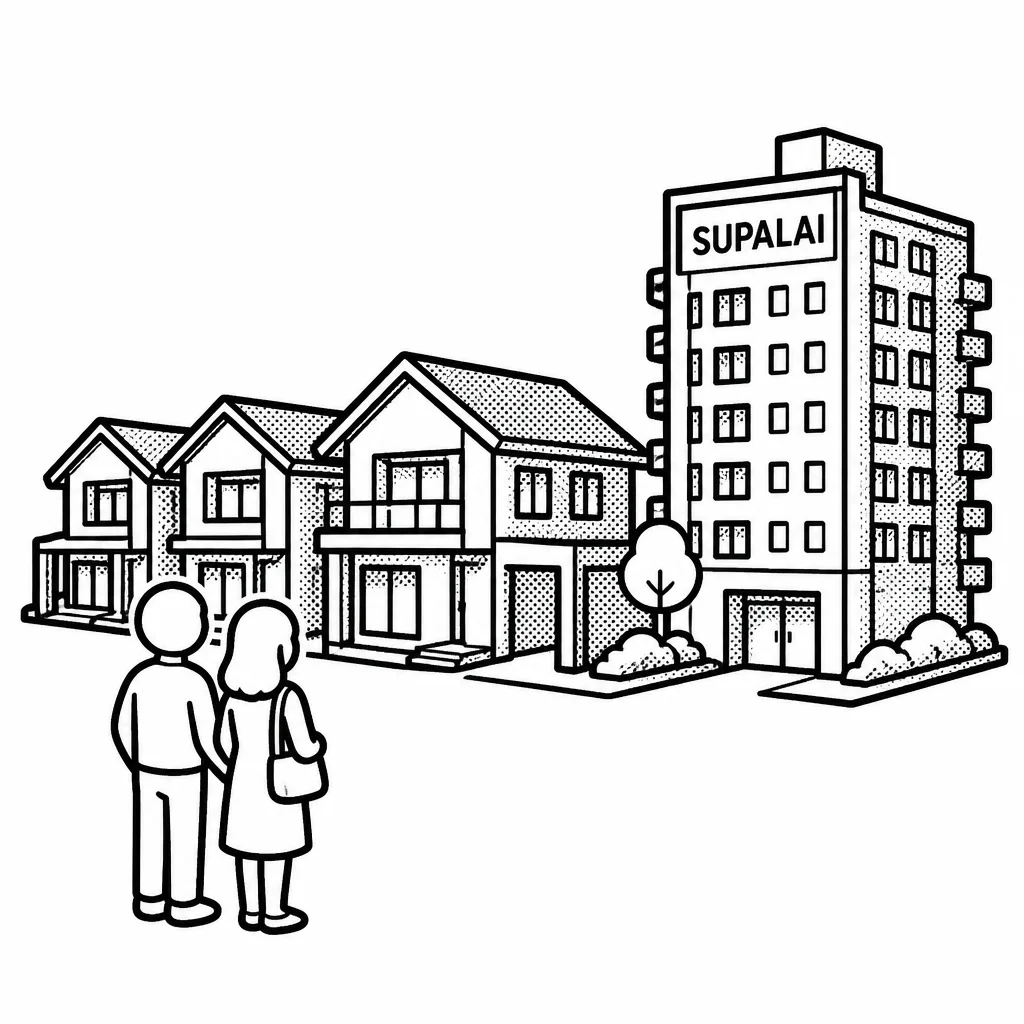
The business runs on a simple cycle: buy land, design and construct, then sell. Supalai earns most of its money from selling completed homes, with a slice coming from office buildings it develops and rents out. Homebuyers pay with mortgages from Thai banks, usually over decades. That makes the company deeply sensitive to interest rates and to how confident ordinary people feel about their jobs and incomes. When rates are low and the economy is humming, the queues at the sales office get longer; when banks tighten lending, they shrink. Its main rivals are other large Thai developers such as Sansiri, AP Thailand, and Land and Houses. Supalai's edge is value: it targets buyers who want a solid home at a reasonable price rather than luxury branding, and it builds at scale so it can keep costs down. The trade-off is that this is a crowded, low-margin business where a developer's reputation for finishing projects on time matters enormously, since buyers are handing over years of their future income.
Property development is a lumpy, cash-hungry business. Land must be bought years before it generates a single sale, so results swing with how many projects hand over in a given year. Supalai has historically been one of the more conservatively financed developers, which matters in a country where household debt is high and the property market moves in long slow cycles. The big risks are simple: a Thai housing slowdown, a credit crunch that chokes off buyers' mortgages, or too much unsold inventory sitting on its books.
Saved answer · last researched 12 Nov 2026