Understand any stock in simple English
Enter a ticker to learn what the company does and how it makes money.
Senti Biosciences, Inc.
Senti Biosciences designs cell therapies with built-in genetic "circuits" that let the cells sense and respond to disease, mainly to treat cancer.
Senti Biosciences is a biotech company that engineers living cells into smarter medicines. Its big idea is the "gene circuit": extra genetic instructions programmed into a cell so it can sense its surroundings and respond — killing a cancer cell, for example, but holding back when it meets healthy tissue. That is a step beyond the first generation of cell therapies, which are powerful but blunt.
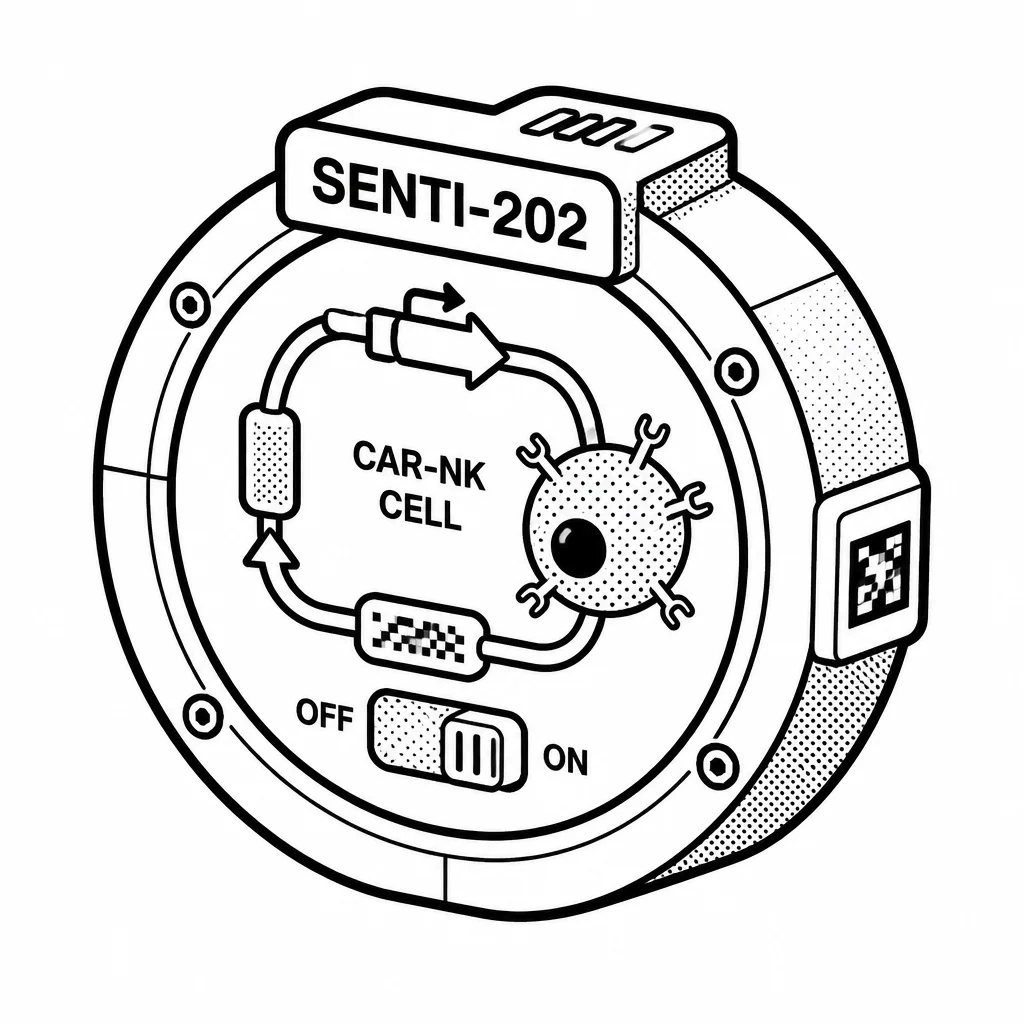
Its lead work is in "off-the-shelf" cell therapies for cancer. Instead of taking a patient's own cells, modifying them, and putting them back — a slow, expensive, one-patient-at-a-time process — Senti uses donor cells engineered so a patient's immune system won't reject them. Think of switching from a tailor-made suit to one made ready in advance. It also builds gene circuits for other serious diseases, and its programs are still in early testing in humans. The commercial bet is a big one with a long fuse. Cell therapy is expensive to develop, clinical trials take years, and regulators must be convinced the circuits work as intended and that donor cells are safe. Senti's pitch is that off-the-shelf products could reach more patients at lower cost than personalized therapies. Its competition includes other cell-therapy developers of various sizes, such as Allogene Therapeutics and Gilead Sciences, which owns Kite.
Senti went public on NASDAQ in 2022 by merging with a blank-check company, Dynamics Special Purpose Corp. It has since trimmed programs to conserve cash, and like most early-stage biotechs it spends more than it earns — it has no approved product yet. Its future hinges on clinical data and on raising enough money to reach the next milestone. That is the whole story of a company like this: careful science, patient capital, and a long wait to find out whether the engineering works.
Saved answer · last researched 16 Nov 2026