Understand any stock in simple English
China Petroleum & Chemical Corporation
Sinopec turns crude oil into the fuels, plastics, and chemicals that keep cars moving and factories running.
Sinopec is one of China's giant state-owned energy companies, and its business runs in two main directions. Downstream, it refines crude oil into gasoline, diesel, and jet fuel, then sells it through a vast network of branded gas stations and to industrial customers. Upstream, it pumps oil and natural gas out of the ground, both in China and overseas. It also makes petrochemicals — the building blocks for plastics, synthetic fibers, and fertilizers — which it sells to factories that turn them into everyday products.
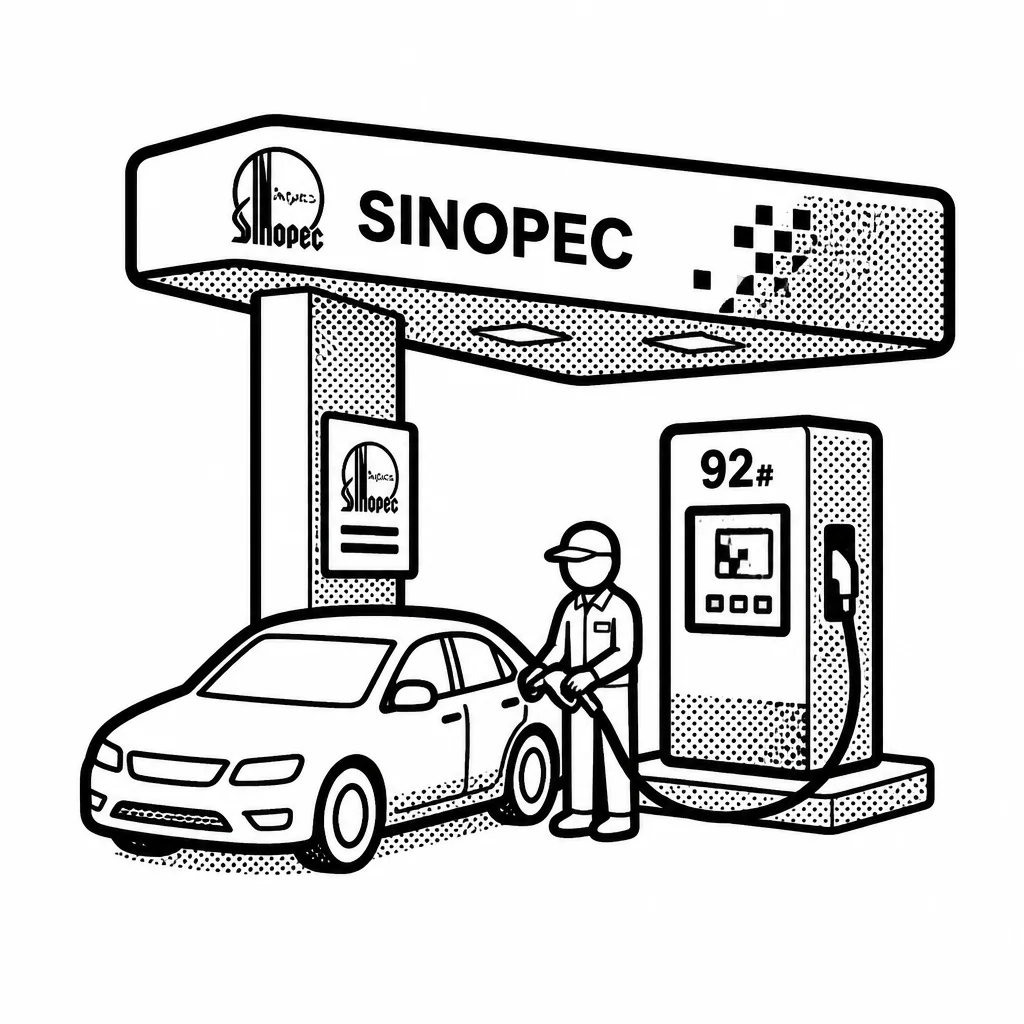
The money mostly flows in from selling fuel at the pump and bulk fuel to businesses, with chemicals adding another large stream. Sinopec's edge comes from scale and reach: it operates thousands of stations across China and feeds a huge domestic market where car ownership keeps growing. But refining is a thin-margin, commodity business, and profits swing with the gap between what crude costs and what refined products sell for. When oil prices spike or demand softens, the squeeze shows up fast. The company sits at the center of China's energy transition puzzle. It is a major buyer of imported crude, much of it from the Middle East and Russia, so geopolitics and shipping costs matter. It is also pushing into natural gas and hydrogen, and investing in cleaner refining, as Beijing leans on big energy firms to help cut emissions while still keeping the lights on and the trucks moving.
Sinopec is listed in Hong Kong, Shanghai, and New York, and its shares are partly owned by the Chinese state through a parent group. It pays a meaningful dividend and returns cash to shareholders, but it is not a growth story in the way a tech firm is — it is a cyclical, capital-heavy industrial giant whose fortunes track oil prices, Chinese industrial demand, and government policy.
Saved answer · last researched 20 Nov 2026