Understand any stock in simple English
Semler Scientific, Inc.
Semler Scientific sells a small medical device and software that help doctors spot poor blood flow in a person's arms and legs.
Semler Scientific makes a handheld device and the software that goes with it, and both are built for one main job: helping doctors find peripheral artery disease, a common condition where narrowed arteries reduce blood flow to the legs and arms. The company's product, called QuantaFlo, clips onto a patient and measures blood flow in minutes, right in a normal exam room. That matters because the disease is often silent, and catching it early can head off worse problems.
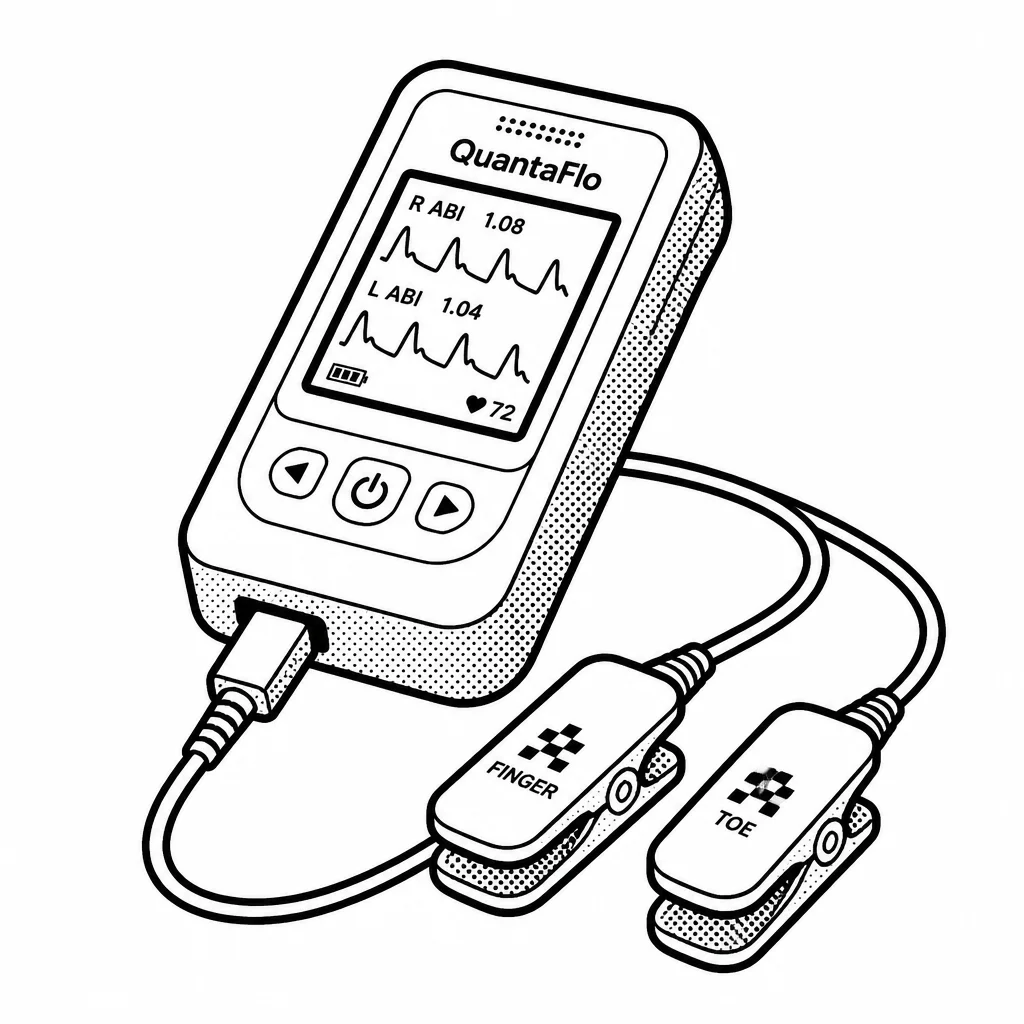
The people who pay for it are mainly primary care doctors, cardiologists, and the clinics and health systems that employ them, especially in the United States. They buy the device and software so they can test patients on the spot instead of sending them to a specialist or a hospital vascular lab. For the doctor, a quick in-office test is convenient and can be billed to insurance; for the patient, it means a fast answer without a separate trip. Semler is a small company with a simple economic engine: it sells the devices and recurring software, and it earns money as more clinics adopt testing. The business is profitable and throws off cash, and management has used that cash in ways shareholders notice — buying back stock and, in a notable twist, putting money into bitcoin as a treasury reserve asset. That bitcoin bet has made the stock's story swing with crypto prices, not just with medical device sales, which is an unusual and risky thing for a healthcare company to do.
The core risk is competition and adoption. Other tools and tests can detect circulation problems, and selling into doctor's offices takes patient, feet-on-the-ground effort. Semler's edge is that its test is fast, simple, and fits into an ordinary visit, and it has spent years building a base of loyal clinics. Still, investors should treat it as a tiny, focused device maker whose fortunes — and lately its balance sheet — can move in surprising ways.
Saved answer · last researched 17 Nov 2026