Understand any stock in simple English
Enter a ticker to learn what the company does and how it makes money.
Smartfit Escola de Ginástica e Dança S.A.
Smart Fit runs low-cost gyms across Latin America, selling cheap monthly memberships to people who want to work out.
Smart Fit runs gyms — lots of them, mostly cheap ones. It is the biggest fitness chain in Latin America, and its core pitch is simple: a good gym at a price normal people can afford. Instead of marble locker rooms and personal trainers hovering nearby, you get solid equipment, clean space, and a monthly bill that costs less than a couple of pizzas. That low price is the whole strategy. It lets Smart Fit pull in people who would never pay for a fancy gym, and it lets the company open hundreds of identical gyms fast.
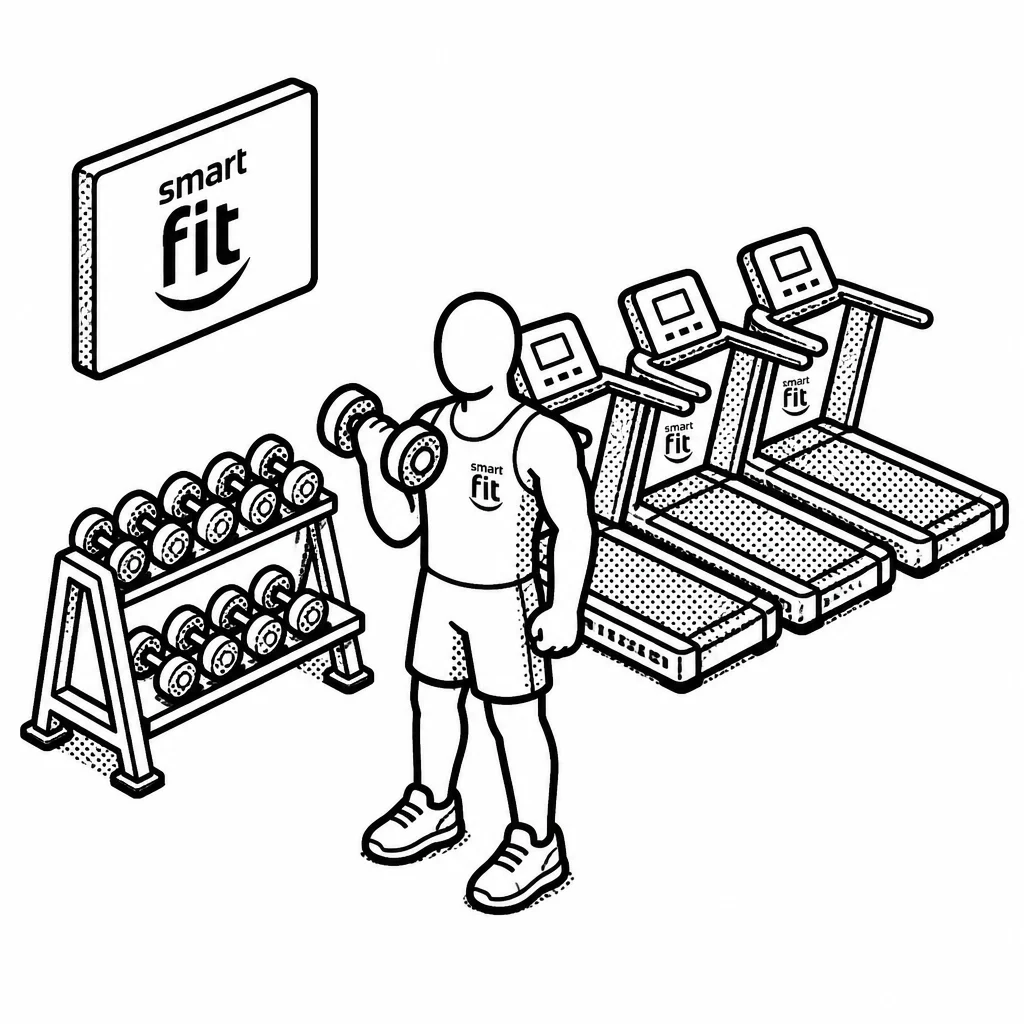
The business earns money from monthly memberships, mostly on low-cost plans under the Smart Fit brand, with a premium tier called Bio Ritmo for people who want more. It also runs digital fitness offerings, so members can keep training when they are not in the building. Members pay every month whether they show up or not — a quirk of gym economics that helps a lot, since a chunk of members rarely visit but keep paying anyway. The engine behind the model is scale and standardization. Gyms are built to a repeatable template, packed into densely populated neighborhoods, and often opened in clusters so marketing and management costs get shared. That makes each new gym cheaper to launch and easier to fill. The company has expanded well beyond Brazil into Mexico, Colombia, Chile, and other Latin American markets, turning what began as a Brazilian chain into a regional machine.
The obvious risk is that gyms are a brutally competitive, cyclical business. Smart Fit's low prices are its shield: when money gets tight, people drop expensive gyms before cheap ones. But it still needs to keep opening new locations to grow, and that takes capital. The company has also built a loyalty machine around its cheapest plan, which keeps members sticky and makes the whole thing hum. Cheap, repeatable, and everywhere — that is the formula.
Saved answer · last researched 12 Nov 2026