Understand any stock in simple English
Enter a ticker to learn what the company does and how it makes money.
AB SKF (publ)
SKF makes the bearings, seals, and lubrication systems that keep machines running, and sells them to factories and carmakers around the world.
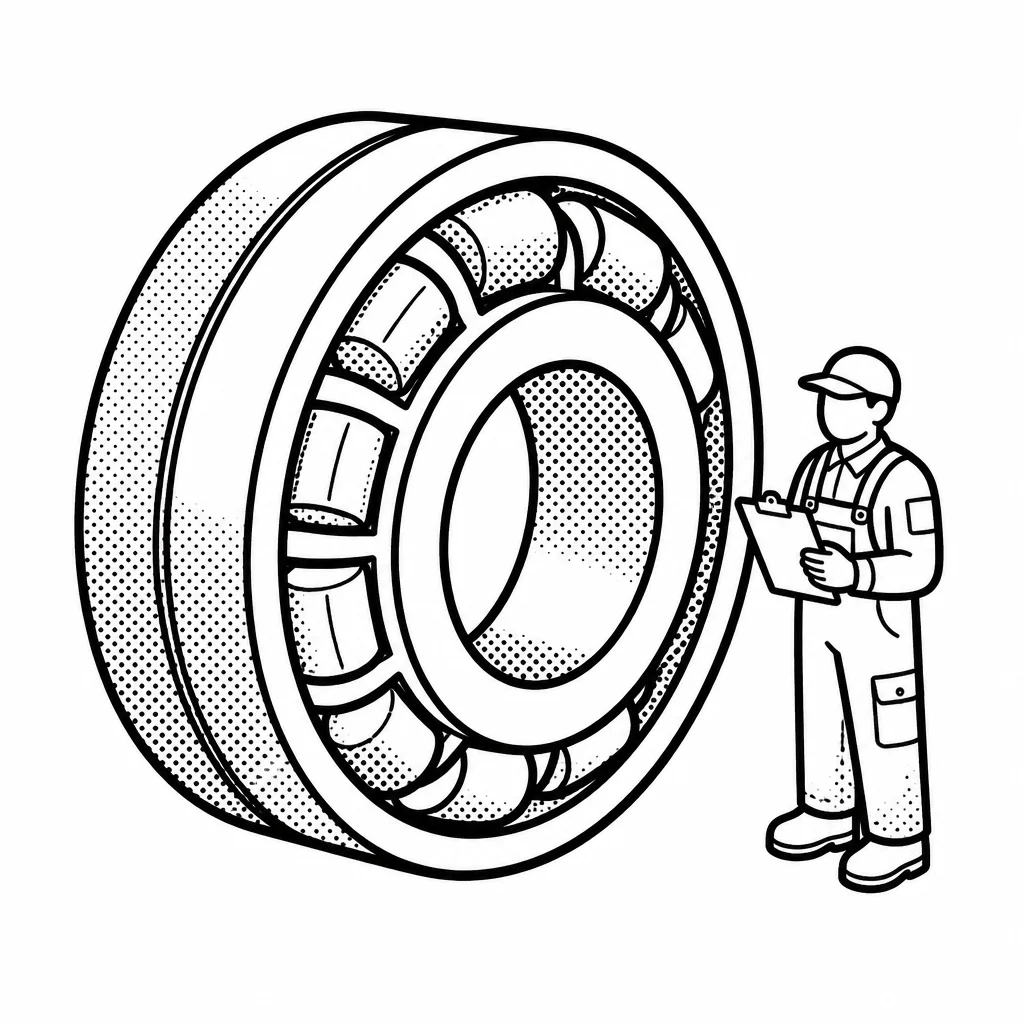
SKF makes the small, precision-engineered parts that let machines spin smoothly. Its core product is the rolling bearing: a ring of steel balls or rollers that sits between two moving parts and carries a load while cutting friction. Nearly anything that rotates — a car wheel, a wind turbine, a paper mill, a conveyor belt, a jet engine — can contain bearings, and SKF is one of the largest bearing makers on the planet. It also sells seals that keep dirt out and grease in, lubrication systems that feed oil to hard-to-reach spots, and maintenance services that help factories predict when a machine will fail.
Customers are mostly industrial: factories, mining and energy companies, wind farms, railways, and automakers, who buy directly or through distributors. SKF wins business on engineering reputation and reliability more than price. When a bearing fails, a factory line can stop and cost far more than the part itself, so buyers care about quality and consistency. Its main rival is Germany's Schaeffler, with NSK and NTN of Japan also competing hard, especially on price in Asia. The company is old — founded in Gothenburg, Sweden, in 1907 — and its famous self-aligning ball bearing was a genuine breakthrough that helped make modern machinery practical. Today it is headquartered back in Gothenburg. After years of steady but unspectacular growth, SKF has been pushing to become more of a services and solutions provider, not just a parts seller, and investing in areas like magnetic bearings and condition monitoring. It also spends on automation and factory efficiency to defend margins against cheaper competitors.
SKF is a cyclical business: when factories invest and car sales are strong, it does well; when industry slows, orders dry up. It uses its cash to pay a steady dividend, fund product development, and make selective acquisitions to add digital monitoring and lubrication capabilities. It is best understood as a quiet industrial workhorse — not glamorous, but deeply embedded in the global economy, because almost every spinning machine needs something like what SKF sells.
Saved answer · last researched 12 Nov 2026