Understand any stock in simple English
Enter a ticker to learn what the company does and how it makes money.
Sixt SE
Sixt rents out cars and vans to people and businesses, and also offers car sharing, ride-hailing, and car subscriptions.
Sixt is one of Europe's biggest car rental companies, and renting cars is still the heart of what it does. You show up at an airport or a city branch, pick a car or van, and pay by the day or week. Businesses rent for visiting staff and clients, and ordinary people rent for holidays, moving flats, or when their own car is in the shop. Sixt owns and leases a huge fleet of vehicles, and its job is to keep those cars on the road and earning money instead of sitting in a lot.
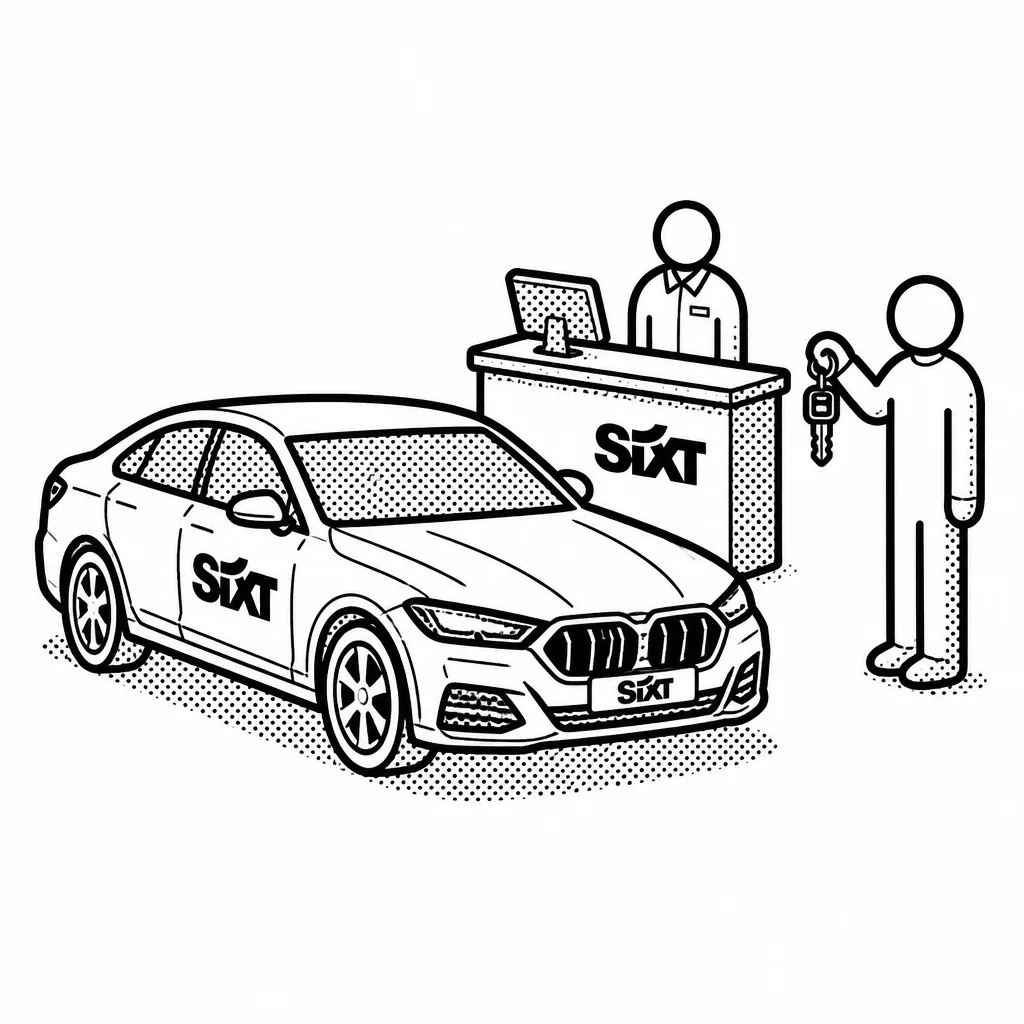
What makes Sixt interesting is that it long ago stopped being just a rental counter. It runs a big car-sharing service, where you unlock a car with your phone and pay by the minute, and it has a ride-hailing arm that connects passengers with drivers. It also sells car subscriptions, which is essentially renting a car for months with insurance and maintenance bundled in. That spreads its risk: if one part of the mobility market cools off, another can pick up the slack. The rental business still brings in most of the money, but the newer services are how Sixt keeps a relationship with customers who no longer want to own a car. The core economics are simple but unforgiving. Rental companies buy cars in bulk at a discount, rent them out for a year or so, then sell them used. Profit depends on three things: what they pay for the car, how much they collect in rental fees, and what they get back when they sell it. Used-car prices are the wild card, so a weak resale market can hurt even when rentals are busy. Sixt has built its name on a premium feel — nicer cars at competitive prices, with customer service that stands out — and that reputation lets it charge a bit more than budget rivals. Its main competitors are the big global players like Avis Budget Group and Hertz Global Holdings, plus Enterprise Holdings in the United States, where Sixt has been expanding. Sixt is headquartered near Munich, Germany, and it is still run by the family that founded it in 1912. It began as a small Bavarian rental firm and grew into a European powerhouse, then pushed hard into the United States to compete on the global players' home turf. That expansion has cost money and taken time to pay off, but it is a deliberate bet that scale in America is worth the pain. The company has also been a pioneer in electric vehicles, putting them into its rental and sharing fleets early.
The business is capital-hungry: buying cars and expanding abroad swallows a lot of cash, and Sixt also pays a dividend to shareholders rather than buying back big chunks of stock. The bigger question hanging over it is whether the newer services — sharing, ride-hailing, subscriptions — can eventually earn real money, or whether they stay a useful way to keep customers loyal while the rental counter pays the bills.
Saved answer · last researched 12 Nov 2026