Understand any stock in simple English
Siemens Aktiengesellschaft
Siemens makes and services the machines, software, and infrastructure that factories, power grids, trains, and hospitals run on.
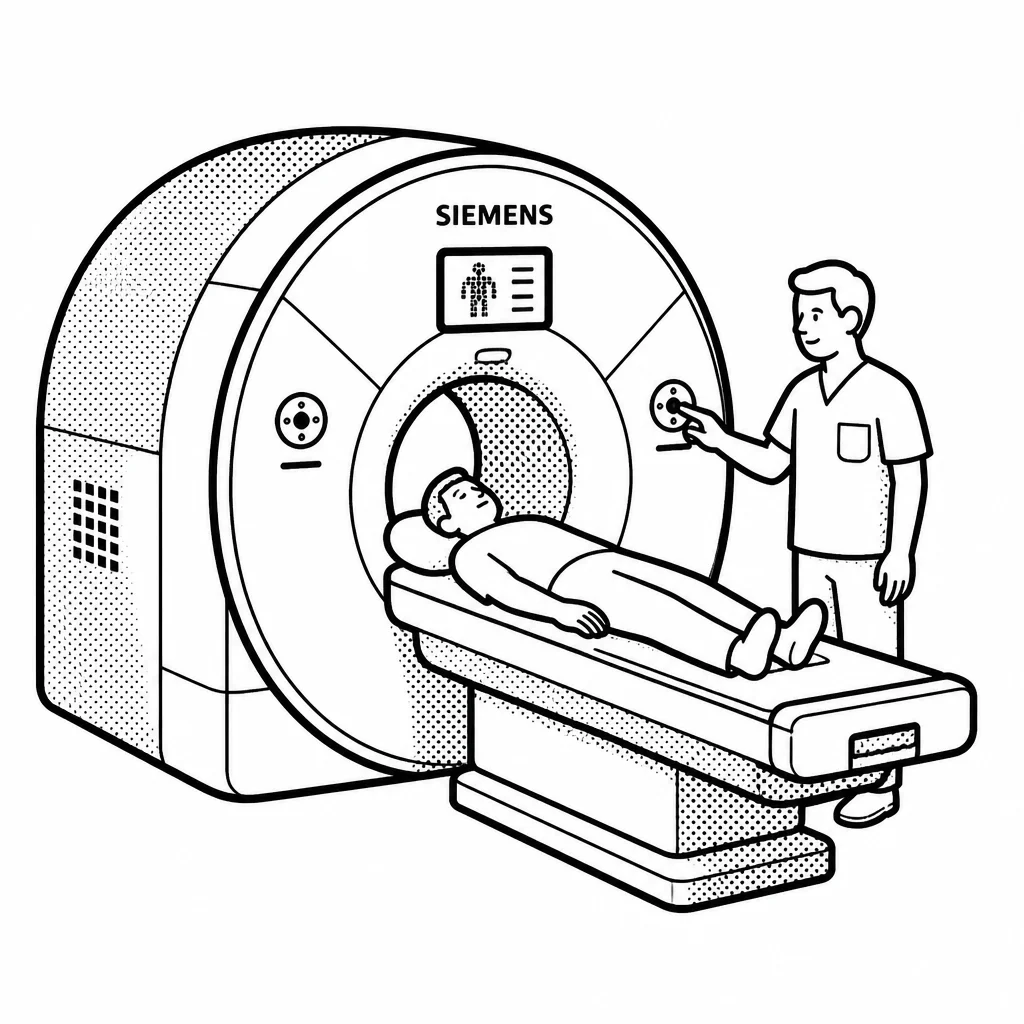
Siemens is a German industrial giant, and its simplest description is that it builds and maintains a lot of the physical and digital plumbing that modern life quietly depends on. Its main business sells factory automation — the controllers, drives, and software that let a car plant or a food factory run with robots and machines talking to each other. It also builds and services equipment for power grids and rail networks, and it makes medical scanners like MRI and CT machines through its separate healthineers arm, which is listed on its own.
Customers are mostly other businesses and governments, not people at home. A factory buys Siemens' controllers and software because they are the standard its engineers already know, and because switching means re-engineering a whole production line. A utility buys its grid gear for the same reason. That stickiness, plus a huge installed base that Siemens services for decades, is the core of the business — it sells the machine and then earns money keeping it running. Siemens has been reshaping itself for years, spinning off and listing chunks of itself to become a more focused industrial-technology company. It sold its large wind-turbine business, Siemens Gamesa, which had piled up big losses, and its healthineers unit now trades separately while Siemens retains a majority stake. Its train business, which makes and services rail vehicles and signalling, is being carved out too. One oddity of its structure: it still owns most of Siemens Energy, the power-generation and grid spinoff that has had its own well-publicized troubles.
What makes Siemens strong is its engineering depth, its global service footprint, and the way it bundles hardware with software so factories can monitor and optimize their own machines. What makes it vulnerable is that its fortunes track heavy industry and government infrastructure spending, which rise and fall with the economy and interest rates. It is not a fast-growing software company; it is a patient, capital-intensive builder whose profits follow the world's appetite for factories, power, and trains.
Saved answer · last researched 17 Nov 2026