Understand any stock in simple English
Enter a ticker to learn what the company does and how it makes money.
Schwab Long-Term U.S. Treasury ETF
It is a fund that holds long-term U.S. government bonds so investors can own a basket of them in one cheap purchase.
This is a fund, not a company that makes or sells things. It holds a basket of long-term U.S. Treasury bonds — loans to the U.S. government that take many years to mature — and sells shares in that basket to ordinary investors. When you buy a share, you are essentially lending money to the U.S. government for a long stretch of time, packaged up so you don't have to buy individual bonds yourself.
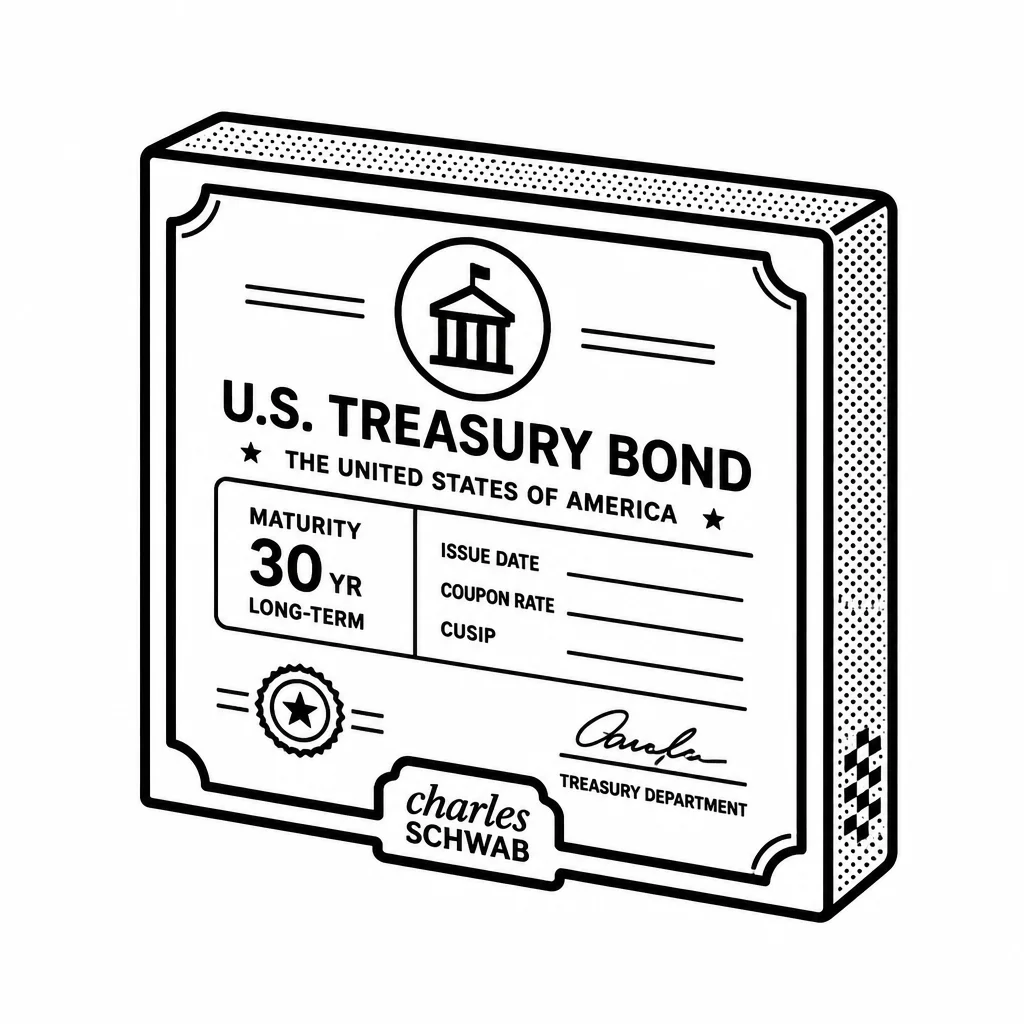
The pitch is simplicity and low cost. Instead of picking individual Treasury bonds, an investor buys one fund and gets a diversified slice of the long-term Treasury market. The fund tracks an index of these bonds, so its job is to mirror that market rather than try to beat it. It is managed by Charles Schwab, the big brokerage firm, which runs a whole family of these low-cost index funds and ETFs. What the fund actually delivers depends on where interest rates go. Long-term bonds are unusually sensitive to rate changes: when rates fall, the value of the bonds rises and the fund's price climbs; when rates rise, those bonds lose value. That makes this a tool for people who want steady government-backed income and are willing to ride out bigger price swings than a short-term bond fund would have. It is not a savings account — the price moves.
The appeal to investors is mainly cost and convenience. It offers exposure to long-term Treasuries in a single trade, with the low fees that Charles Schwab is known for in its index lineup, and it trades on an exchange like a stock. The catch is the same one that comes with all long bonds: the fund can lose money when rates rise, sometimes a lot, so it rewards patience and a long horizon rather than quick trading.
Saved answer · last researched 16 Nov 2026