Understand any stock in simple English
Enter a ticker to learn what the company does and how it makes money.
Companhia de Saneamento Básico do Estado de São Paulo - SABESP
Sabesp treats and delivers water and collects and treats sewage for homes, businesses, and government customers across São Paulo state.
Sabesp is essentially a giant plumbing system for São Paulo, Brazil's most populous state. It pumps clean water into millions of homes, businesses, and government buildings, and then takes the dirty water away through sewers to treatment plants. Most people in the state turn on a tap and flush a toilet without ever thinking about it. Sabesp is the company that makes that happen.
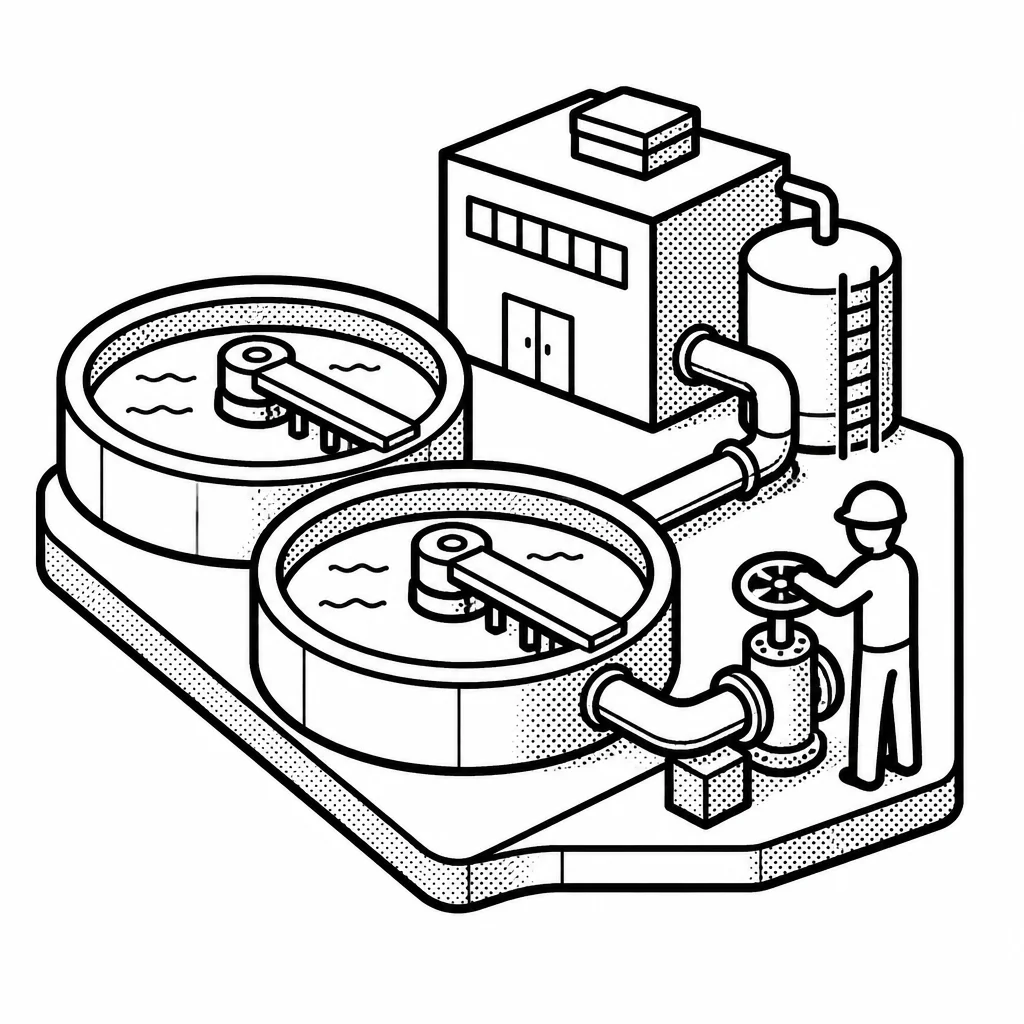
The business earns money from monthly water and sewage bills. A household pays for the water it uses, and it pays a separate charge for sewage service, usually calculated from its water usage. Commercial customers like factories, shops, and offices pay the same way, just with much bigger bills. City governments also pay for some services. Customers do not really choose Sabesp the way they choose a phone plan. In much of its territory, it is the only water utility around, which is a very stable business but also one with little room to wow anyone. For decades Sabesp was mostly owned by the São Paulo state government, which made it a political football as well as a utility. That changed in 2024, when the company was privatized in a large share offering that shifted control to private investors, with the state keeping a smaller stake. The pitch behind privatization is simple: a private company can raise money and invest in pipes and treatment plants faster than a government one, and São Paulo still has a lot of sewage that goes untreated. That means big spending ahead, paid for by customers and investors, with the payoff being a famously reliable utility in a fast-growing region.
The main risks are ones every water company faces: droughts and water shortages, the huge cost of maintaining aging underground pipes, and regulators who decide how much it can charge. Sabesp has one large advantage, though. São Paulo has a very big and growing population, and water is not something people can simply stop buying. That makes the company's revenue remarkably steady, rain or shine, which is exactly what investors tend to like about utilities.
Saved answer · last researched 12 Nov 2026