Understand any stock in simple English
Enter a ticker to learn what the company does and how it makes money.
Salmon Evolution ASA
Salmon Evolution raises salmon on land in Norway using a hybrid flow-through system, then sells the fish internationally.
Salmon Evolution is a salmon farmer, but with a twist: instead of floating cages in the sea, it grows its fish on land. It uses a technology called a hybrid flow-through system, which constantly moves large volumes of seawater through big tanks so the salmon swim in a steady, clean current. The fish are hatched and raised from eggs all the way to market size at the company's facility on the west coast of Norway, and then sold as whole salmon meals to buyers around the world.
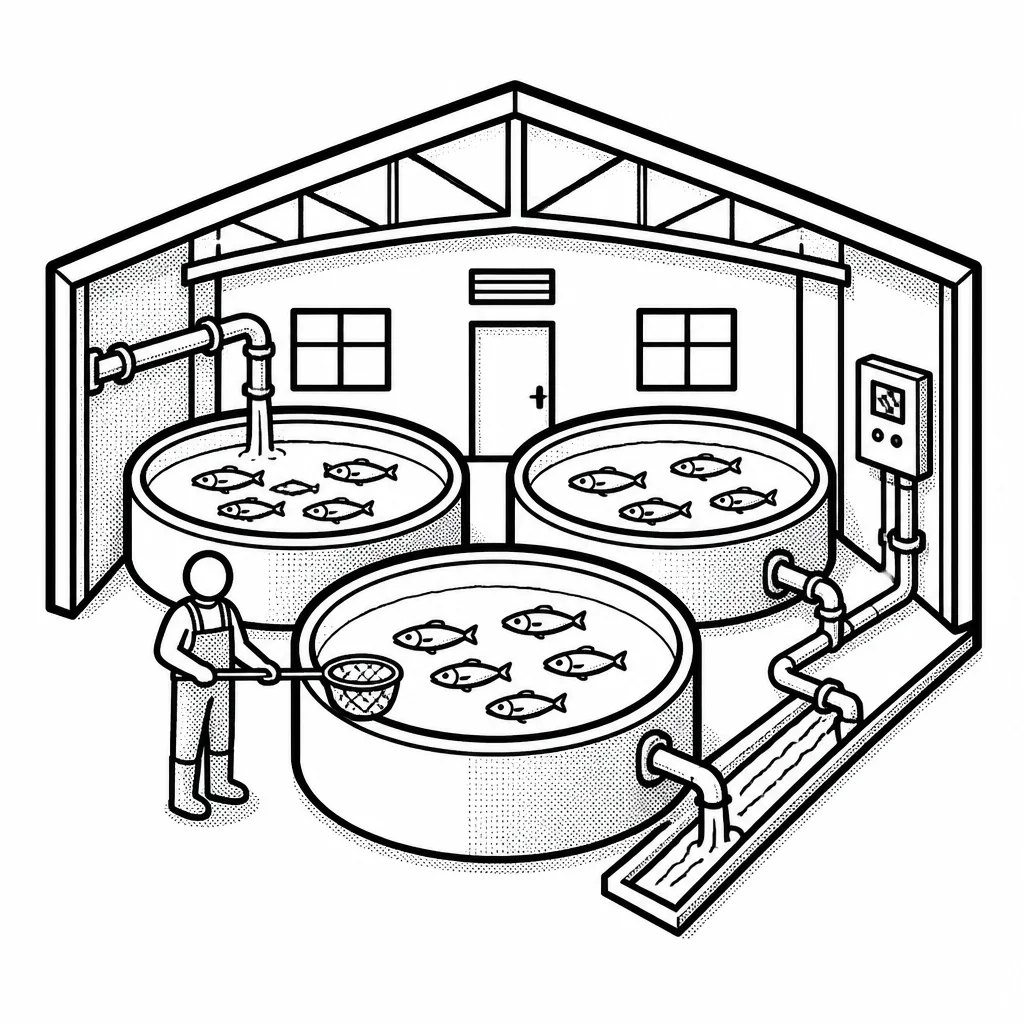
The reason this matters is that ocean-based salmon farming has problems. Sea lice, algae blooms, storms, and the constant tension between fish farms and wild salmon all make open-net farming risky and controversial. Growing fish on land gives the company much tighter control over water quality, temperature, and disease, and it keeps farmed fish physically separated from wild ones. The trade-off is cost: pumping and treating all that seawater takes a lot of electricity and money, so land-based farming is more expensive per fish than the traditional cage approach. Salmon Evolution went public on Oslo Børs, which gave it the capital to build out its plant in stages. The plan is to keep adding tank capacity and ramp up how many fish it produces each year, because the whole business only makes sense at scale — the fixed costs of running a big facility are heavy, and spreading them over more fish is how the operation becomes profitable. As it grows, it also sells into the same global salmon market as the big sea-farming players.
The honest picture is that this is a capital-hungry, early-stage business. It has to spend heavily on buildings and equipment before it earns much, and its results depend on fish survival rates, salmon prices, and construction timelines going right. But if the land-based model works at scale, it offers a more predictable and environmentally safer way to supply a world that keeps eating more salmon.
Saved answer · last researched 14 Nov 2026