Understand any stock in simple English
Enter a ticker to learn what the company does and how it makes money.
Ryerson Holding Corporation
Ryerson buys metals like steel and aluminum from mills and sells them, cut and processed to order, to companies that make things.
Ryerson is a metals middleman. It buys enormous coils and sheets of stainless steel, aluminum, carbon steel, and alloy steel from the big mills that actually make the metal, then cuts, slits, bends, and shapes them to the exact sizes its customers need. Its customers are the thousands of manufacturers and fabricators that build everything from industrial equipment and machine frames to food-service gear and buildings — businesses that need metal but not enough of it to buy directly from a mill.
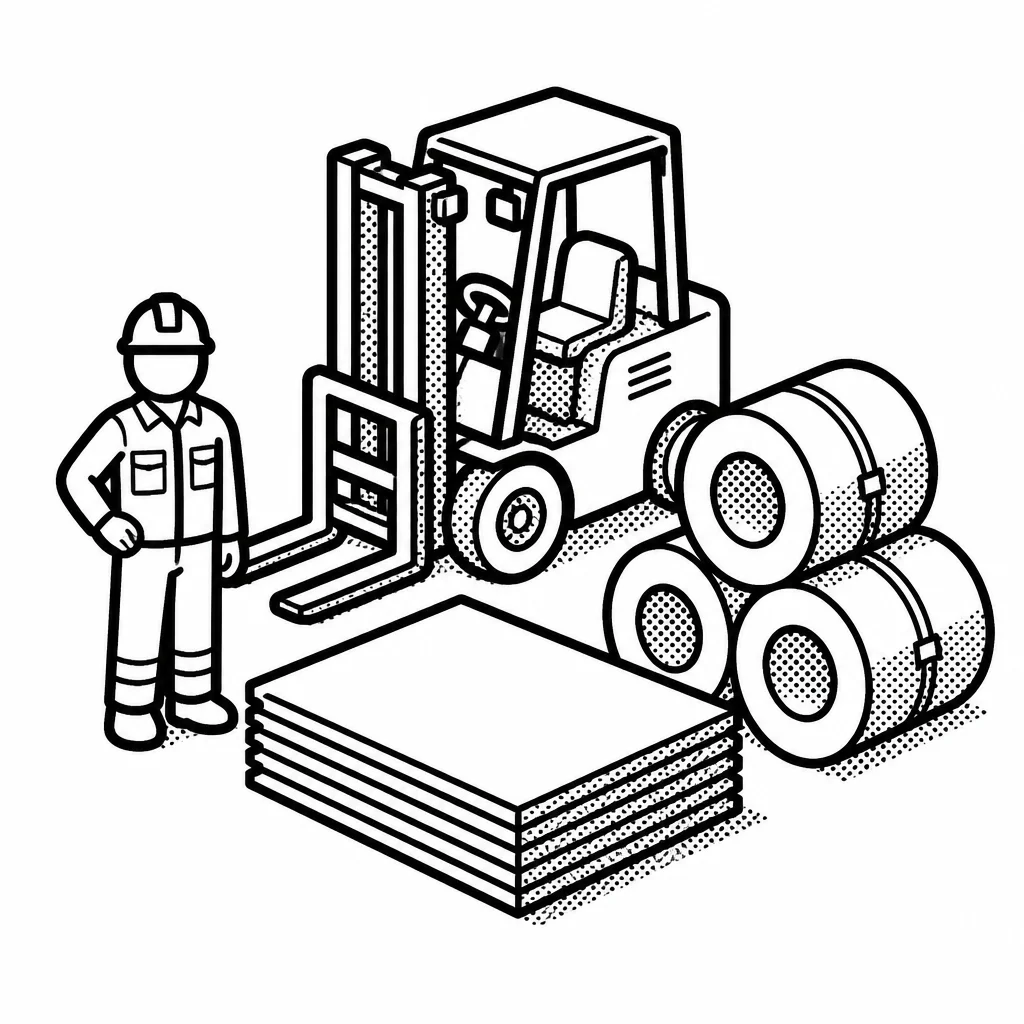
The service sounds dull until you see the problem it solves. A mill wants to sell a giant coil weighing several tons. A small machine shop wants a few hundred pounds cut to length, delivered tomorrow. Ryerson sits in the middle, stocking metal across dozens of warehouses, running slitting and laser-cutting lines, and offering next-day delivery. Customers pay for metal plus the processing and convenience — the nearest comparable competitor is Reliance, another large metals service center. Because everyone is largely selling the same commodity, Ryerson's edge comes from scale in purchasing, local inventory that saves customers from holding their own stock, and quick turnaround. That commodity reality is the whole story of the business. Steel prices swing hard with construction demand, tariffs, and mill capacity, and Ryerson's profits follow those swings closely. When metal prices surged in 2021, the company's revenue jumped sharply and it made unusually fat margins because inventory bought cheaply was sold at high prices. When prices fall, the opposite happens. Ryerson does not produce metal, so it has little control over the biggest lever in its own economics.
Ryerson is headquartered in Chicago and traces its roots back to a family metals business founded in 1842. It has spent recent years strengthening its balance sheet after a rough stretch — buying back stock and paying down debt — and expanding its processing capabilities so it is not just a warehouse but a genuine manufacturing partner. The core risk is simple and permanent: this is a cyclical, low-margin business whose fate is tied to U.S. industrial demand.
Saved answer · last researched 16 Nov 2026