Understand any stock in simple English
Enter a ticker to learn what the company does and how it makes money.
Rubis
Rubis stores and distributes fuels, gases, and other petroleum products to businesses and drivers, mainly in Europe, the Caribbean, and Africa.
Rubis is a fuel middleman. It buys refined fuels and gases, stores them in tanks and terminals, and then delivers them to the people who actually need them — gas stations, factories, truck fleets, airlines, and heating customers. It rarely drills for anything and rarely owns the oil itself. It owns the plumbing in between: the terminals, the barges, the tanker trucks, and the small stations that keep fuel moving.
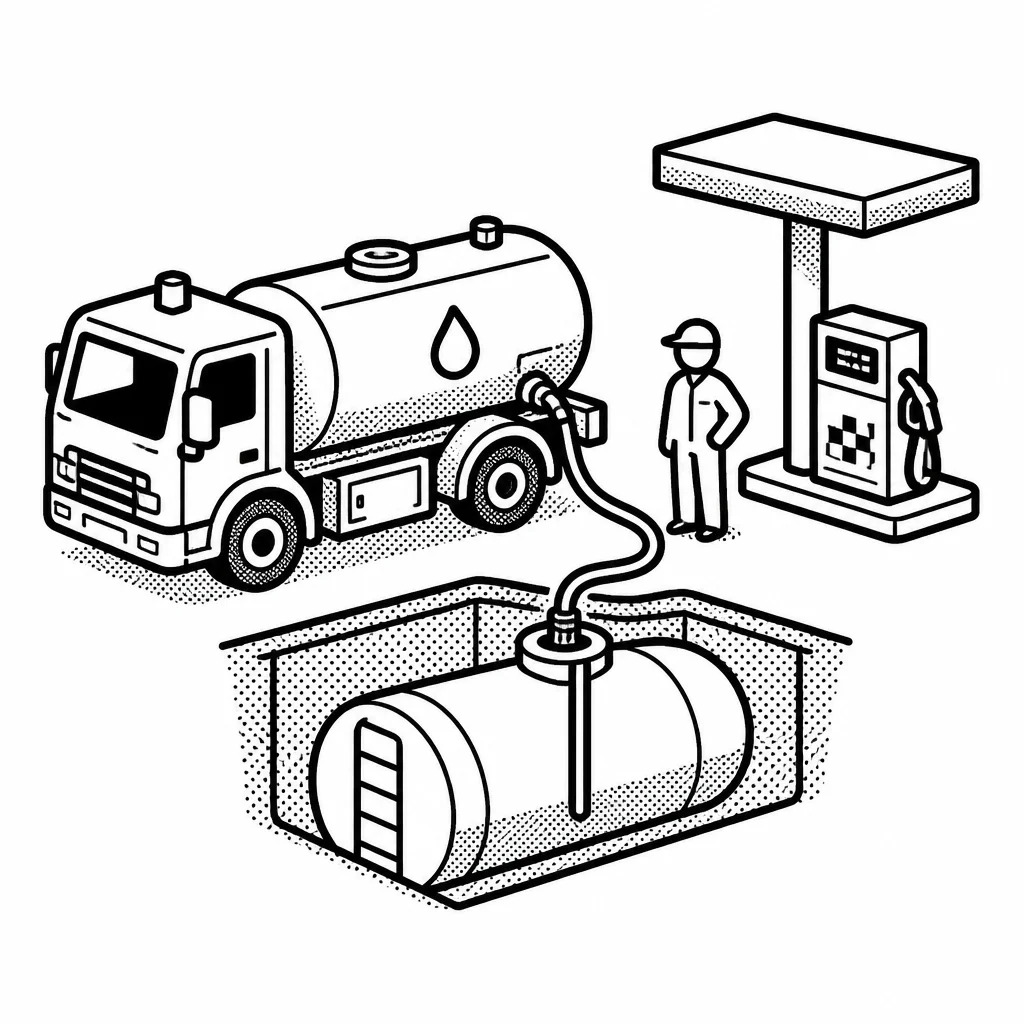
The business splits into two main chunks. The bigger one is distribution: Rubis ships fuel, liquefied petroleum gas, lubricants, and bitumen to industrial customers, transport companies, and its own branded service stations, mostly across France, the Caribbean, and parts of Africa. The other chunk is bulk storage — it operates terminals that hold fuels and chemicals for itself and outside traders. Bitumen is a quieter but important piece: Rubis sells it to road builders, tying the company to government infrastructure spending. Why do customers pay a middleman? Because fuel is cheap per litre and expensive to move. Small gas stations in Jamaica or rural France can't buy directly from a refinery in Rotterdam. Rubis aggregates demand, holds inventory, and guarantees delivery. Its fuel margins are thin and volume-driven, but storage and logistics are hard assets that are expensive to replicate — a real moat. It competes with global trading houses like Vitol-style players and with local distributors, but in many small island markets it is the dominant supplier simply because nobody else has built the terminals.
Rubis has grown largely by buying things. It has spent years acquiring distributors and storage assets — often family-run operations in the Caribbean and Africa — and folding them into its network. The story is less about invention and more about patient consolidation. Profits get recycled into more terminals, more acquisitions, and a steady dividend. The risks are real: fuel demand faces long-term pressure from electric vehicles, political instability in some African markets can disrupt operations, and a single oil-price shock can squeeze working capital. Still, it is a business built on the unglamorous truth that the world still runs on liquid fuel — and somebody has to store the stuff.
Saved answer · last researched 14 Nov 2026