Understand any stock in simple English
Enter a ticker to learn what the company does and how it makes money.
Ramelius Resources Limited
Ramelius Resources is an Australian gold miner that digs gold out of the ground and sells it.
Ramelius Resources is a gold miner. It finds gold in the ground in Western Australia, digs it up, processes the ore into gold bars, and sells that gold at the going market price. That's the whole business in one sentence: it turns rocks into gold, and gold into cash.
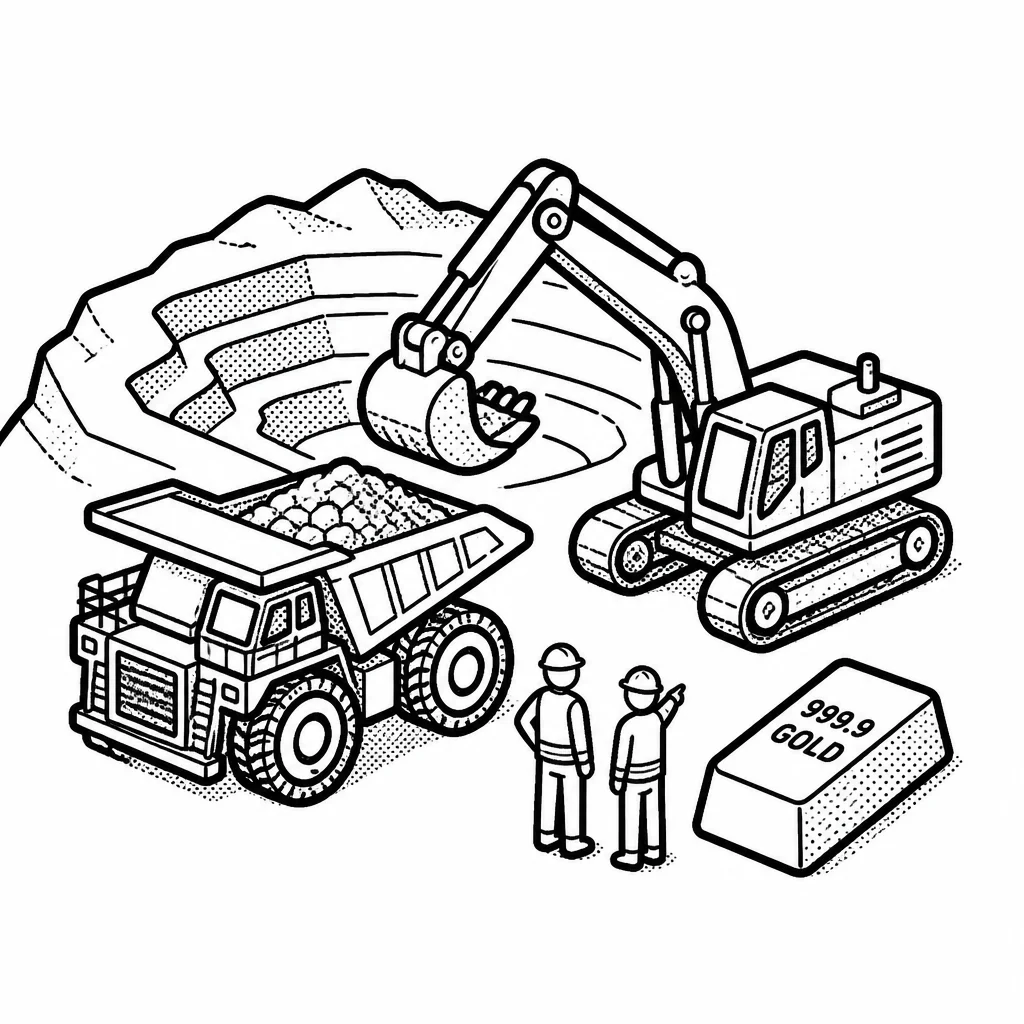
The company runs a handful of mines and processing plants in Western Australia's goldfields, a sparsely populated region that has been one of the world's great gold-producing areas for over a century. Its operations include the Mount Magnet and Edna May mines, and it also owns the Penny mine, which it developed after discovering a high-grade deposit. Ramelius both mines its own ore and processes ore from other small miners at its plants for a fee, which keeps its mills busy and spreads its costs. Because gold is a commodity sold at a global price, Ramelius cannot charge more than anyone else — its only real lever is producing each ounce as cheaply as possible. That makes cost control, ore grades, and keeping equipment running the things that decide whether it makes a big profit or a thin one. Gold miners are a leveraged bet on the gold price. If it costs Ramelius roughly A$2,000 to produce an ounce and gold sells for A$4,000, every ounce is a big margin. If the gold price falls, those margins shrink fast. That is why Ramelius's profits swing much more than the gold price itself, and it is why the company spends heavily on exploration — finding new ore bodies is how it replaces the gold it digs out each year. Its peers in the same patch of Australia include Northern Star Resources and Evolution Mining, both larger ASX-listed gold producers chasing the same deposits and the same investors. Ramelius became a much bigger company through dealmaking. For years it was a small miner, but in 2024 it agreed to buy the Australian assets of Spartan Resources, a move that added mines and exploration ground and turned Ramelius into a mid-tier producer. The logic was simple: buying an existing mine or a promising deposit is often cheaper and faster than finding and building one from scratch. The risk is paying too much, especially when gold prices are high and everyone is feeling optimistic.
With the cash its mines throw off, Ramelius pays dividends and funds exploration and mine development, and it has bought back shares when it had surplus cash. Like all miners, it faces the realities of the business: ore grades decline as deposits are mined out, costs rise, and accidents or equipment failures can halt production. Gold miners also carry a reputation problem — mining is dirty, land-intensive work — though Australian operations face strict environmental rules. For an investor, Ramelius is a straightforward bet: a mid-sized Australian gold producer whose fortunes rise and fall with the gold price and with how efficiently it can pull metal from the ground.
Saved answer · last researched 12 Nov 2026