Understand any stock in simple English
Enter a ticker to learn what the company does and how it makes money.
Rambus Inc.
Rambus designs chips and sells chip technology that helps move data quickly between memory and processors in data centers and AI systems.
Rambus makes the plumbing that lets computer chips talk to memory. When a processor needs data, it has to fetch it from memory chips, and that trip is often the slowest part of the job. Rambus sells memory interface chips — little pieces of silicon that sit between the processor and the memory and push data across as fast and cleanly as possible. It also licenses silicon IP, meaning it designs the underground circuitry that other chipmakers pay to drop into their own chips.
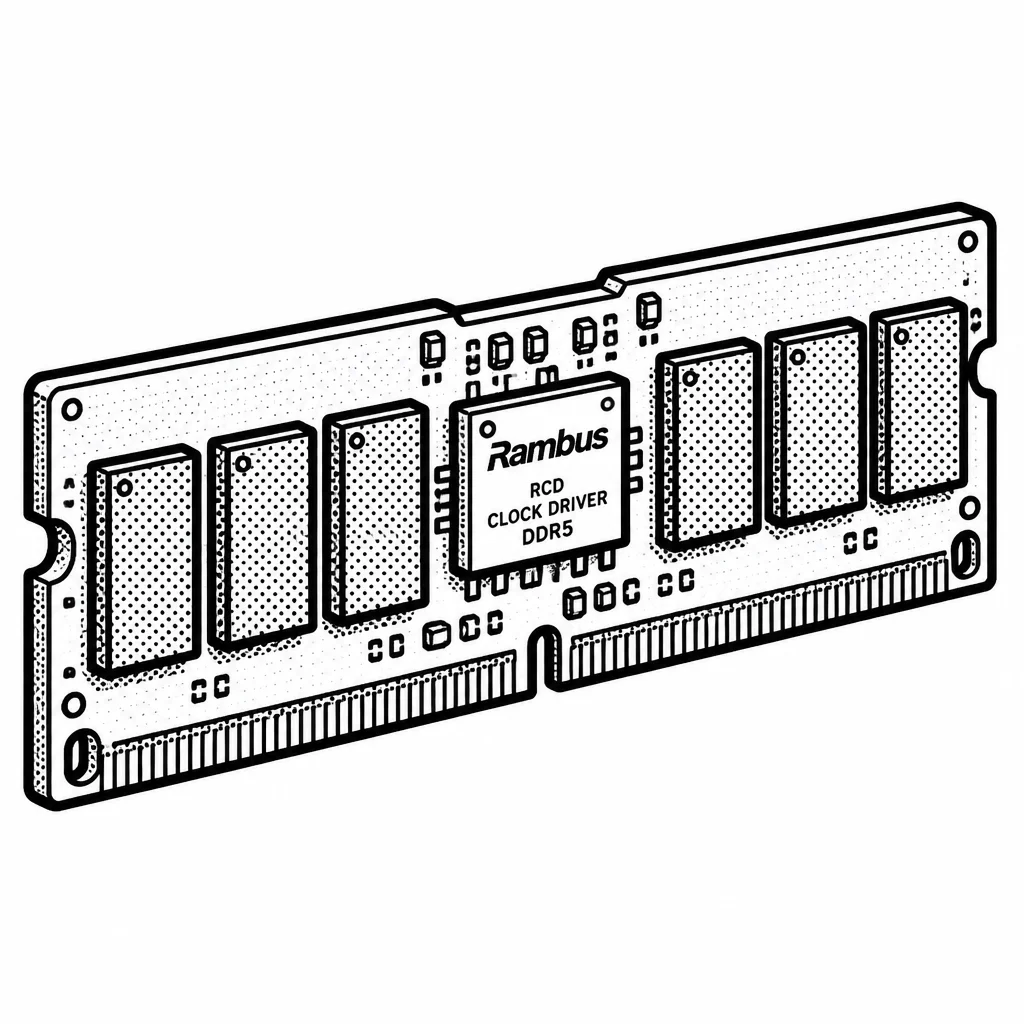
The customers are the companies building the heavy machinery of computing: data center operators, server makers, and chip designers. Two forces are pulling Rambus forward right now. AI systems are hungry for memory bandwidth — the speed at which data flows in and out of memory — and that is exactly the problem Rambus solves. And the industry is shifting to a new memory standard called DDR5, which requires new interface chips; when a generation changes, every server that upgrades needs the new parts, which gives Rambus a fresh selling cycle. The IP side is a different kind of business. Rambus holds a deep patent portfolio and licenses technology that chipmakers need to build high-speed memory and connections. Licensing deals are high-margin and recurring, and they have historically been backed by litigation when negotiations stall — the company has spent decades in courtrooms over patent royalties. That makes the IP segment lucrative but lumpy, with revenue that jumps around depending on when deals get signed.
Rambus is not a giant. It is a specialist that wins by being very good at one hard problem, and its competition comes from other interface-chip makers and from in-house designs by big chip companies. It generates real cash, and it has used that cash to buy back a meaningful chunk of its own shares over the years, shrinking the share count rather than paying a dividend. The bet is simple: data keeps getting faster, memory keeps getting harder, and someone has to build the bridge.
Saved answer · last researched 14 Nov 2026