Understand any stock in simple English
Enter a ticker to learn what the company does and how it makes money.
Resilient REIT Limited
Resilient REIT owns and runs large shopping malls, mostly in South Africa, and collects rent from the retailers who lease space in them.
Resilient REIT is a South African property company that owns big, dominant shopping centres and earns money the old-fashioned way: it collects rent from the shops inside them. Its malls are anchored by national retail chains — the big grocery, clothing, and pharmacy brands you'd find in any decent-sized South African town — and the company's whole strategy is built around owning the busiest, most dominant centre in a given area rather than a scatter of weaker ones.
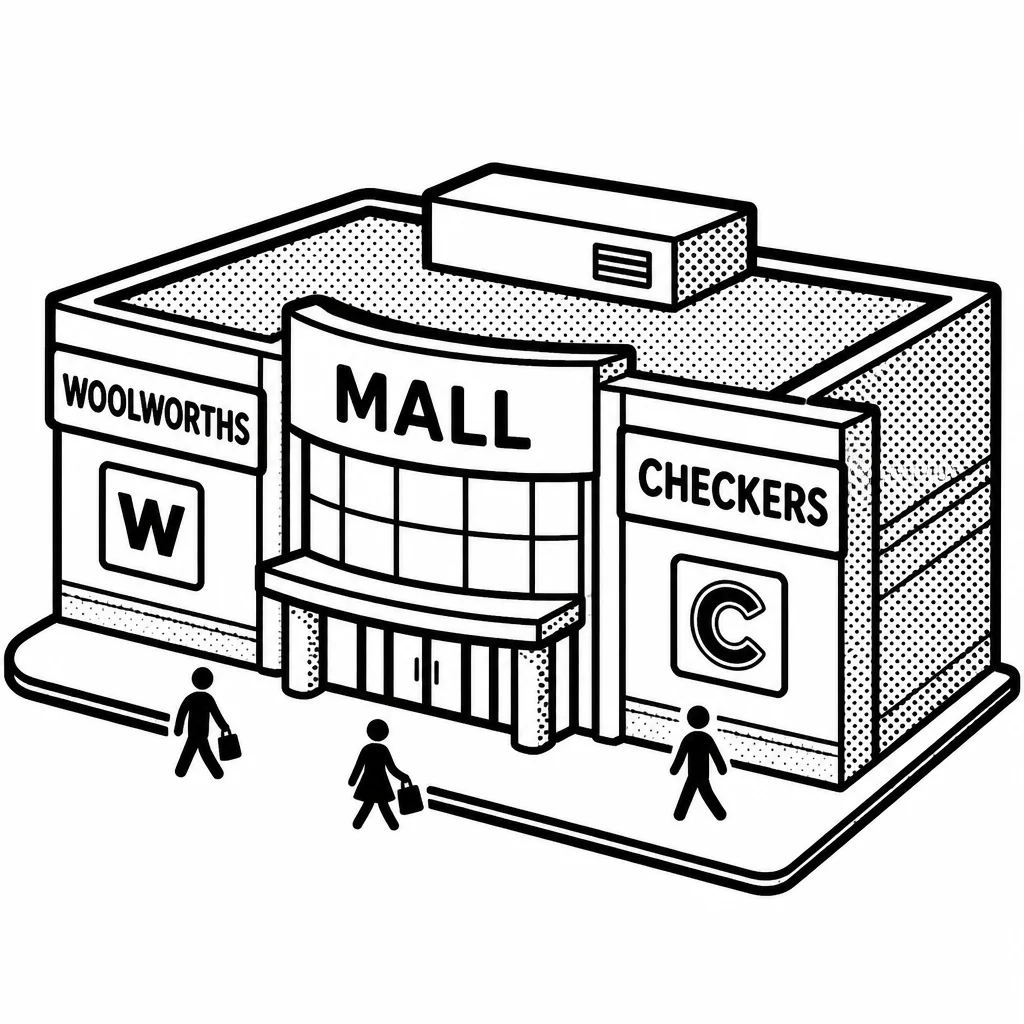
The business model is simple to grasp. A shopping centre is expensive to build and own, but once it's full it throws off steady cash. Resilient buys or develops these centres, signs retailers to multi-year leases, and then mostly sits back and collects. It's structured as a REIT, which in South Africa means it must pay out most of its distributable profits to shareholders as dividends, so investors largely own it for that income stream rather than for rapid growth. Because malls live or die on foot traffic, the quality of each location matters enormously — a dominant mall in a growing area keeps tenants and commands higher rents, while a weak one bleeds. There's a real honest side to this story too. South African retail property has had a tough stretch: a weak consumer economy, high interest rates squeezing shoppers, and the long shadow of online shopping have all pressured mall landlords. Resilient has also carried a reputation as one of the more aggressive, deal-heavy players in the sector, and its share price has had a volatile history — including a sharp sell-off in 2018 tied to governance concerns around its former management and a controversial investment in an offshore holding company. That episode is part of why investors now watch its balance sheet and management closely.
More recently, Resilient has pushed offshore for growth, buying retail properties in Europe, particularly in France and Croatia, to tap into markets where yields and currency can differ from South Africa's. So today it's a two-part story: a big domestic mall landlord defending its turf in a slow-growing economy, and an expanding offshore arm hunting for better returns abroad. For investors, the appeal is the dividend — steady rental income paid out — with the risk being that South African consumers stay under pressure and mall values stagnate.
Saved answer · last researched 12 Nov 2026