Understand any stock in simple English
Enter a ticker to learn what the company does and how it makes money.
Repsol, S.A.
Repsol finds and turns oil and gas into the fuels and products people buy, and it is also building out electricity and low-carbon businesses.
Repsol is one of Spain's biggest energy companies, and its core job is turning oil and gas into things people actually use every day: gasoline at the pump, diesel for trucks, jet fuel, heating fuel, plastics, and the raw materials for chemicals. It runs a huge network of gas stations, especially across Spain, and it owns refineries that churn crude oil into those finished products. A driver filling up, an airline buying jet fuel, or a factory buying petrochemicals all end up paying Repsol.
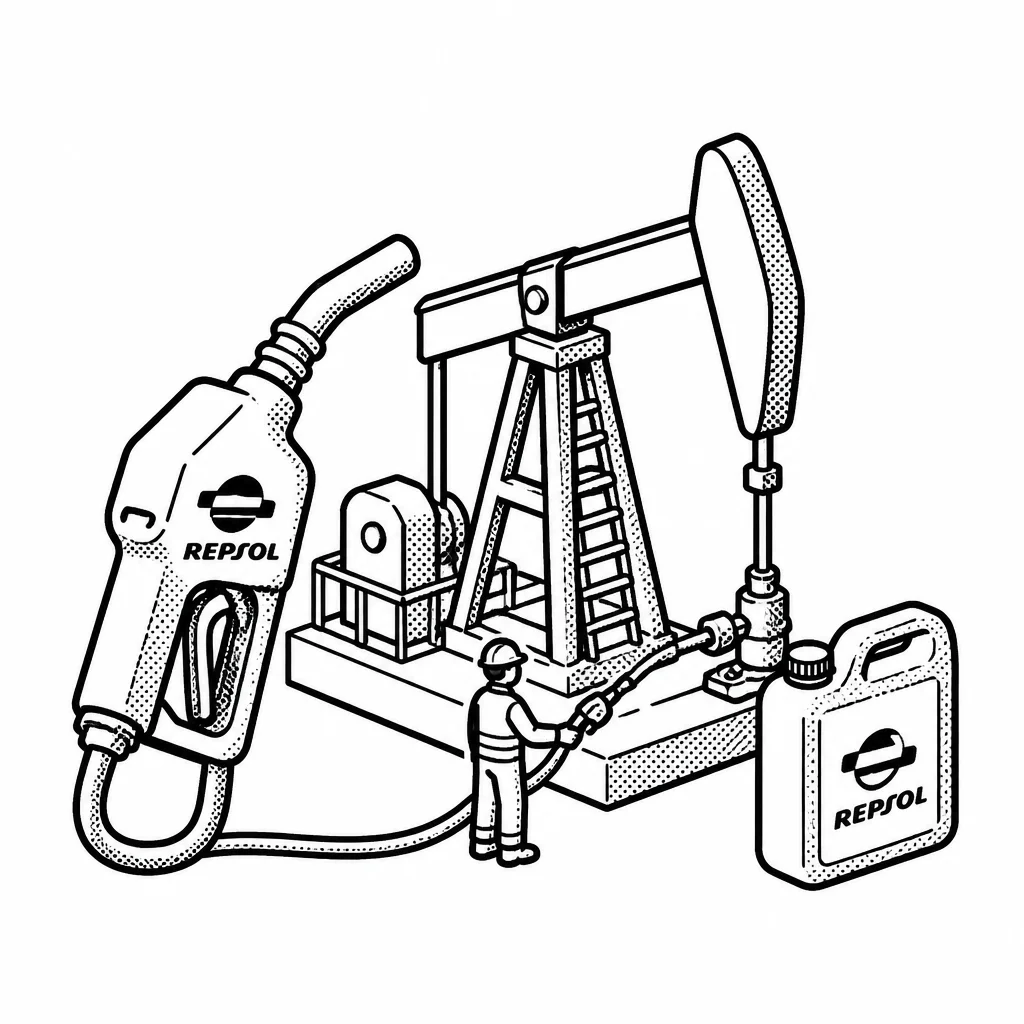
The company isn't just a fuel seller. It also produces electricity and is pushing into low-carbon areas like renewable power, biofuels, and hydrogen. That mix matters because the world is slowly trying to use less oil, and Repsol wants a business that still makes money as that shift happens. Its international reach means it explores for and produces oil and gas in several countries, not just at home in Spain. The money engine is fairly simple: Repsol earns when the gap between what it pays for raw crude and what it charges for refined products and chemicals is wide. When oil prices swing, profits swing too. It also uses its cash to pay dividends and buy back shares, a way of returning money to investors. The risk is the same one facing every oil major: prices are volatile, and the long-term shift away from fossil fuels means Repsol has to keep investing in the future while still milking the present.
What makes Repsol interesting is that it's an old-line oil company trying to quietly reinvent itself as a broader energy business. It competes with giants like Shell and BP and other refiners, but its home turf is Spain and its customer base is loyal and dense. If the transition to cleaner energy goes well, Repsol could look very different in a decade. If oil stays central, it's still a big, steady, and somewhat cyclical business built on the fuel the world runs on today.
Saved answer · last researched 14 Nov 2026