Understand any stock in simple English
Enter a ticker to learn what the company does and how it makes money.
Quanta Services, Inc.
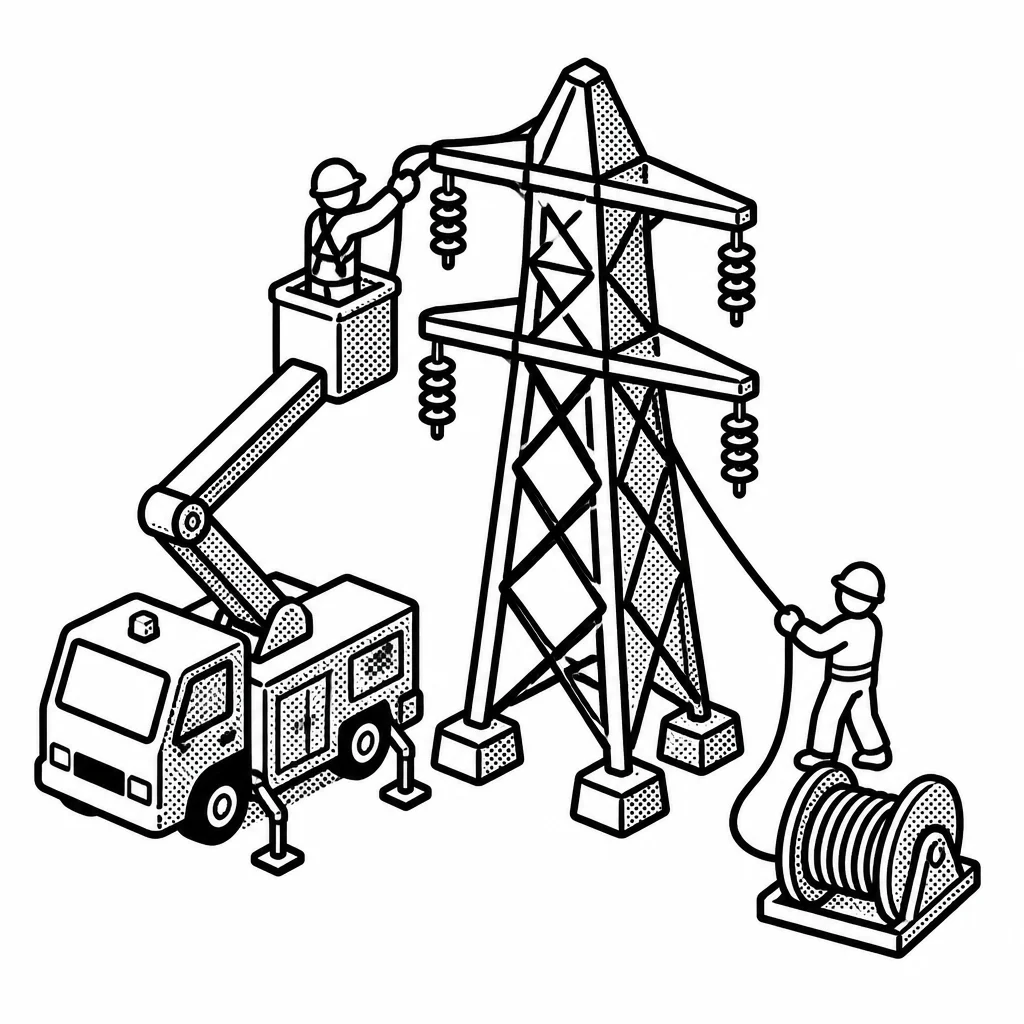
Quanta Services is a big specialty contractor that builds and maintains the power lines, pipelines, and communication networks that keep electricity, fuel, and data moving across North America.
Quanta Services is the company that electric utilities, pipeline operators, and telecom firms call when they need someone to actually build and fix the physical infrastructure we all depend on. It strings power lines, constructs substations, lays pipelines, and installs fiber-optic cable. It does not own the grid or sell electricity. It gets paid by the utilities and energy companies that do, and those customers keep coming back because building and maintaining these networks is dangerous, technical, highly regulated work that requires specialized crews, equipment, and years of experience. Utilit
Timeline
Colson Builds Quanta
The electrical contracting business in America was a mess of tiny firms, over 50,000 of them, most owner-operated, while the country's aging power lines and poles badly needed fixing. John R. Colson started out carrying stakes for a living and worked his way up to owning PAR Electrical Contractors. He then merged PAR with three other contractors, Union Power, Trans Tech Electric and Potelco, into one company called Quanta Services, based in Houston. The bet was simple: one big, well-run player could do what thousands of small shops could not.
Quanta Goes Public
The next year Quanta sold shares to the public for the first time, raising $45 million, and a big chunk of that money went to pay the founders for their companies. It listed on the New York Stock Exchange under the ticker PWR, short for power. The company now had public money to grow with.
UtiliCorp's Takeover Bid
One of Quanta's partners, UtiliCorp United, which owned a big slice of the company, decided it wanted the whole thing and tried to buy it out. Quanta said no and swallowed a 'poison pill,' a defense that makes a hostile takeover painfully expensive for the buyer. The fight dragged on until UtiliCorp gave up and walked away, leaving Quanta independent, though with a reshuffled board.
Quanta Buys InfraSource
Quanta went shopping and came back with InfraSource Services, the eighth-biggest specialty contractor in the country, while Quanta itself was number two. It paid with stock, roughly $1.26 billion worth, and the combined company became a much bigger force in utility and infrastructure work.
Price Gregory Joins
Two years later Quanta bought Price Gregory, the largest gas pipeline builder in the U.S., for $350 million in cash and stock. That pushed Quanta into building big transmission pipelines, a new kind of work that would matter more and more as America's energy system grew.
Duke Austin Takes Over
In 2016 a new chief executive took the wheel: Earl C. 'Duke' Austin, who had joined Quanta back in 2001 and run its electric power division. He pushed the company to spread its bets across more kinds of work and to invest in its skilled tradespeople, the crews who actually climb the poles and build the lines.
Blattner Deal
Then came a huge bet on clean energy. Quanta agreed to buy Blattner, one of North America's leading builders of utility-scale wind and solar farms, for $2.7 billion in stock and cash. Blattner brought in about $2.4 billion of yearly revenue on its own, and suddenly Quanta was a dominant player in building wind, solar and battery storage projects.
Cupertino Electric Acquired
Quanta kept growing, buying California's Cupertino Electric for $1.5 billion, mostly cash. Cupertino was the country's sixth-largest electrical contractor, and its wiring was already inside more than 20 million square feet of data centers. That made Quanta a one-stop shop for power work of every kind, a deal the industry's main trade magazine called the biggest of the year.
Record Backlog
By 2026 the strategy was paying off in a big way. Quanta posted double-digit growth in revenue and profit in the first quarter, with a record backlog of $48.5 billion, and by the third quarter the backlog had climbed to $64 billion while revenue jumped 57% from a year earlier. Management pointed to a $2.4 trillion market, with demand fueled by the need to modernize the grid and by the boom in data centers.
Saved answer · last researched 7 Nov 2026
BIG PICTURE
Data centers and tech firms are set to bring Quanta 18% of its 2026 revenue
- 18% Data center and tech customers
- 82% All other customers
Quanta's bread and butter is building and fixing power lines for utilities, but a fast-growing slice of its sales now comes from the companies behind AI data centers, which need enormous amounts of electricity. Those tech and data center players are expected to supply 18% of revenue in 2026, up from 10% a year earlier, a sign the AI boom has moved into the company's core business. Source: Barron's, data from 2026