Understand any stock in simple English
Enter a ticker to learn what the company does and how it makes money.
Precious Shipping Public Company Limited
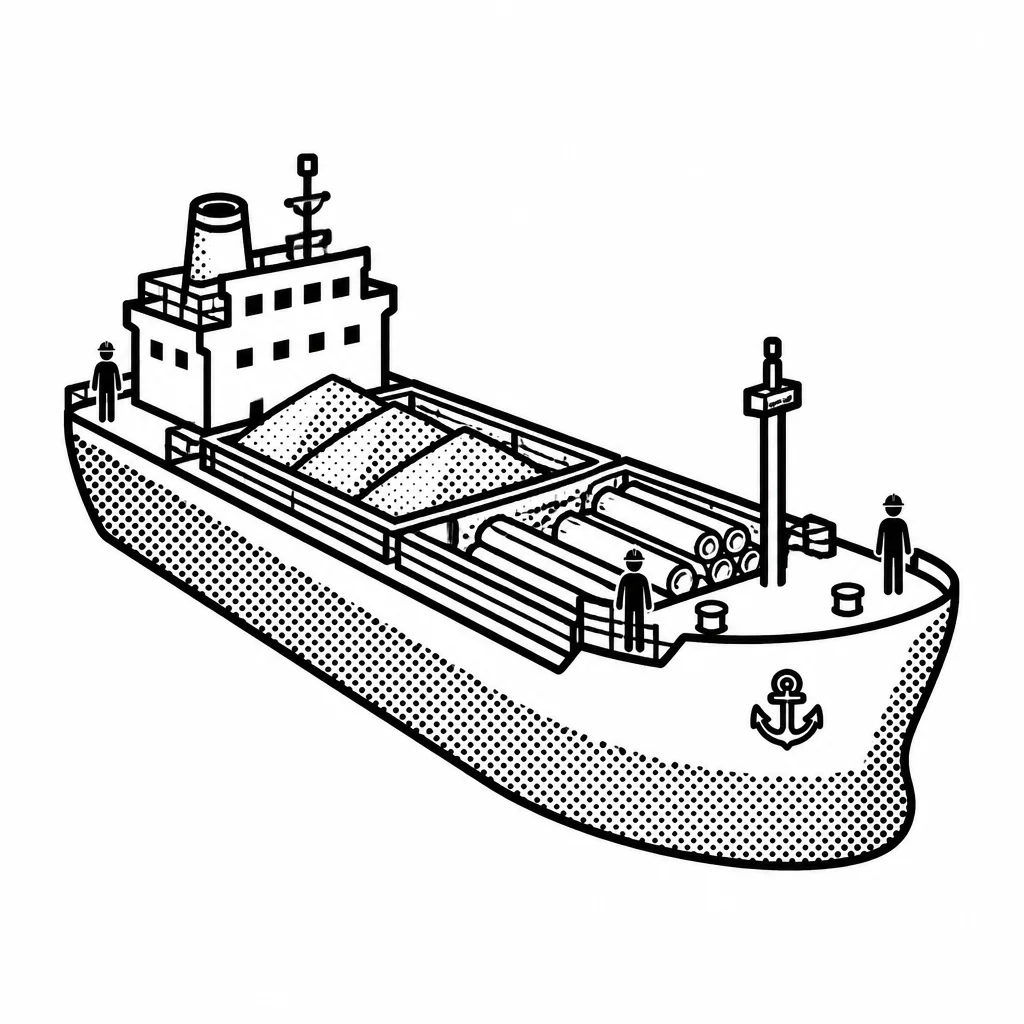
Precious Shipping owns and operates dry bulk ships that carry raw materials like grain, coal, and iron ore across the world's oceans.
Precious Shipping is a shipowner. It buys large dry bulk vessels, the kind that carry mountains of loose raw material in their bellies, and hires them out to move cargo across oceans. The cargo is the unglamorous stuff that keeps the world running: coal for power plants, iron ore for steel mills, grain for food, fertilizer for farms, and cement for buildings. The company does not usually sign long-term contracts fixing a ship to one route. Instead it operates on the "tramp" model, meaning each ship goes wherever the next paying cargo takes it, like a taxi cruising for fares rather than a bus on a fixed schedule.
The customers are commodity traders, mining companies, steel producers, and agribusiness giants — the businesses that need to move physical stuff between countries. They pay Precious Shipping a daily rate to use a ship, and that rate swings wildly with supply and demand. When cargo is plentiful and ships are scarce, day rates soar and shippers make fat profits. When too many new ships get built and demand sags, rates collapse and shipowners bleed. This is the core truth of the business: it is a price-taker in one of the most cyclical industries on earth, and management's skill lies largely in timing — buying ships cheap when the market is depressed and selling or scrapping them when it is hot. Based in Bangkok, Precious Shipping has a history stretching back to the early 1990s, when it listed on the Stock Exchange of Thailand and grew into one of the country's best-known shipping names. The fleet is made up of handy-size and supramax vessels — smaller bulk carriers that can squeeze into smaller ports and rivers, which makes them flexible and broadly useful. That flexibility is a genuine edge: these ships can serve many cargo types and many routes, so they are less hostage to any single trade.
Shipping is a brutally honest business. A ship earns money only when it is moving cargo, so every idle day is a day of pure cost — fuel, crew, insurance, and maintenance keep ticking whether the vessel sails or sits. Precious Shipping's profits therefore track the global economy closely: a slowdown in China's steel output or a disruption in grain flows shows up quickly in its results. The company also spends heavily on fleet renewal, because older ships burn more fuel and face tightening environmental rules. Like most shipowners it has leaned into fuel-efficient designs and has also invested in technology to track and cut fuel use. The payoff for investors comes through dividends paid in the good years, though those payouts are lumpy and depend entirely on where the freight market sits.
Saved answer · last researched 12 Nov 2026