Understand any stock in simple English
Enter a ticker to learn what the company does and how it makes money.
PrairieSky Royalty Ltd.
PrairieSky owns the rights to collect a slice of the oil and gas that other companies pump out of its land in Canada.
PrairieSky Royalty is a company that owns the underground mineral rights to millions of acres of land across Western Canada, mostly in Alberta and Saskatchewan. It doesn't drill wells or hire rig crews or operate heavy equipment. Instead, it signs deals with oil and gas producers who want to drill on its land, and those producers pay PrairieSky a royalty — a small cut of every barrel of oil and every cubic foot of gas they pull out of the ground.
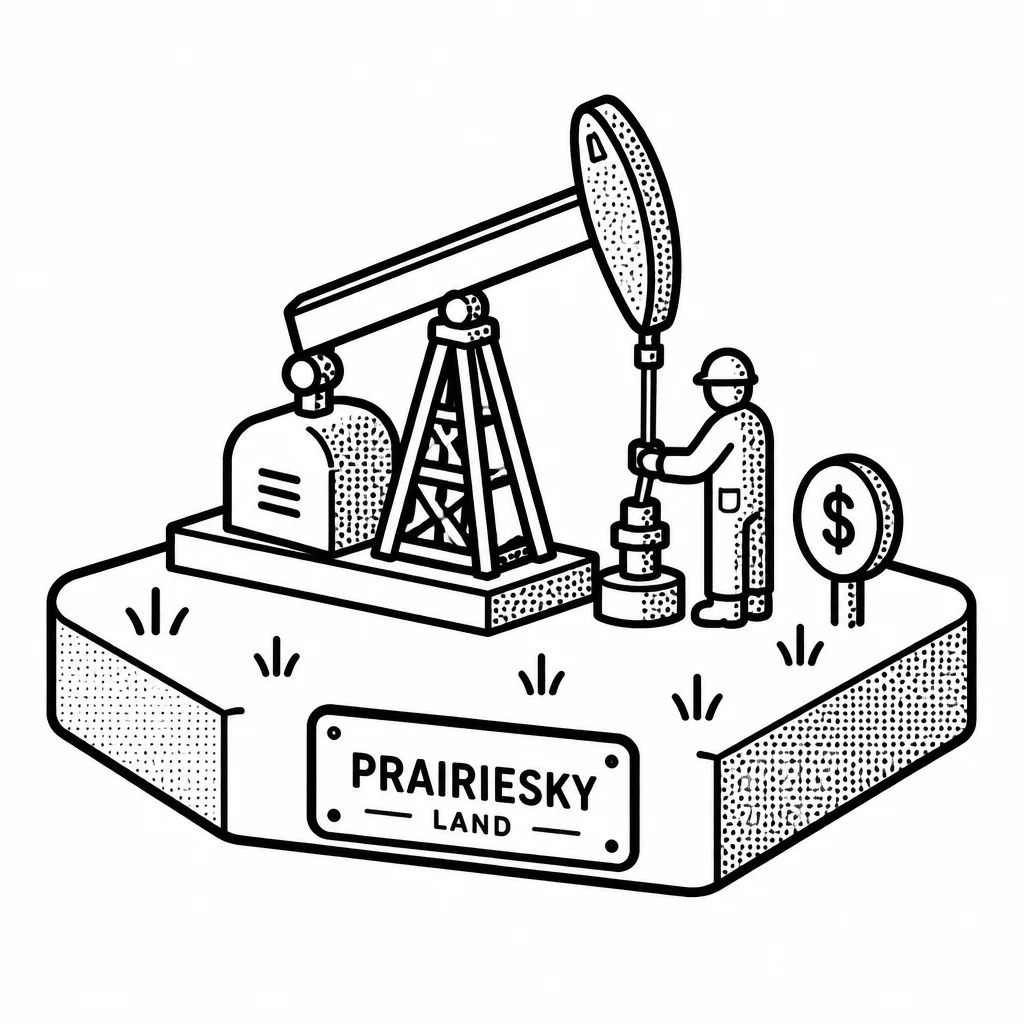
Here's the basic idea that makes this business so unusual. When a producer drills a well, it takes on all the cost and all the risk: the drilling, the labor, the equipment, the chance the well comes up dry, the environmental cleanup. PrairieSky just collects its cut, usually a percentage of what the well produces. That means its costs are tiny and mostly fixed — head office staff, land records, a few lawyers — while its revenue rises and falls with oil and gas prices and how much gets pumped. When prices are high, the money pours in; when prices crash, revenue falls but the company doesn't have to shut down rigs or lay off roughnecks. Producers choose to deal with PrairieSky because the land is already there and the terms are clear, and PrairieSky gets a steady stream of income without putting a dollar at risk in the well itself.
The royalty owners before it were often families, farmers, and institutions holding land rights. PrairieSky became a public company in 2014 when Encana (now Ovintiv) spun off its royalty business, and it has since grown by acquiring more mineral rights, sometimes in big packages. Its fortunes are tied to the health of Western Canadian oil and gas drilling, which means it is a pure, unhedged bet on the energy business — no refinery profits, no pipeline fees, just the ground itself. The company has paid out most of its cash to shareholders as dividends, which suits investors who want energy exposure with less operational risk. The vulnerability is obvious: if producers stop drilling, or if policy in Canada makes oil and gas harder to develop, the royalties shrink. But as long as the wells keep pumping, PrairieSky collects its slice for doing almost nothing.
Saved answer · last researched 12 Nov 2026