Understand any stock in simple English
Enter a ticker to learn what the company does and how it makes money.
Perseus Mining Limited
Perseus Mining digs gold out of the ground in West Africa and sells it on the global market.
Perseus Mining is a gold miner. It owns and runs gold mines in West Africa, pulls the metal out of the ground, and sells it to refineries and buyers around the world at the going gold price. It is headquartered in Perth, Australia, but almost all of the actual work — and the money — happens thousands of kilometres away in Africa.
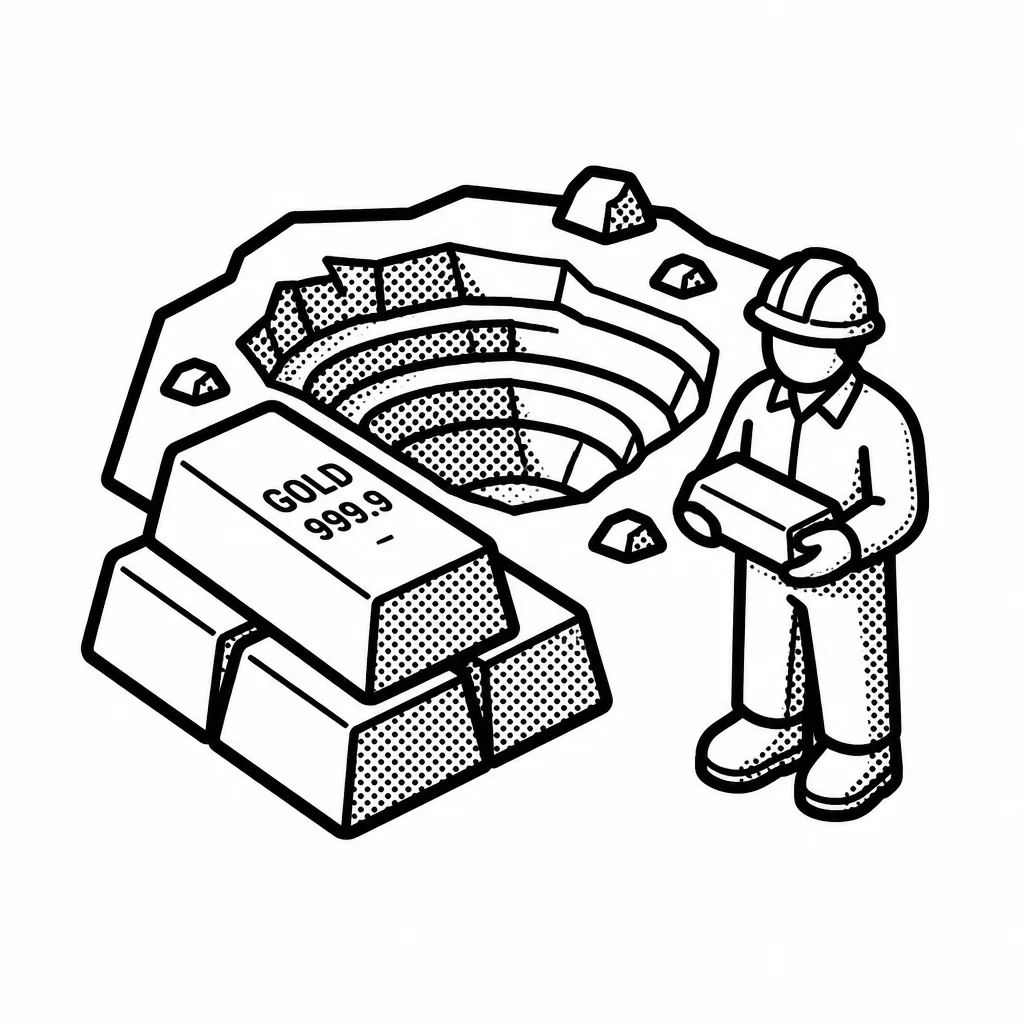
The company operates three mines: Sissingué and Yaouré in Côte d'Ivoire, and Edikan in Ghana. Each is an open-pit operation where workers blast and dig out ore, crush it, and run it through a processing plant that extracts the gold. Perseus then sells gold bars (called doré) to refineries, which purify them further before the metal ends up in banks, jewellery, and electronics. Management has described the company as a "multi-mine, multi-jurisdiction" gold producer, which is a fancy way of saying it doesn't depend on one hole in the ground. Why does this matter? Because a single-mine gold company is fragile — a flood, a strike, or a government dispute can wipe out its entire output. Spread across three mines in two countries, Perseus can keep producing even when one site stumbles. That diversification, plus a habit of keeping costs low, has let it generate real cash even when gold prices dip. Gold miners are price-takers: nobody at Perseus sets the gold price, so the whole game is about digging it up cheaply. The company's main levers are ore grade, diesel and labour costs, and keeping its plants running smoothly. It competes with other mid-tier African gold miners, and it is exposed to the usual risks of the region — political changes, royalty hikes, and security concerns in parts of West Africa. When gold prices are strong, Perseus throws off cash, which it has used to pay dividends and fund growth rather than pile up debt.
The company was built by Mark Calderwood starting in 2004, when it listed with essentially one exploration project. It spent years exploring, building mines, and surviving the 2013 gold price crash that nearly broke many small miners. Today it is a profitable mid-tier producer, not a giant like Newmont or Barrick Gold, but a steady operator that turns West African rock into cash for its shareholders.
Saved answer · last researched 12 Nov 2026