Understand any stock in simple English
State Street IG Public & Private Credit ETF
It is an actively managed fund that invests in investment-grade public and private credit debt for investors.
This is a fund, not a company that makes or sells things. It pools money from investors and uses it to buy bonds and loans — mostly "investment grade," which is the polite way of saying the borrower is considered a safe bet to pay you back, not a shaky one. An investor buys shares of the fund to get a slice of that whole pile of debt and the interest it throws off, rather than picking individual bonds themselves.
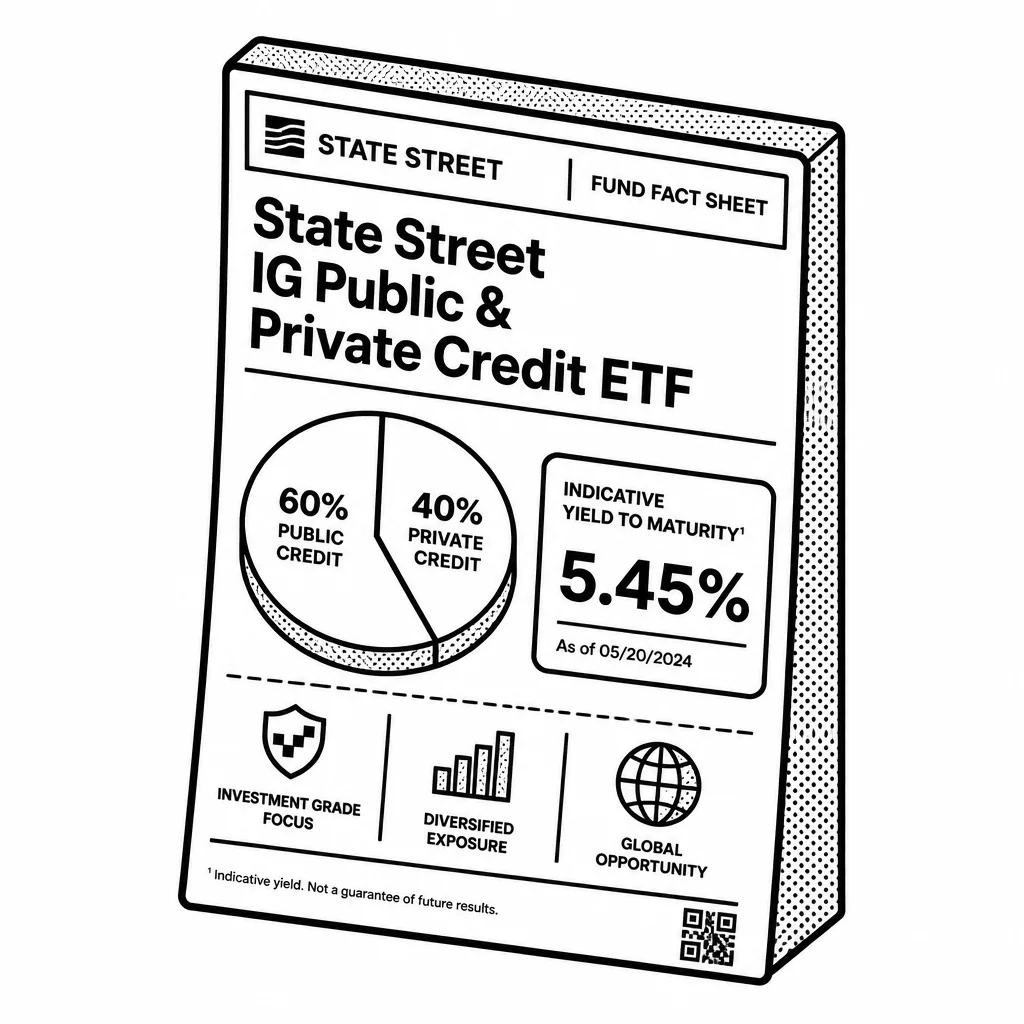
The interesting twist is the word "private" in the name. Public credit means bonds you can buy and sell on a market any day, like corporate bonds. Private credit means loans made directly to companies behind closed doors — no trading market, often higher interest, and normally reserved for big institutions. This fund blends the two so an ordinary investor can own a bit of the private lending world that used to be off-limits. State Street, the giant Boston-based financial firm, runs the fund and charges a fee for managing it, which is how the business earns its money. The appeal for investors is convenience: instead of hunting down individual private loans, they get a professionally managed mix of credit in one ticker that trades on an exchange.
The catch is worth knowing. Private loans are hard to value and hard to sell quickly, so a fund holding them carries a bit of a squeeze risk if lots of investors want out at once. And "investment grade" cuts both ways — safer than junk debt, but the yields are correspondingly modest.
Saved answer · last researched 17 Nov 2026