Understand any stock in simple English
Enter a ticker to learn what the company does and how it makes money.
Progress Software Corporation
Progress Software sells tools that help businesses build, run, and manage applications and digital experiences, including newer AI-powered ones.
Progress Software is a business-to-business software company. It sells the behind-the-scenes tools that other companies use to build and run their own applications — the digital forms customers fill out, the systems that move data between programs, and the infrastructure that keeps business software talking to itself. Its customers are mostly enterprises, and they pay for software licenses and subscriptions, often bundled with support and maintenance.
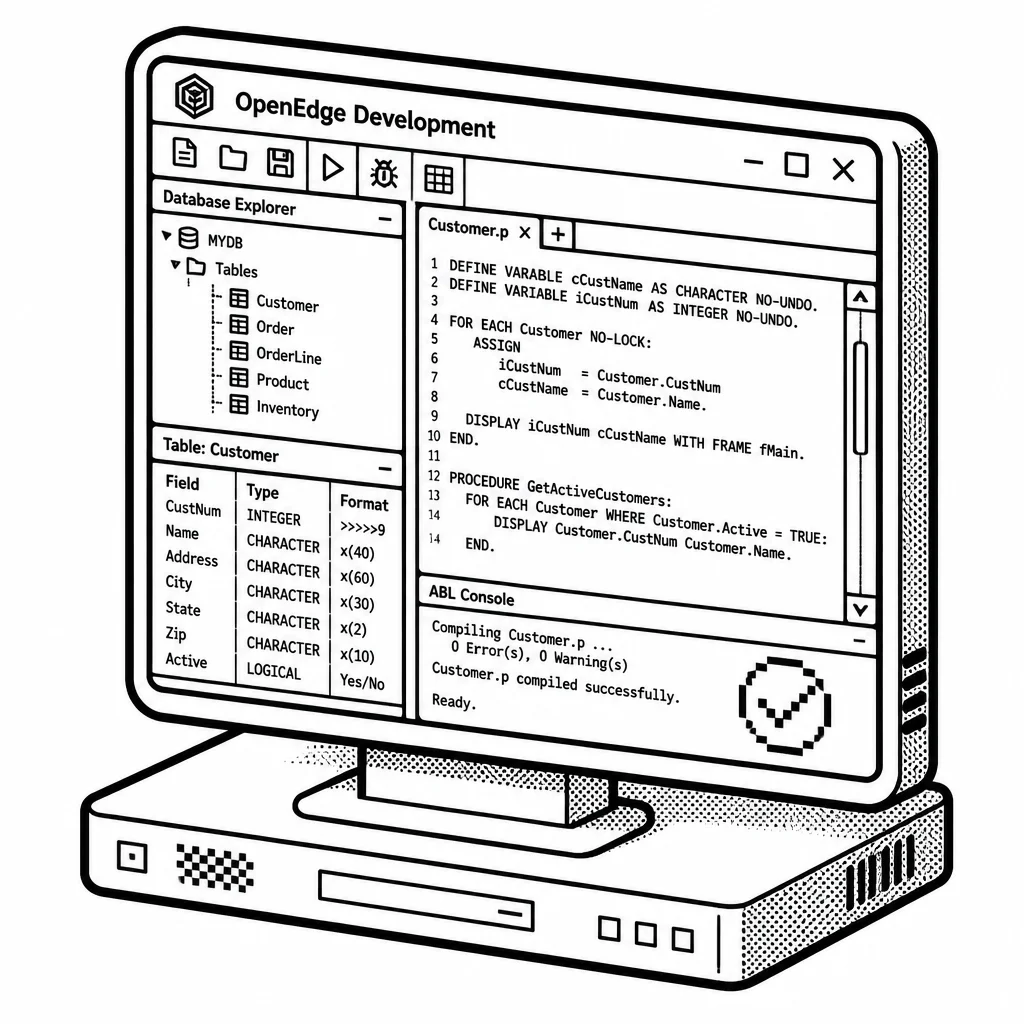
The company's best-known product is OpenEdge, a development platform that many businesses rely on to run their core operational applications — the kind of software that quietly processes orders, manages inventory, or handles billing. Progress also sells data connectivity tools like DataDirect, which let different programs and databases talk to each other, and a security and file-transfer line built around its MOVEit product. The pitch is straightforward: big organizations have lots of old and new systems that need to work together, and Progress sells the glue and the tools to keep them running. The business has shifted shape over the years through acquisitions. A major turning point was the 2023 purchase of MarkLogic, a database company, which Progress folded into its data platform offerings. Progress also owns a stake in the marketing-software world through its Sitefinity product for building websites and digital experiences. Its MOVEit file-transfer software became widely known in 2023 for a different reason: a major cyberattack exploited a flaw in the product, hitting thousands of organizations worldwide. The company disclosed the incident publicly and has since invested in security fixes, a reminder that selling infrastructure software means carrying real security responsibility.
Progress makes money on recurring licenses and maintenance, which gives it a sticky, predictable base — once a company builds its operations on OpenEdge, switching away is expensive and risky. That reliability is the core of the investment case. Growth, though, depends on acquisitions and on selling newer products like AI-related tooling, since the legacy platform base grows slowly. The company has used its cash to buy other software businesses rather than pay a big dividend, betting that it can buy established products and squeeze more value from their customer bases.
Saved answer · last researched 16 Nov 2026