Understand any stock in simple English
Enter a ticker to learn what the company does and how it makes money.
Power Grid Corporation of India Limited
Power Grid owns and runs the giant network of high-voltage wires and substations that carry electricity across India.
Power Grid is the company that moves electricity around India the way a highway system moves cars. It owns and operates the long-distance, high-voltage transmission lines and the substations that link them, carrying power from where it is generated — big coal plants, hydro dams, solar and wind farms — to the state grids and cities where people actually use it. Most people never think about it, but every time a light switches on in India, there is a good chance the power traveled along wires and through substations that Power Grid controls.
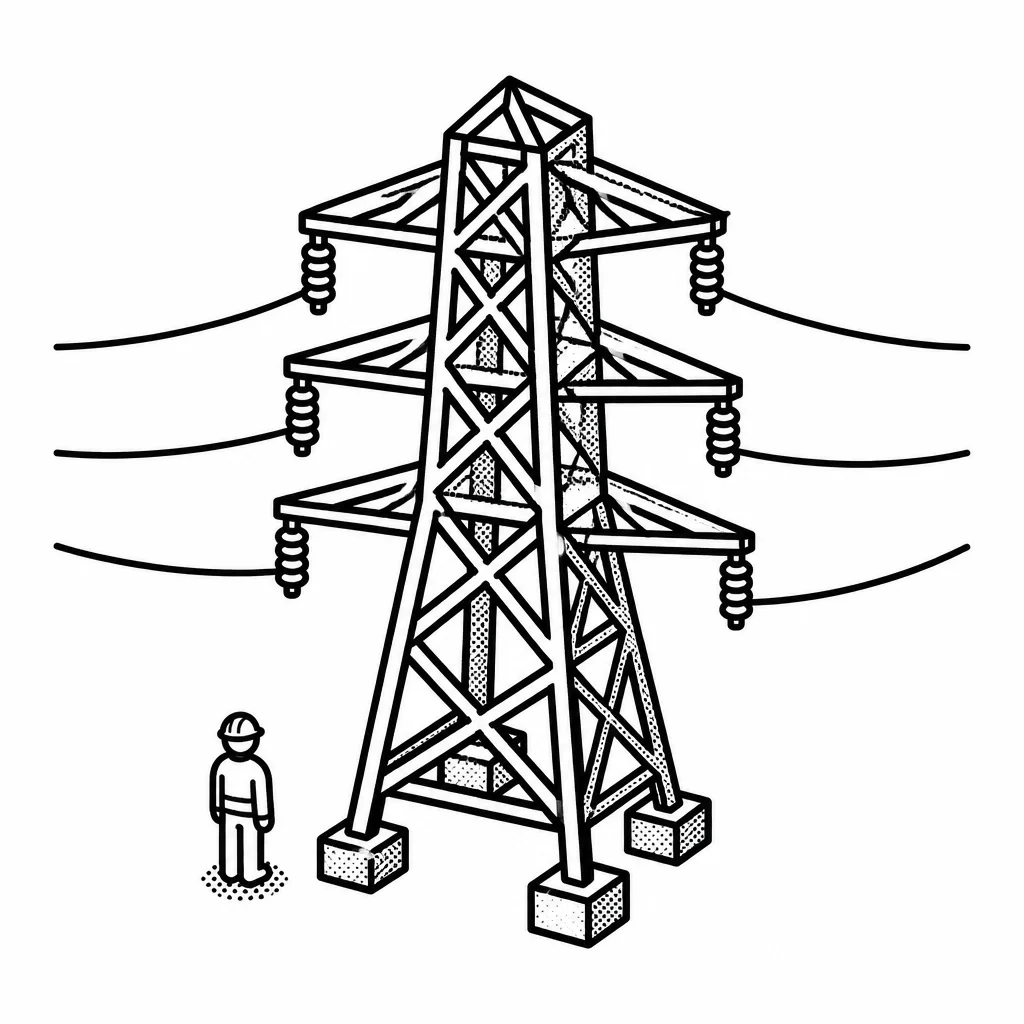
Its customers are mainly the state electricity boards, power generators, and other utilities that need to send or receive electricity. Power Grid makes money in two main ways. First, it charges these users for using its transmission network, collecting a steady fee for the service, often shared across the network through a regulated system. Second, it runs a telecom business, selling bandwidth on the fiber-optic cables wrapped along its transmission lines, plus some consultancy work. The transmission business is by far the core, and the telecom arm is a clever side-hustle: the cables are already strung up, so there is extra money in letting phone and internet companies use them. The business has one big advantage: it is essentially a regulated monopoly. You cannot easily build a second, parallel national grid, so Power Grid's networks face little direct competition, and the government regulator sets rules on how much it can earn. That makes it stable and predictable, but it also means growth depends heavily on how much the country spends on new lines and whether the regulator allows a fair return. Big spending on renewable energy and connecting new solar and wind farms to the grid is a tailwind, since more generation means more transmission needed. Power Grid was spun out of a national power company in the late 1980s and later renamed Power Grid Corporation of India Limited, moving it under the Ministry of Power. It became a listed company in 2007, with the government still holding a majority stake. It also has a notable history of laying undersea cables and handling cross-border links, such as connecting power with neighbors like Nepal and Bhutan, which shows how central it is to the region's power plumbing. One odd but useful fact: its vast fiber network was originally built for internal communications, then turned into a commercial telecom business, making the "wires company" an internet provider too.
Take a step back and you can see why it works. Power Grid does not sell electricity and does not take on the risk of whether a power plant earns a profit; it just charges a toll for using the wires. That toll is steady, regulated, and hard to compete with. The downside is that it is a capital-hungry business — building transmission lines costs a fortune, and it must keep spending to keep up with India's growing power needs. But as long as the country keeps generating more electricity and the regulator keeps allowing a reasonable return, Power Grid keeps collecting its toll, quietly keeping the lights on.
Saved answer · last researched 12 Nov 2026