Understand any stock in simple English
Enter a ticker to learn what the company does and how it makes money.
Pinnacle West Capital Corporation
Pinnacle West is a utility company that produces and delivers electricity to homes and businesses in central Arizona.
Pinnacle West is an electric utility — a company that makes electricity and runs the power lines that carry it to homes, offices, and factories. Its main business, Arizona Public Service (APS), is the largest electric utility in Arizona, serving roughly 1.4 million customers across a big chunk of the state, including most of the fast-growing Phoenix metro area. When you flip a light switch in Phoenix, the odds are good that APS is the company behind it.
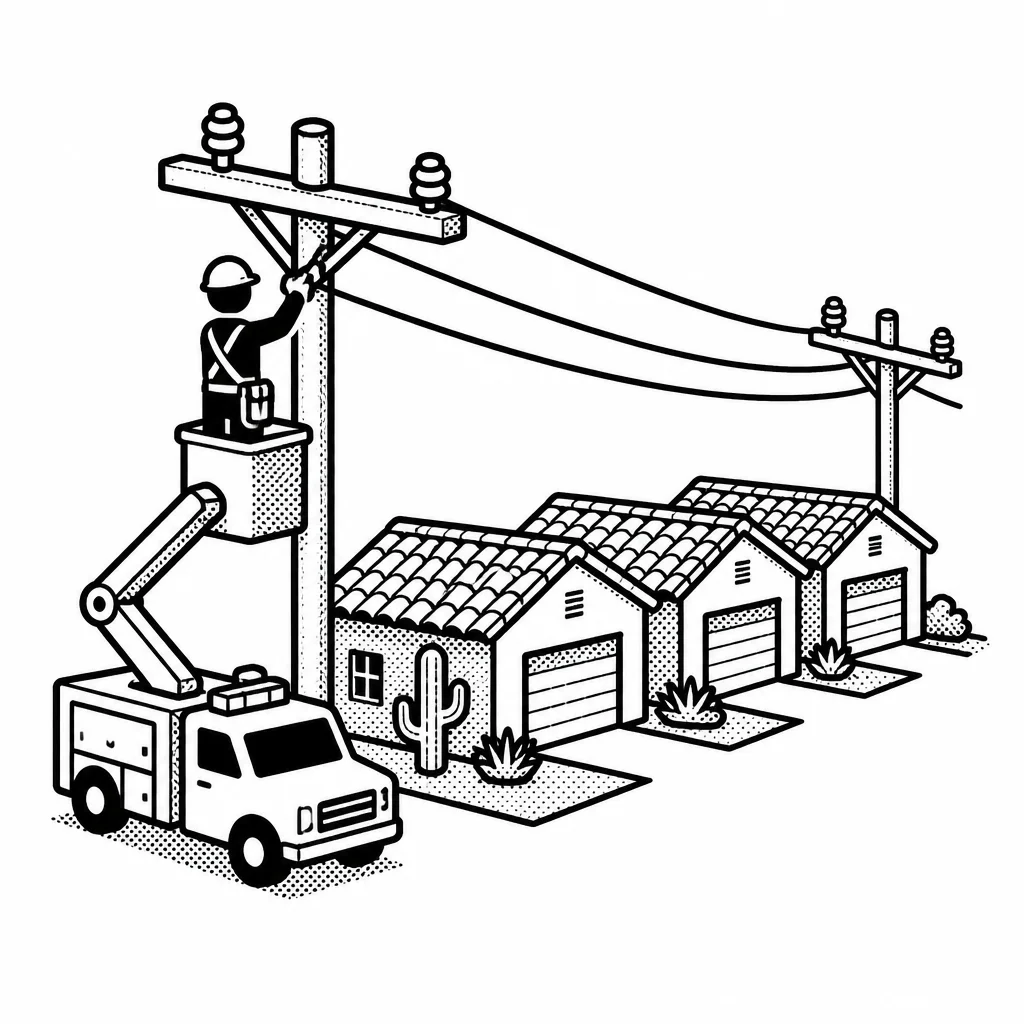
The business is about as plain as it gets. APS owns power plants, including the Palo Verde Nuclear Generating Station, the largest nuclear plant in the country, plus gas, coal, and solar facilities. It owns the poles, wires, and substations that move power around. Customers don't shop around — they pay a regulated rate set by the Arizona Corporation Commission. That regulated setup is key: the company earns a modest, government-approved return on the money it invests in plants and power lines, so its profits depend less on chasing customers and more on building and maintaining the system while running it efficiently. That means growth mainly comes from building. Central Arizona has been one of the fastest-growing regions in the country, and every new subdivision, data center, and factory adds customers and demand. More demand means APS can invest in more infrastructure and earn a return on it. Lately, the company has flagged a surge in electricity demand from data centers and chip factories, which is reshaping how much it needs to build. It also faces real pressures: extreme Phoenix heat strains the grid and drives big summer bills, wildfire risk is a growing concern, and regulators can push back on rate increases. Its rates have climbed, and customer groups have objected.
Pinnacle West is a steady, dividend-paying utility stock, the kind investors buy for predictable income rather than excitement. It also owns a smaller unregulated arm and has a real-estate subsidiary, but electricity is overwhelmingly the story. The future hinges on a simple trade: a growing Sun Belt region needs more power, and the company gets to profit by building the wires and plants to supply it — so long as regulators let it charge enough to pay for the work.
Saved answer · last researched 12 Nov 2026