Understand any stock in simple English
Enter a ticker to learn what the company does and how it makes money.
Pentair plc
Pentair sells pumps, filters, and pool equipment that move and clean water for homes, businesses, and cities.
Pentair makes the machines that move and clean water. If you have a swimming pool, a spa, or a well pump at home, there's a decent chance a Pentair product is quietly doing the work. The company sells pool equipment like pumps, filters, heaters, and lights, plus water treatment systems that filter and soften water for homes and businesses, and industrial pumps and valves used in factories and municipal water systems.
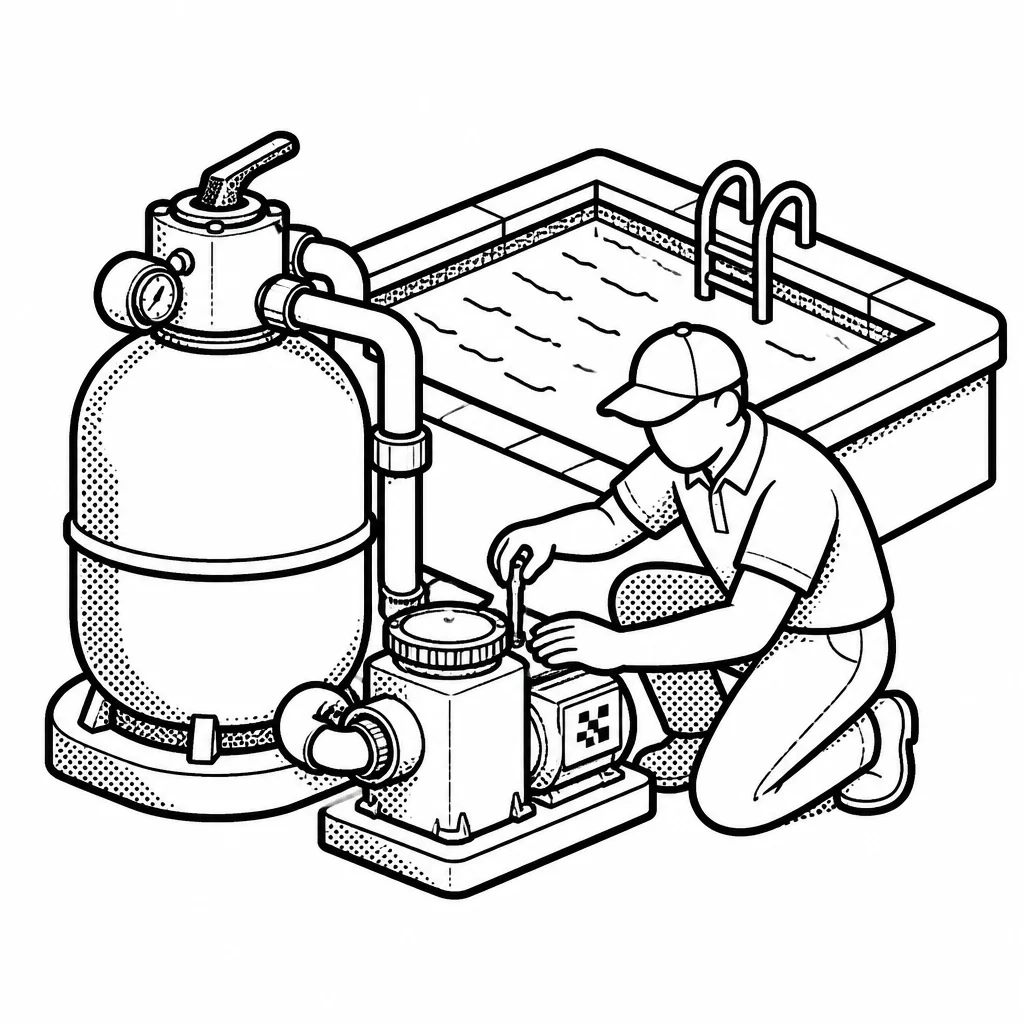
The business splits into two main parts. One is Pool, which sells to pool builders, retailers, and service companies — this is the bigger and steadier moneymaker, helped by the fact that once someone owns a pool they keep buying parts, chemicals-adjacent gear, and replacements for years. The other is Water Solutions, which sells filtration systems, pumps, and valves to homes, businesses, and industry. Customers pay Pentair because the brand is known, the products are reliable, and replacing a pool pump or filter is not the moment to experiment with a cheap unknown. Pentair is technically headquartered in the United Kingdom, though most of its operations and customers are in the United States. It used to be a much broader industrial conglomerate — at one point it owned toolmaker Stanley Black & Decker-adjacent businesses and electrical enclosures — but it has spent the last decade slimming down to focus on water. That focus sharpened in 2024 when it sold its industrial filtration business to a private buyer, leaving it more purely a pool and water treatment company.
The pool side is cyclical in an interesting way: new pool construction dries up when homeowners feel poor, but the installed base of existing pools keeps needing pumps and filters regardless. Pentair also returns cash to shareholders, paying a dividend and buying back stock. The main risks are a housing slowdown that chills new pool builds and competition from cheaper equipment makers, but the recurring replacement demand gives it a sturdy floor.
Saved answer · last researched 12 Nov 2026
Timeline
Five Men and a Balloon
In 1966, five men who had worked at Litton Industries started a company in a suburb of St. Paul, Minnesota, to make high-altitude balloons. They named it Pentair: "penta" for the five of them, "air" for the balloons. It was a simple idea with a clear market, and they had the technical background to pull it off.
The Balloon Business Nearly Dies
It didn't work. The balloons sold badly, and so did a side venture making canoes, and by 1968 the company was nearly bankrupt. One founder had died and three had quit, leaving Murray Harpole alone. He brought in an outside investor, Ben Westby, and together they bought Peavey Paper Mills, a cheap, badly run, debt-heavy mill Harpole thought he could fix. That paper mill, not balloons, became the company's backbone for decades.
Pentair Buys a Power Tool Factory
In 1981, Pentair bought a power hand tool factory from Rockwell International. It couldn't use the Rockwell name, so it brought back a retired brand called Porter-Cable. This was the company's first real step into tools.
Pentair Sells Its Paper Business
By 1997, paper had shrunk to about a tenth of revenue, and Pentair sold the papermaking business to Consolidated Papers. The company had already been placing bets on water, buying the Fleck Controls valve business and the General Signal Pump Group. The backbone was gone, but a new one was forming.
Water In, Tools Out
In 2004, Pentair paid $850 million for WICOR Industries, the old water systems arm of Wisconsin Energy, which made pumps, filters and pool equipment under brands like Sta-Rite and SHURflo. To pay for it, Pentair sold its entire tool operation to Stanley Black & Decker. Two big moves in one year: buy deeper into water, get out of tools.
Pentair Merges With Tyco's Flow Control
In 2012, Pentair combined with Tyco International's flow control business to form Pentair Ltd., based in Switzerland. Tyco shareholders ended up with a little more than half of the new company. It was now a giant, with 30,000 employees and 100 plants in 30 countries. But a company that big is rarely simple, and the mix of businesses would not last.
Valves & Controls Sold to Emerson
Pentair agreed in 2016 to sell its Valves & Controls business to Emerson, and the deal closed in 2017, bringing in more than $3 billion. The sale was a deliberate slimming down, clearing the way for an even bigger split.
Pentair Splits in Two
In 2018, Pentair separated into two public companies: the water business kept the Pentair name and the PNR ticker, while the electrical unit became nVent. CEO Randall Hogan stepped down to chair the electrical side. After years of buying and selling, Pentair was now a pure water company, doing one thing instead of many.
Pentair Buys Manitowoc Ice
In 2022, Pentair bought Manitowoc Ice for $1.6 billion, strengthening its commercial water business. The Manitowoc ICE Neo later won a Kitchen Innovation Award, a nice reminder that the company's machines now sit in restaurant kitchens as well as pools and homes.
The Pool Inventory Shock
Then came 2026. Pentair pre-announced preliminary second-quarter results that showed pool distributors were clearing out old inventory instead of buying new, cutting Pool sales by about $170 million and income by about $105 million. Sales were now expected to fall about 17% instead of growing slightly, and full-year guidance was slashed from modest growth to a decline. The stock dropped 15% in a single day, and a securities fraud class action followed. The pool business, the heart of the pure water bet, had suddenly become the problem.
Pentair Restores a Pool CEO
Pentair had folded its pool segment under De'Mon Wiggins in April 2026, but in October it brought back a dedicated pool CEO, naming Josh Cowley. Management bet the slump was a temporary inventory correction and expected growth to return by 2027. After years of shedding businesses to focus, Pentair was now betting its future on one segment getting back on its feet.