Understand any stock in simple English
Enter a ticker to learn what the company does and how it makes money.
Pantheon Infrastructure PLC
It is an investment fund that buys stakes in infrastructure assets like power grids, data centers, and toll roads, aiming to pay investors income and grow their money over time.
Pantheon Infrastructure is a publicly listed investment trust that does something simple in theory but complicated in practice: it pools money from investors and uses it to buy pieces of the physical things modern economies run on. Think power plants, electricity grids, data centers, toll roads, ports, and pipelines. These are assets that tend to produce steady, predictable cash flows because people keep paying for electricity, internet access, and road use regardless of what the stock market is doing. The fund buys these stakes, collects the cash those assets throw off, and passes a chunk of it back to shareholders as dividends while also hoping the assets themselves grow in value.
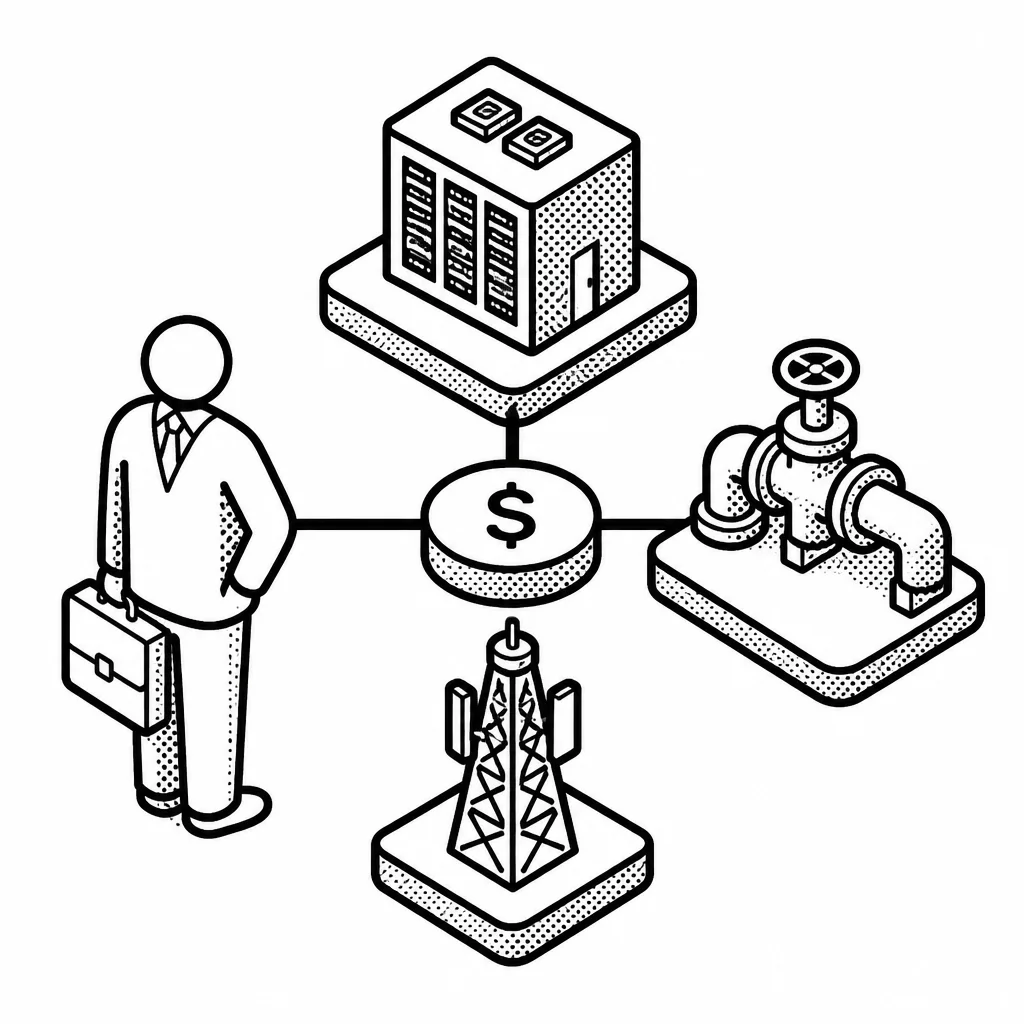
The interesting wrinkle is how it buys. Pantheon Infrastructure doesn't go out and negotiate directly with, say, a wind farm developer. Instead, it invests alongside other specialist infrastructure managers — often buying into funds run by those managers, or taking secondary positions from investors who want to sell out early. This gives it access to a broad spread of assets across countries and sectors without needing to build its own deal team for every market. It's a bit like buying a seat on many different buses instead of owning one bus yourself: more diversification, less control. The fund is managed by Pantheon, a well-established private markets investor based in London, and it listed on the London Stock Exchange in 2021. Its pitch to investors is income plus growth — the steady cash yield of infrastructure paired with the chance that these assets appreciate over time. It targets a diversified global portfolio, meaning investors get exposure to infrastructure in multiple countries rather than betting on one regulatory regime or one currency. That geographic spread is a genuine selling point: if one country's energy policy turns hostile, the whole portfolio doesn't collapse. Infrastructure funds like this one compete for investor money against other listed infrastructure trusts and against private infrastructure funds that big pension schemes can access directly. The trade-off is liquidity versus price. A listed trust lets you buy and sell shares any day, but those shares can trade at a discount to the underlying assets — a persistent frustration for this sector. Private funds lock your money up for years but avoid that daily price noise. Pantheon Infrastructure also has to justify its fees, since investors are effectively paying for the manager's deal-sourcing and asset-picking skill on top of the underlying assets' own costs.
The fund's fortunes depend on two things: the quality of the assets it owns and the price it pays for them. Infrastructure has become a crowded, expensive market as pension funds and sovereign wealth funds pile in, which pushes prices up and future returns down. On top of that, higher interest rates make steady, bond-like cash flows less valuable than they were when money was free. For a shareholder, the bet is that Pantheon's access and selection are good enough to overcome those headwinds — and that the dividend keeps flowing while you wait.
Saved answer · last researched 17 Nov 2026