Understand any stock in simple English
Enter a ticker to learn what the company does and how it makes money.
Pinnacle Minerals Limited
Pinnacle Minerals is a small Australian explorer hunting for mineral sands, rare earths, lithium, uranium and kaolin — the raw ingredients behind batteries, magnets, ceramics and nuclear fuel.
Pinnacle Minerals is a tiny Australian exploration company, the kind of business that goes looking for buried treasure rather than digging it up yet. Its shopping list is unusually broad for a company its size: mineral sands (the gritty stuff used to make titanium pigments and ceramics), rare earths (the exotic metals inside magnets for electric cars and wind turbines), lithium (for batteries), uranium (for nuclear power) and kaolin (a fine white clay used in paper, paint and porcelain). It owns or has stakes in exploration ground, mostly in Australia, and its job is to prove whether any of that ground is worth mining.
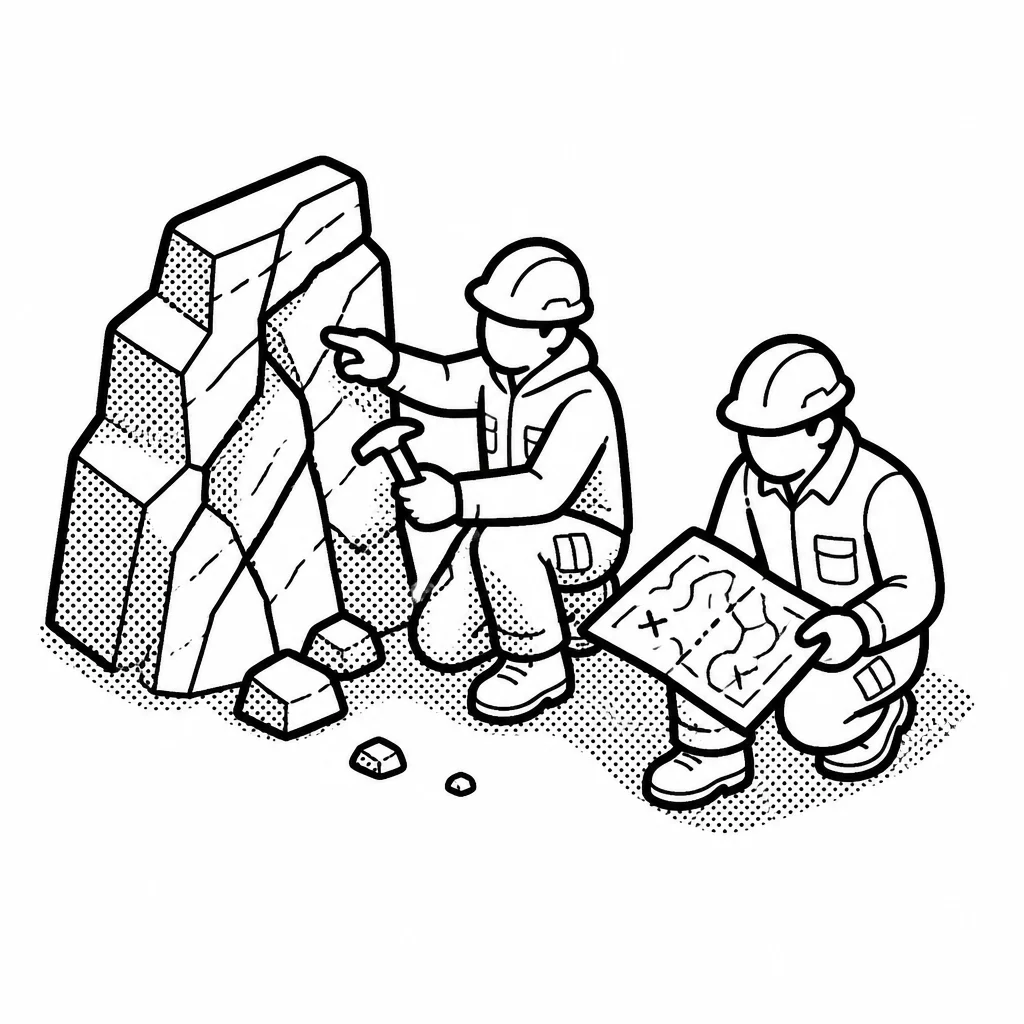
The way this works is simple to describe and hard to do. An explorer spends money on geology, drilling and testing to turn dirt into a resource — a measured, trustworthy estimate of how much ore is there and how rich it is. Pinnacle doesn't sell products to customers. Its "customer" is really the market itself: if it finds something valuable, it can sell the project to a bigger miner, bring in a partner to fund the work, or raise money from investors to keep going. Investors buy the stock as a bet on discovery, which is why small explorers swing wildly on a single drill result. Pinnacle is a micro-cap, so it lives or dies on cash management. It has no mining revenue to fall back on, so it funds work by issuing shares and keeping costs lean. Its broad commodity mix is a deliberate hedge — if rare earths or lithium prices sag, kaolin or uranium might still interest buyers. That breadth also makes it harder to explain, and spreading a small budget across five commodities means none of them gets the full attention a focused explorer would give.
The honest picture: this is a speculative, early-stage company with no certainty any of its ground will ever become a mine. Its value depends on drill results, commodity prices and the goodwill of investors willing to fund the next round. For a resource investor, that's the point — a cheap lottery ticket on what's underneath the soil. For everyone else, it's a reminder that exploration is a business of spending money now for a payoff that may never arrive.
Saved answer · last researched 16 Nov 2026