Understand any stock in simple English
PIMCO Income Strategy Fund
PIMCO Income Strategy Fund is a closed-end fund that pools investor money and spreads it across many types of bonds to pay investors a steady stream of income.
PIMCO Income Strategy Fund is a closed-end fund. That means it raises money once by selling a fixed number of shares, then invests that pile of cash on behalf of the people who bought in, and those shares trade on the New York Stock Exchange like a stock. An investor buys shares to collect regular monthly income, mostly from interest on bonds, rather than to bet on a stock price soaring.
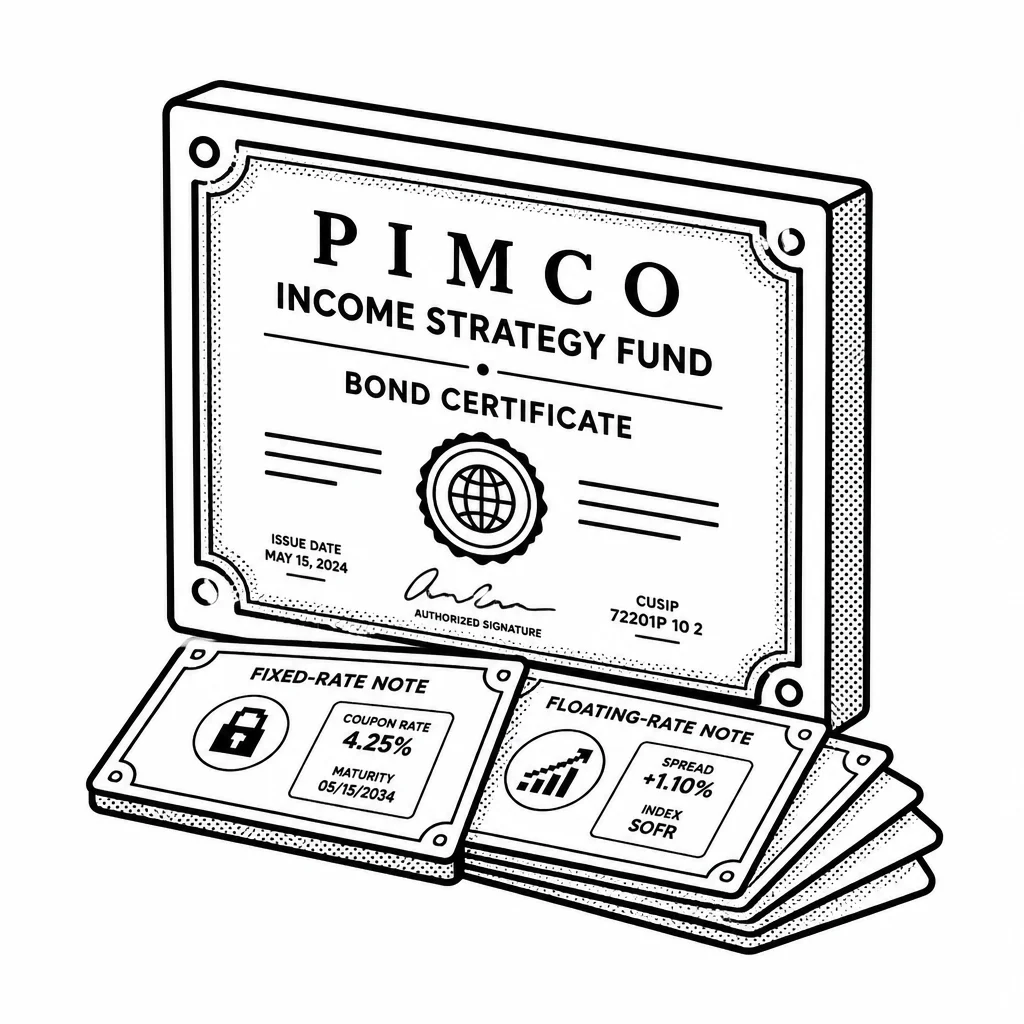
The fund's job is to earn high current income by spreading money across many kinds of debt — government bonds, corporate bonds, mortgage-backed securities, and other credit — rather than parking it in one safe corner. A team of professional managers at PIMCO decides where to put the money and shifts it around as markets change, hunting for the best yield for the risk. This "dynamic multi-sector" approach is the selling point: instead of an investor picking bonds alone, they get a whole team constantly rebalancing a broad bond portfolio. The catch with any closed-end fund is that its share price can drift away from the actual value of the bonds it holds. If investors get nervous, the shares can trade at a discount to what the fund is really worth, and if they get excited, at a premium. The fund also uses leverage — borrowing money to buy more bonds — which can boost income in good times but magnify losses when credit markets turn ugly.
PIMCO, the bond giant based in California, manages the fund and earns a fee based on assets, so its incentive is to grow and keep the portfolio healthy. For investors, the appeal is a simple one: a professionally run, diversified bond portfolio with a monthly check, without having to build it themselves. The risk is that bond markets can be volatile too, especially when rates and credit conditions shift.
Saved answer · last researched 17 Nov 2026