Understand any stock in simple English
PIMCO Corporate & Income Strategy Fund
A closed-end fund that pools investor money and lends it out through corporate bonds and other credit investments to generate steady monthly income.
PIMCO Corporate & Income Strategy Fund is a closed-end fund, which is a bit like a mutual fund that trades on a stock exchange like a regular stock. Investors buy shares in it, and the fund uses that money to buy bonds and other credit investments — mostly corporate debt from around the world — and pays out the income it collects, usually every month.
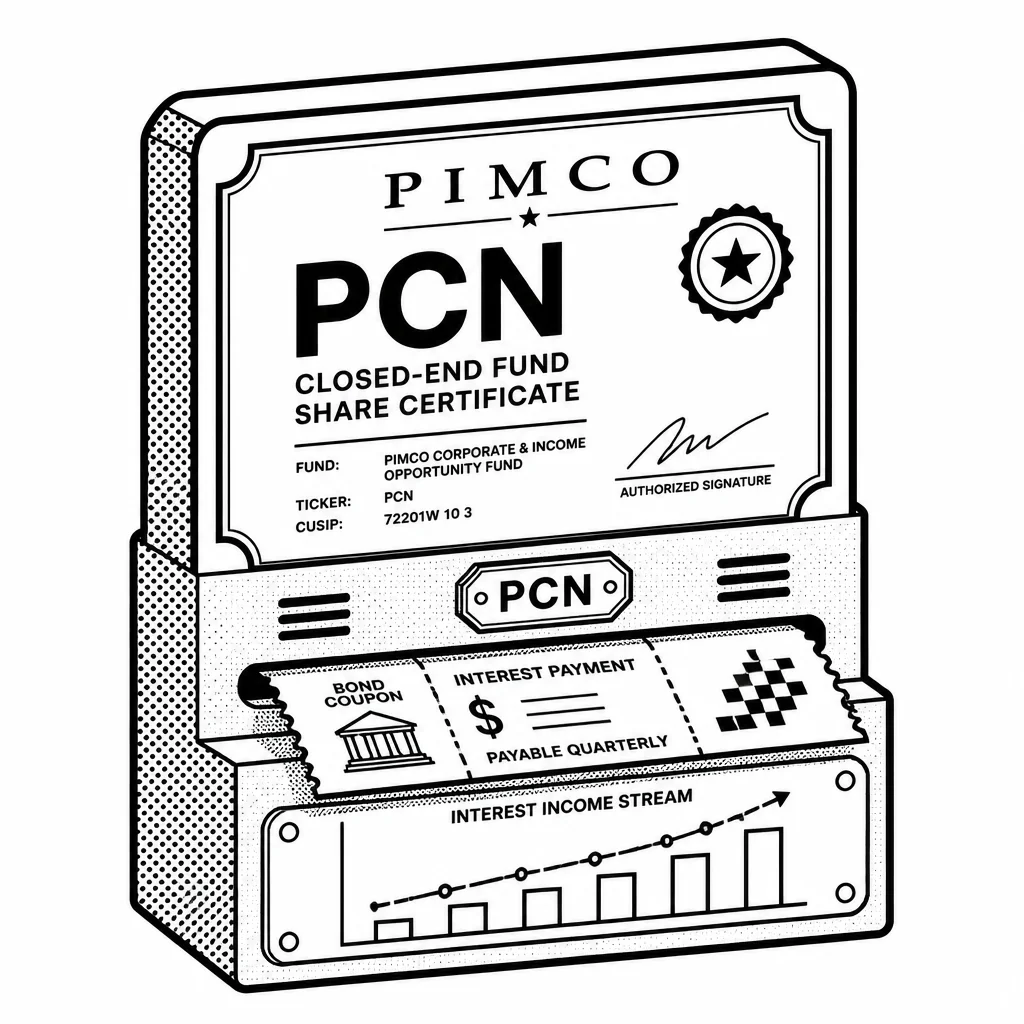
Here's the basic idea. Companies need to borrow money, and they pay interest to whoever lends it to them. This fund does the lending by buying those bonds, and it focuses on higher-yielding credit, meaning riskier or longer-dated debt that pays more interest than plain government bonds. A professional manager at PIMCO decides which bonds to buy and sell. The fund also uses leverage — it borrows money itself to buy more investments — which can boost returns but also turns up the risk. What an investor gets is a stake in that portfolio and a share of the monthly cash it throws off. The big appeal is income: people who want regular payouts from credit markets without picking bonds themselves can buy a single fund. The catch is that closed-end funds often trade at a price above or below the actual value of their holdings, and leverage cuts both ways — great when bonds do well, painful when they don't.
PIMCO, based in Newport Beach, California, is one of the world's largest bond managers, which gives this fund serious research muscle behind its credit picks. Competitors are other credit-focused closed-end funds and bond funds, such as BlackRock's line of income funds. The fund charges management fees that come out of the portfolio, and its share price can swing with interest rates and credit conditions, so it is really a tool for income-focused investors who understand that the monthly check comes with real market risk.
Saved answer · last researched 17 Nov 2026