Understand any stock in simple English
PowerCell Sweden AB (publ)
PowerCell makes hydrogen fuel cell stacks and systems that turn hydrogen into electricity for vehicles, ships, aircraft, and stationary power.
PowerCell makes the part of a hydrogen vehicle that actually does the work: the fuel cell stack. A fuel cell takes hydrogen gas and oxygen from the air and quietly combines them to make electricity, with water and heat as the only exhaust. That electricity then drives a motor or powers a building. So instead of a big lithium battery that you plug in, you get a device that keeps making power as long as you keep feeding it hydrogen.
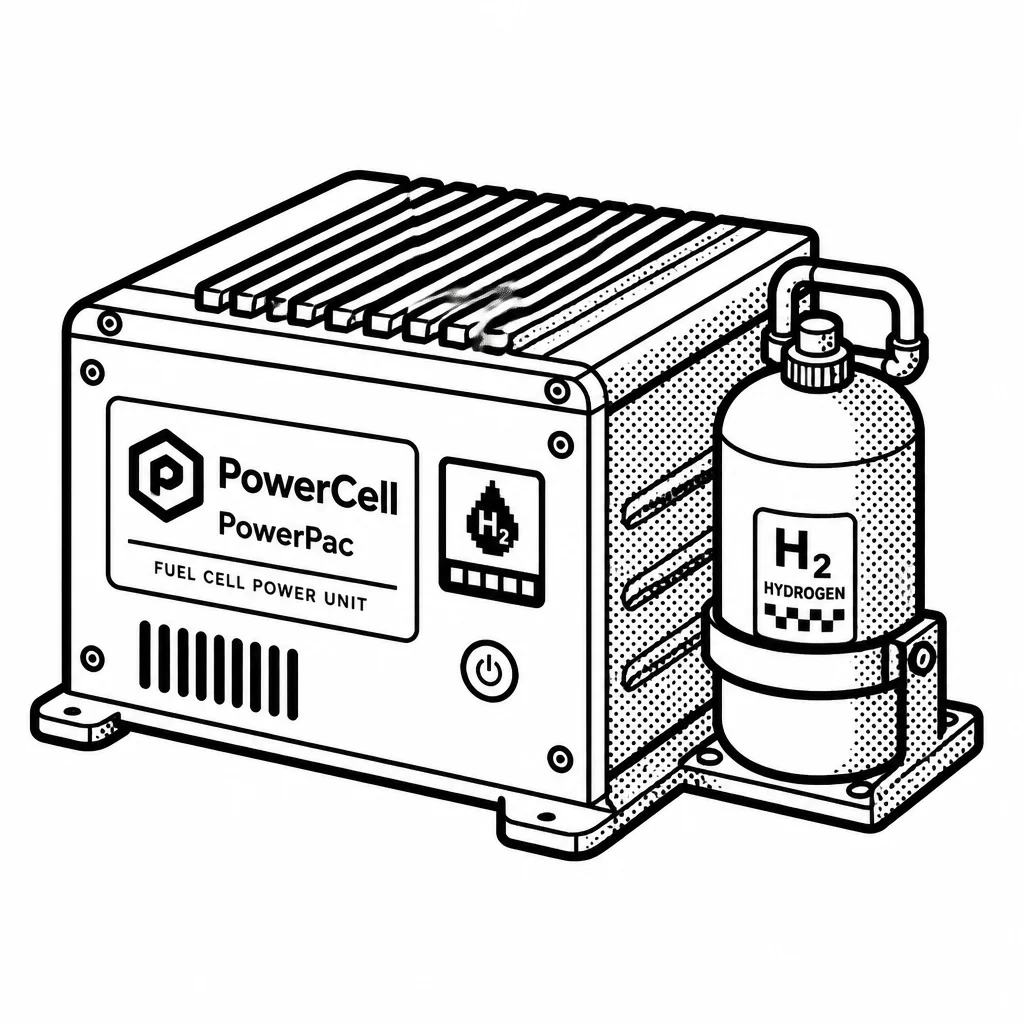
The company is based in Gothenburg, Sweden, and sells to four main kinds of customers: automakers and truck builders, marine and aviation projects, and companies that need steady power on the ground, such as backup power for data centers or construction sites. It sells both the bare stacks, which other companies build into their own systems, and complete fuel cell systems with the cooling, controls, and electronics already included. Customers come to PowerCell because fuel cells pack more energy into less weight than batteries, which matters a lot when a truck, ship, or plane needs to run all day and refueling quickly matters more than plugging in. The hard truth is that this is still a small, money-losing company. Hydrogen fuel cells are expensive compared with diesel engines and batteries, and the refueling network for hydrogen is thin. PowerCell has spent years investing in factories and development, and it has been burning cash to do it. Bigger players such as Cummins and Toyota are also chasing hydrogen, so PowerCell has to prove its technology is better or cheaper to win orders. Its edge is deep fuel cell know-how and a head start in the Nordics, but it lives or dies on whether the hydrogen economy actually arrives at scale. There are real reasons for optimism. Governments in Europe and elsewhere are pushing hydrogen as a way to clean up heavy transport and industry, and PowerCell has landed marine and aviation projects that show its technology works in tough settings. It has also worked with major industrial partners to get its stacks into real products. But the path to profit is long, and the company depends on customers placing large, repeat orders rather than one-off pilot projects. Until that happens, it is a bet on a future where hydrogen becomes a normal fuel, not a niche experiment.
So the simple version: PowerCell is a Swedish engineering firm selling the engines of the hydrogen age, and its stock is a wager that heavy transport will eventually switch from diesel to hydrogen. If that switch happens, PowerCell wants to be supplying the key component. If it stalls, the company will keep spending money it does not yet earn.
Saved answer · last researched 17 Nov 2026