Understand any stock in simple English
Enter a ticker to learn what the company does and how it makes money.
Everpure, Inc.
Everpure sells data storage hardware, software, and services that help big organizations store and manage their data.
Everpure is a data storage company. It sells the hardware and software that big organizations — hospitals, banks, government agencies, universities, and large technology companies — use to keep enormous amounts of digital information safe and quickly accessible. Any time an organization needs to store millions of files, run databases, or keep backups, it needs a storage system. Everpure builds those systems.
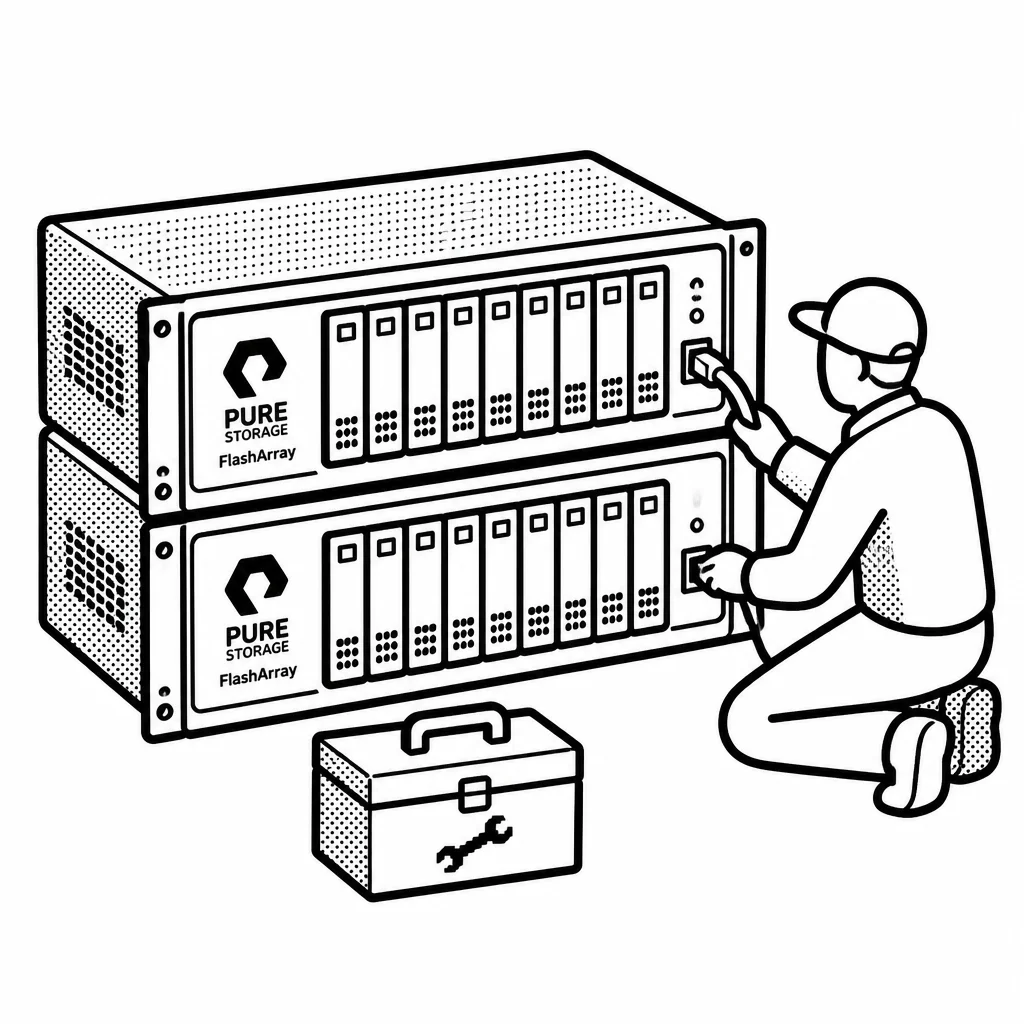
The core product is a flash-based storage array, a refrigerator-sized box packed with memory chips instead of spinning disks. Because there are no moving parts, these arrays read and write data far faster than old-fashioned disk storage, which matters enormously for things like running databases, virtual machines, and analytics. Everpure's secret sauce is its software, which manages how data flows in and out of that hardware so efficiently that customers often get more speed and capacity than they expected. Customers pay for the hardware upfront and then add software subscriptions and support contracts on top, which keeps money coming in year after year. The storage market is brutally competitive. Everpure goes head-to-head with giants like Dell Technologies, Hewlett Packard Enterprise, and NetApp, plus cloud providers like Amazon Web Services that rent out storage over the internet and have been steadily eating into the traditional hardware business. Everpure's pitch is simplicity and reliability: its systems are designed to be set up in minutes and to keep running without babysitting, which appeals to overworked IT teams. The company has also pushed into selling storage as a subscription service, so customers can pay monthly instead of buying big boxes outright — a model that mirrors how cloud computing works and keeps customers stickier. One thing to know: Everpure has historically been unprofitable on a GAAP basis, burning through cash as it spends heavily on research and development and on sales teams to win large enterprise accounts. It went public in 2015 and has grown revenue steadily, but the question investors keep asking is whether it can eventually turn a profit while fending off cheaper cloud alternatives. The company also made a big bet on a new generation of flash technology called DirectFlash, designing its own drives rather than buying off-the-shelf parts — a costly strategy that could pay off if it delivers better performance and lower costs at scale.
If you are looking at this as an investment, the key tension is simple: Everpure sells a genuinely good product into a market that is shifting toward rented cloud storage. Its subscription push and software layer are attempts to stay relevant as that shift happens. Whether it succeeds depends on whether big customers keep choosing to own their storage rather than rent it — and whether Everpure can finally start making money while they decide.
Saved answer · last researched 10 Nov 2026
BIG PICTURE
Everpure's storage systems sit inside 64% of the Fortune 500
- 64% Fortune 500 companies that are Everpure customers
- 36% Fortune 500 companies that are not Everpure customers
Nearly two out of three of America's biggest companies already run Everpure storage somewhere, the company said on its May earnings call. That installed base is the opening, not the finish: Everpure earns money selling the hardware and the subscriptions attached to it, and each existing account is a chance to sell more data software and services. Expansion, not finding brand-new customers, is where much of the growth has to come from. Source: Everpure Q1 fiscal 2027 earnings call, data from 2026
Timeline
Two Johns Start Pure Storage
In 2009, John Hayes and John Colgrove started Pure Storage with a simple bet: the old way of storing business data, with spinning disks, was slow and clumsy, and flash memory could do the job far better. So they built all-flash storage systems and sold them by subscription, so customers didn't have to buy big boxes up front. The company set up shop in Santa Clara, California, and its whole idea was to make storing and managing data feel less like a headache.
Pure Storage Goes Public
Six years later, Pure Storage listed on the New York Stock Exchange, and it also launched Evergreen, a subscription model that turned selling hardware into a steady stream of recurring revenue. That recurring base became the heart of the company's economics, because customers who keep paying every year are worth far more than a one-time sale.
Pure Storage Becomes Everpure
After 17 years, the company changed its name to Everpure. The reason was simple: it no longer saw itself as just a storage company, but as a data management company for the AI era, where companies need help handling huge amounts of data, not just storing it. It started trading under the new name on the NYSE while keeping its old ticker.
Everpure Moves to Buy 1Touch
To make good on that broader data mission, Everpure announced plans to buy 1Touch, a company that helps find and organize data. The idea was to give the Everpure platform the context and discovery tools that make a company's data actually usable for AI, and the deal was expected to close a few quarters later.
First Billion-Dollar Quarter
The rebrand landed at a moment of real strength: Everpure reported its first billion-dollar quarter, with revenue up about a fifth from a year earlier, and full-year growth well above what the company had first promised. In plain terms, the business was growing faster than it had told investors to expect.
Stock Falls Despite a Beat
Then came a sharp reminder that a good business and a happy stock market are two different things. Everpure beat earnings estimates, and revenue jumped 35%, yet the stock fell more than 16% in a day, because investors worried about rising memory chip costs and customers pulling purchases forward. The company chose to earn less on its products so customers wouldn't get crushed by rising component prices, a trade-off that cost it on Wall Street but protected its relationships.
A Second Hyperscaler Deal
The next quarter showed the strategy working: revenue rose 38%, operating profit jumped 77%, and Everpure won a design and supply deal with a second top-five hyperscaler, with the real volume expected later. Management said the company had entered breakout territory in its core enterprise market, powered by its DirectFlash technology and its Evergreen//One subscription.