Understand any stock in simple English
Enter a ticker to learn what the company does and how it makes money.
Orizon Valorização de Resíduos S.A.
Orizon runs landfills and waste-treatment plants in Brazil, charging cities and factories to take their garbage and turn part of it into energy and recycled products.
Orizon is one of Brazil's biggest waste-handling companies. Cities and factories pay it to take the stuff nobody wants — household trash, industrial waste, construction rubble — and deal with it safely. It buries what can't be reused in engineered landfills, treats hazardous waste, recovers material for recycling, and captures the methane that rotting garbage gives off, turning it into biomethane and electricity.
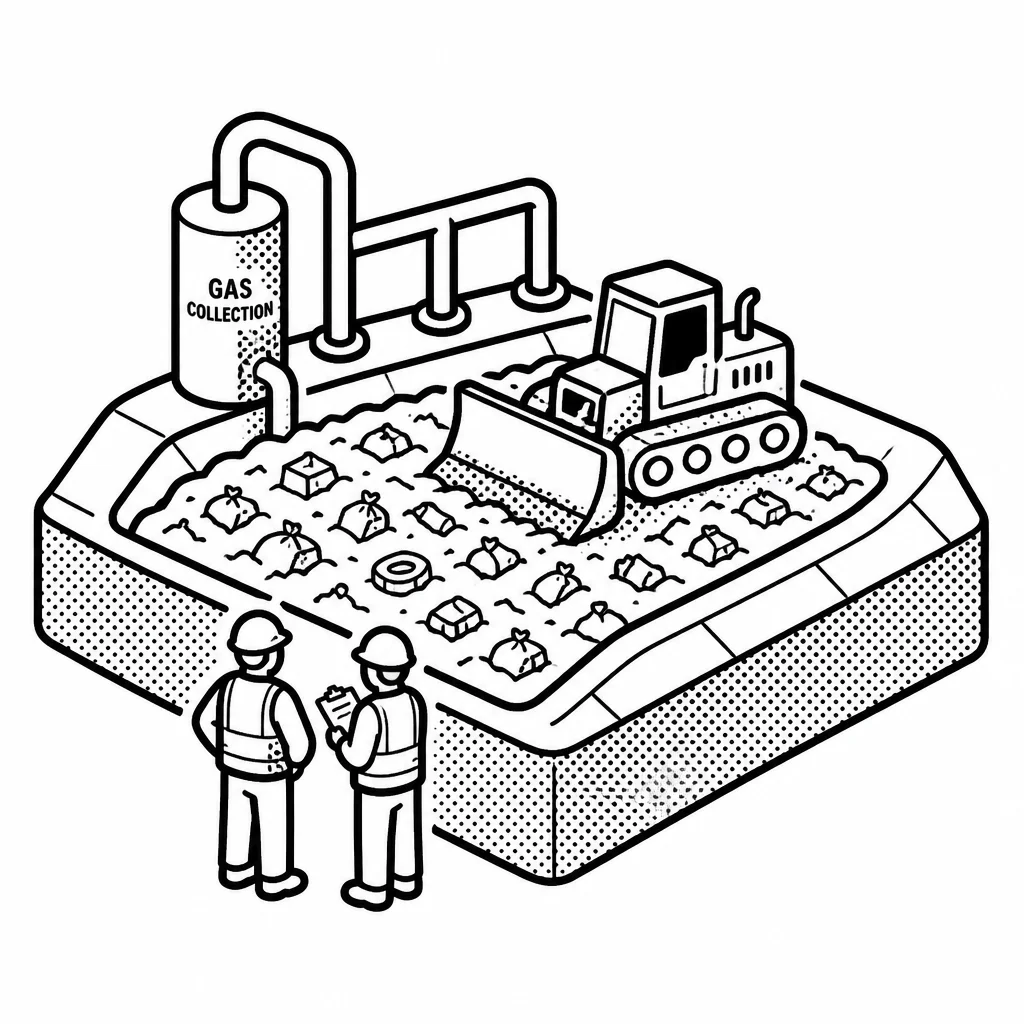
The core of the business is surprisingly simple: it owns the landfill sites. A landfill is a bit like a toll road for garbage. Once Orizon has built and licensed a site, every truck that dumps waste there pays a fee, and those fees recur year after year because cities never stop producing trash. Getting a new landfill approved in Brazil is slow and hard, which keeps competitors out and makes existing sites valuable. The company serves both municipal governments, which pay for city trash collection and disposal, and industrial clients, who pay for specialized treatment of trickier waste. The interesting twist is what Orizon does with the gas. As trash decomposes it releases methane, a potent greenhouse gas. Orizon captures that gas and sells it as biomethane — a cleaner fuel — or burns it to generate electricity. That turns an environmental problem into an extra revenue stream and gives the company a greener story than a plain landfill operator. It also earns money from recycling and recovering materials rather than just burying everything.
The business is steady and recession-resistant, since garbage keeps coming no matter what the economy does. But it is also capital-hungry: building landfills and gas plants costs a lot upfront, and the company has carried meaningful debt. Its results hinge on winning and renewing municipal contracts, keeping its licenses, and ramping up the newer biomethane and energy operations. In short, Orizon gets paid to solve a problem every Brazilian city and factory has, and it is trying to squeeze more value out of each ton of trash along the way.
Saved answer · last researched 12 Nov 2026