Understand any stock in simple English
Oportun Financial Corporation
Oportun makes small personal loans and offers credit cards and savings accounts to Americans who are often shut out of mainstream banking.
Oportun is a lender for people the big banks tend to skip. Its customers are working Americans who may have thin credit files or no credit history at all, and who need a few thousand dollars for a car repair, a medical bill, or to consolidate costlier debt. Oportun gives them personal loans, secured loans, and a credit card, and it also offers savings accounts. The pitch is simple: fast cash for people who can't easily walk into a branch and get approved.
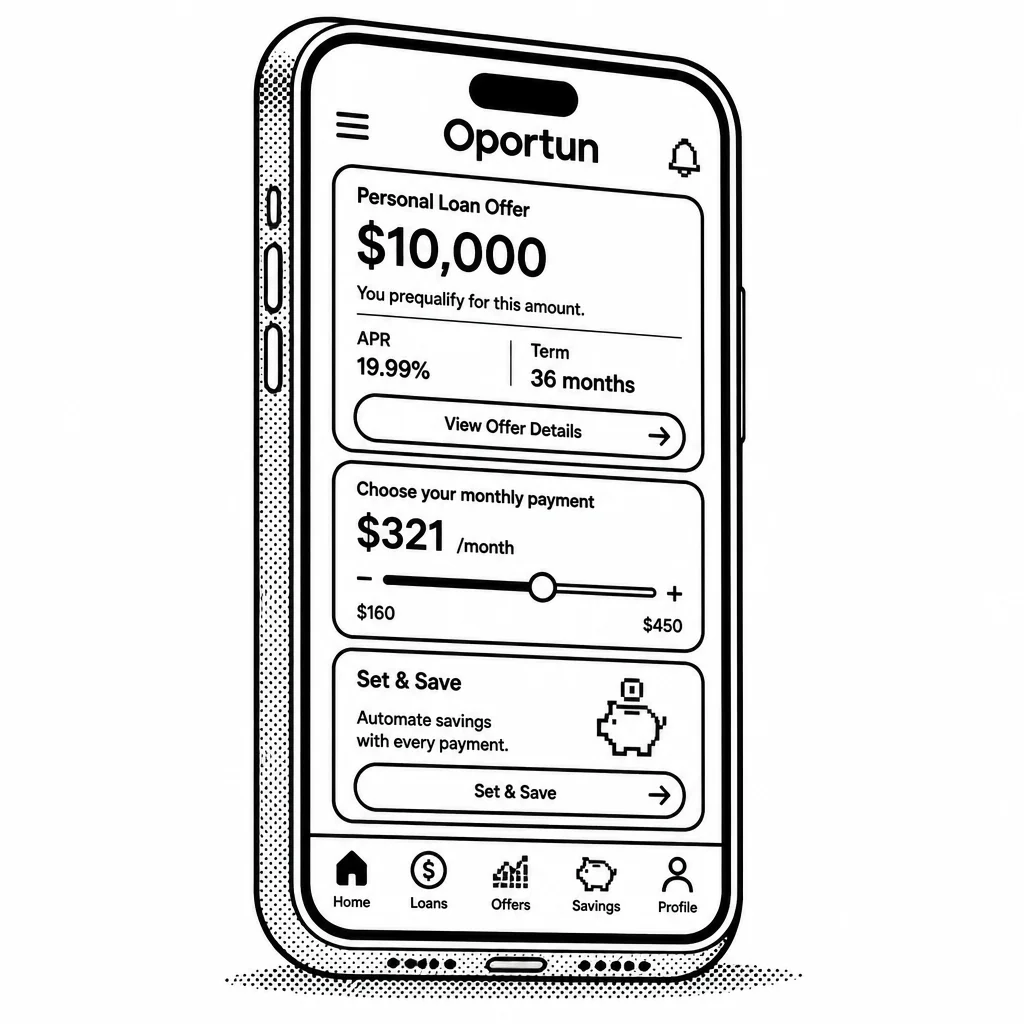
The company's engine is lending money at high interest rates and being good at predicting who will pay it back. Oportun built its own risk models and has spent years lending to this exact slice of the market, which lets it approve people that mainstream lenders reject. It makes money on the interest and fees borrowers pay, and it reports its results through a "total revenue" figure that combines interest income and fees. The business is publicly traded on Nasdaq, and its results swing with credit conditions — when borrowers struggle, losses rise, and the stock gets punished. It is a small, volatile company, not a household name. There is real tension in this model. Oportun charges rates that are high by mainstream standards because it lends to people banks avoid, and it has been the target of consumer advocates who argue that this kind of lending can trap borrowers. The company counters that it offers credit to people who would otherwise turn to payday lenders, which are even more expensive. That argument — is this a lifeline or a trap? — is basically the whole debate around Oportun. It also faces competition from fintech rivals and from Upstart and similar online lenders, plus the ever-present risk that a weak economy makes its borrowers stop paying.
If you want the honest version: Oportun is a small lender with a real niche and a real controversy. It serves millions of borrowers, but its profits depend on lending discipline and its borrowers' health, and its stock has been a rough ride. It is worth watching as a window into the subprime credit market more than as a stable compounder.
Saved answer · last researched 17 Nov 2026