Understand any stock in simple English
Omada Health, Inc.
Omada Health runs virtual care programs that help people prevent and manage chronic diseases like diabetes and high blood pressure.
Omada Health is a digital health company that sells virtual care programs to U.S. employers and health insurance plans. The idea is simple: instead of waiting until someone gets sick, Omada tries to catch problems early and help people change their habits before a condition like type 2 diabetes or high blood pressure gets worse. Employees get access to app-based coaching, connected scales and blood pressure cuffs, and a human coach who checks in regularly.
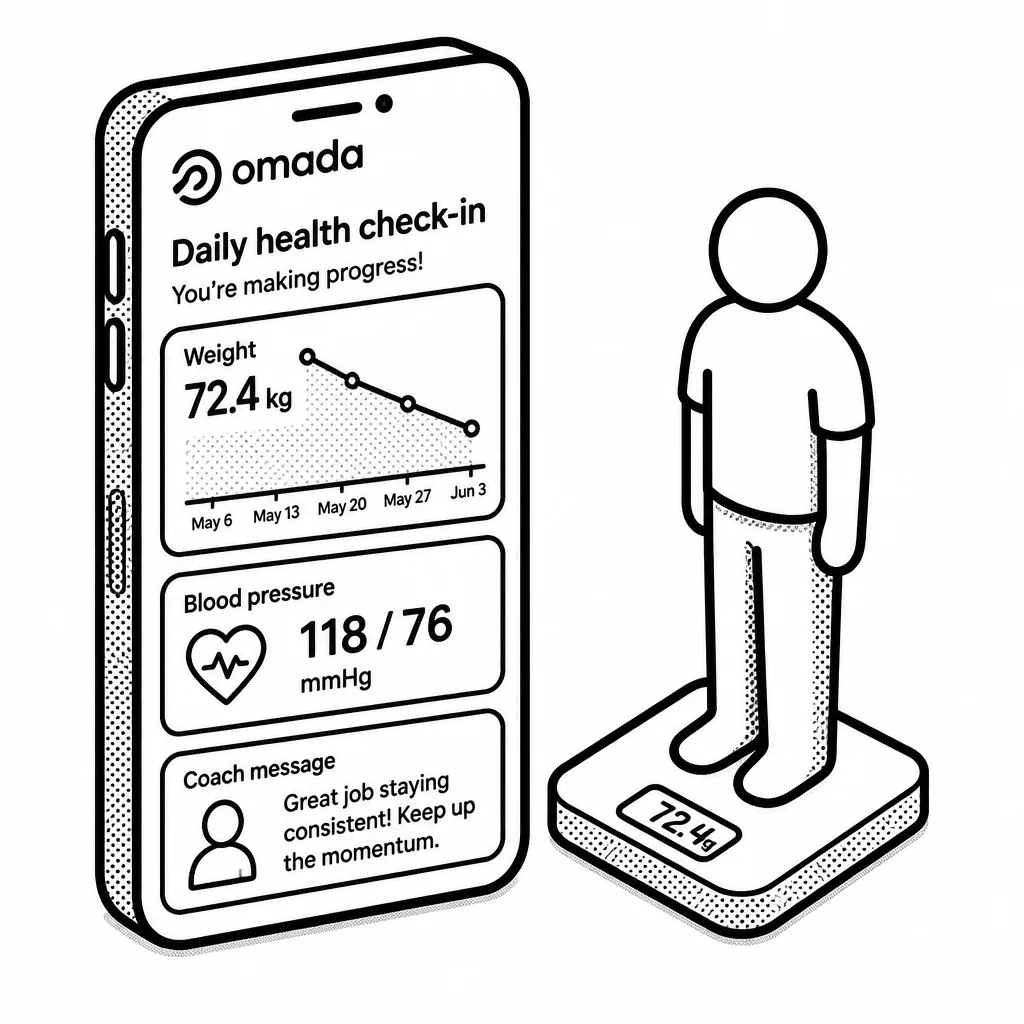
The business model is business-to-business, not direct-to-consumer. Omada signs contracts with employers and health plans, who then offer the program to their workers or members, usually as a free benefit. Those buyers pay because chronic disease is staggeringly expensive for them — a single case of diabetes can cost a health plan or employer many thousands of dollars a year. If Omada can keep even a small share of people from developing diabetes or help them control it, the savings can dwarf the program's cost. That math is the whole pitch. Omada launched with a diabetes prevention program and has since expanded into hypertension, diabetes management, and behavioral health, including a partnership with Costco-adjacent... actually, its more notable moves include teaming up with Amazon on diabetes and hypertension programs delivered through Amazon's health services, and working with Cigna on virtual care for its members. It competes with other digital health players and, more broadly, with the old-fashioned approach of doing nothing until someone ends up in a doctor's office.
The company went public in 2025 and is still small and unprofitable, which is typical for digital health firms trying to scale. The big question hanging over it: employers and health plans are growing skeptical of point-solution wellness apps that people download and abandon. Omada's bet is that human coaching plus connected devices keeps engagement high enough to actually move health outcomes — and that its clinical evidence convinces buyers to keep paying.
Saved answer · last researched 17 Nov 2026