Understand any stock in simple English
Enter a ticker to learn what the company does and how it makes money.
ProShares K-1 Free Crude Oil ETF
This ETF gives investors a way to bet on the price of crude oil without the tax paperwork that comes with oil futures partnerships.
This is a fund, not a company that makes or sells anything. It gives ordinary investors a simple way to get exposure to the price of West Texas Intermediate crude oil — the main U.S. oil benchmark — by holding oil futures contracts. You buy it like a stock, and its price moves roughly in step with oil prices.
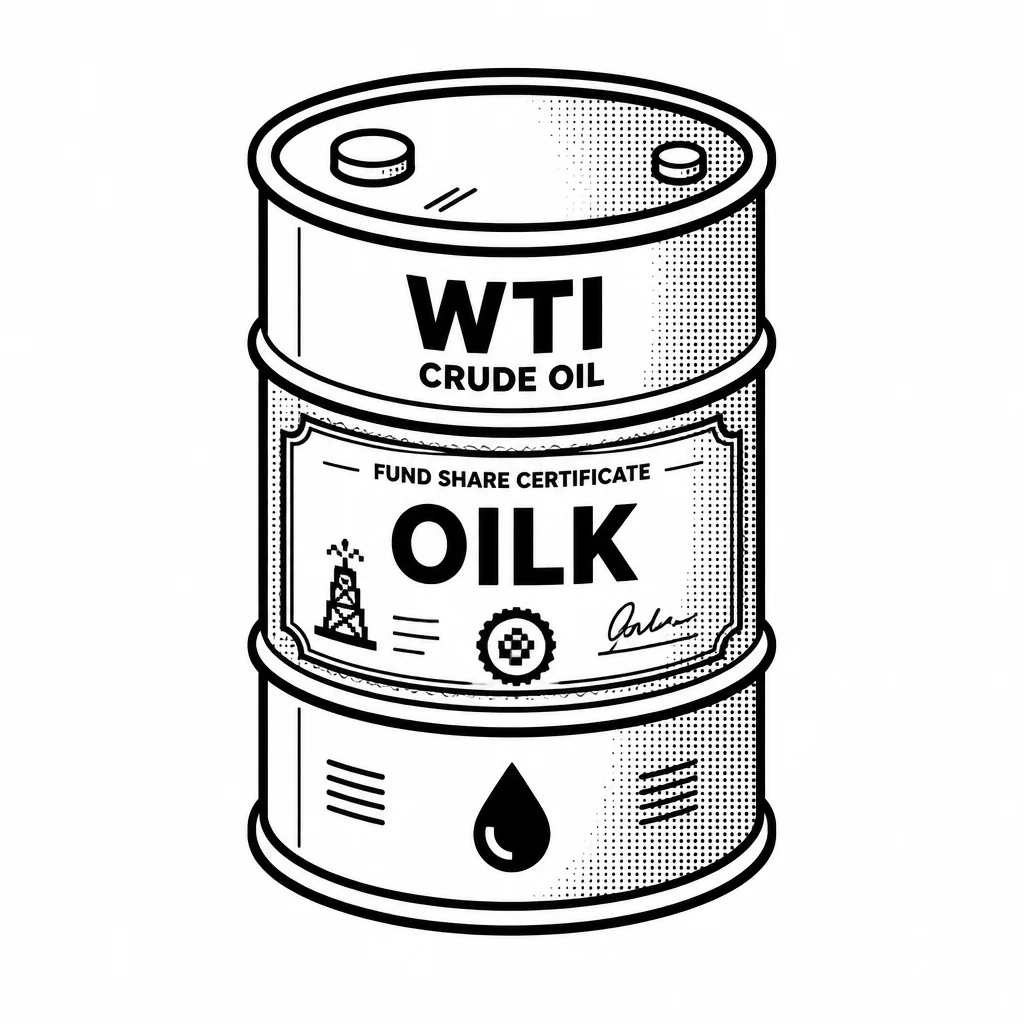
The tricky part is how it gets that exposure. Normally, holding oil futures directly means you're a partner in a limited partnership, and that generates a "K-1" tax form every year — a notorious headache at tax time. This fund gets around that by routing its oil futures trades through a Cayman Islands subsidiary, which keeps the tax reporting simple: you just get a standard 1099 form like any other fund. That K-1-free structure is the whole selling point. The fund is managed by ProShares, a big name in exchange-traded funds, and it trades under the ticker OILK on Cboe. ProShares collects a management fee for running the fund, and the price of the fund reflects both oil prices and the costs of rolling futures contracts from one month to the next.
A few things matter a lot here. Because it holds futures rather than physical barrels, the fund is best for short-term trading or for hedging, not for buying and forgetting — the cost of rolling contracts can quietly eat into returns over long stretches. It is also volatile and very concentrated in one commodity, so its price can swing hard. It is a tool for a specific job, not a set-and-forget savings account.
Saved answer · last researched 16 Nov 2026