Understand any stock in simple English
Obsidian Energy Ltd.
Obsidian Energy is an oil and gas producer that pulls crude oil and natural gas out of the ground in Western Canada and sells it.
Obsidian Energy is an oil and gas producer. It drills wells in Western Canada, mostly in Alberta, and sells the crude oil and natural gas that comes out of them. It doesn't refine fuel or run gas stations. It is a pure upstream company: find the oil, get it out of the ground, and sell it to whoever will pay the market price.
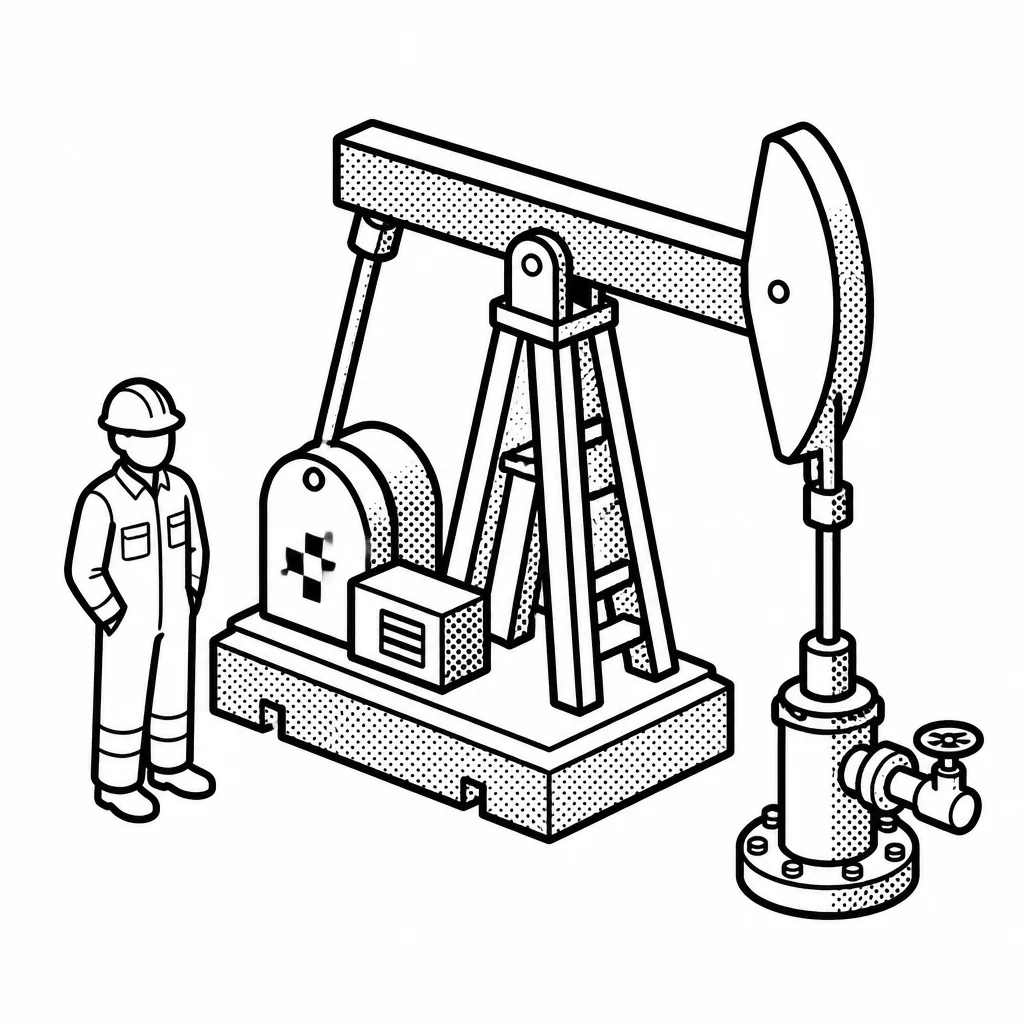
The business runs on a simple loop. Obsidian spends money to drill and complete wells, then collects cash as long as those wells keep producing. Oil and gas prices swing wildly, so the company's profits move with them. When prices are high, it has spare cash. When they fall, it has to watch spending closely. A big part of management's job is keeping production steady while keeping costs low enough to survive the bad years. Obsidian's main oil play is the Cardium formation in Alberta, a large, long-producing rock layer where the company holds a big land position. It also produces natural gas and natural gas liquids. Most of its output is sold into Canadian and U.S. markets at prices set by global and regional benchmarks, so the company is a price taker, not a price setter. Its competitors are the many other Canadian producers working the same rocks, including much larger players like Canadian Natural Resources and Cenovus Energy.
The company has a messy history worth knowing. It used to be called Penn West Petroleum, once one of Canada's biggest oil trusts. A 2014 accounting scandal forced restatements and a management shakeup, and the company spent years selling assets and cutting debt just to survive. It rebranded as Obsidian in 2017 and has since focused on a smaller, tighter set of Alberta assets. With debt lower than in the bad old days, the company now aims to return cash to shareholders while carefully growing production. It's a smaller, leaner business than its former self, and it still lives and dies by the price of a barrel of oil.
Saved answer · last researched 22 Nov 2026
BIG PICTURE
This Calgary oil producer pulls about 65% of its output from liquids, not gas
- 65% Liquids (oil and bitumen) share of production
- 35% Natural gas share of production
Obsidian's barrels lean heavily toward oil rather than natural gas. Roughly 65% of its production is liquids, and that mix matters because oil generally sells for more per unit of energy than gas does. The company pumps it from two Alberta areas, the Pembina Cardium and Peace River, where it has drilled for decades. It has no refineries and no operations outside Western Canada, so the price of a barrel pulled from those fields largely decides what the company earns. Source: Altss, data from 2024
Timeline
Penn West Starts in Calgary
In 1979, a new company called Penn West Petroleum set up shop in Calgary, Alberta. For its first three decades, it did one thing over and over: bought up ordinary oil and gas fields across Western Canada and stitched them together into something bigger.
Penn West Becomes a Royalty Trust
By 2005 the company was running under the name Penn West Energy Trust, a special Canadian structure called a royalty trust. It raised money from public investors that same year, giving it a new pool of cash to keep growing.
Penn West Buys Canetic
Then came the big move: Penn West bought a smaller rival, Canetic Resources Trust, for about $3.6-billion. That deal made it the largest oil and gas energy trust in North America, the crowning moment of decades of collecting assets.
Canada Taxes the Trusts
The good times had a catch. The Canadian government decided royalty trusts had been dodging corporate taxes, so starting in 2011 they had to pay up like everyone else. That January, Penn West swapped its trust structure for a plain old corporation. The special advantage that had fueled its rise was gone.
Accounting Problems Surface
In 2014, the company's finance chief found something ugly: nearly $300-million of expenses had been booked in the wrong place, and the total mess came to about $381-million across two years. Penn West told regulators, widened its own investigation all the way back to 2007, and got hit with lawsuits in both Canada and the U.S. Trust in the company was suddenly a very expensive thing.
Shares Collapse With Oil
That same year, oil prices fell off a cliff, and Penn West's stock fell more than 70 per cent in just a few months. The accounting review piling on top made it worse. A company built on steady growth was now fighting for credibility and cash at the same time.
Penn West Becomes Obsidian
Three years later, shareholders voted to wipe the slate clean on the name: Penn West Petroleum became Obsidian Energy, with new stock symbols to match. The CEO called it the last step in the company's transformation. The old growth-by-acquisition trust was officially gone.
Stephen Loukas Takes Over
In 2019, Stephen Loukas became CEO. His job was less about grand expansion and more about steadying a company that had been through the wringer, using carefully chosen deals to put it back on solid ground.
Earthquakes Near Peace River
Then a different kind of trouble hit. Earthquakes started shaking the ground near Obsidian's deep disposal well southeast of Peace River, and Alberta's energy regulator issued an environmental protection order. Investigators found a clear link between the quakes and injecting wastewater deep underground, a finding later confirmed by a team of university and government scientists.
Loukas Returns as Interim CEO
Leadership shifted again in 2024: Michael Faust left, and Stephen Loukas, who had been vice president of business development, stepped back into the top job on an interim basis. A familiar hand was back at the wheel.
Obsidian Sells Its Viking Gas Assets
In 2025 the company sold its Viking natural-gas assets for roughly $210 million. The reshuffle was less about shrinking than about refocusing, and production held roughly flat heading into the next year.
Belly River Deal at Wilson Creek
The reshaping paid off with a roughly $98-million purchase of light-oil assets at Wilson Creek in the Belly River area, closed in late June. The new wells did better than expected, producing about 2,600 barrels of oil equivalent a day by the third quarter, with record results at one site called Crimson.
Peace River Drives Growth
By 2026, Peace River heavy oil had become the company's main drilling area, with strong early wells in two formations and an extra rig added in December. Obsidian reaffirmed its year-end production target of about 31,000 barrels of oil equivalent a day and pointed to roughly 20 per cent growth in 2027. After decades of buying, fixing and renaming, the company had finally found a simple story: drill where it works.